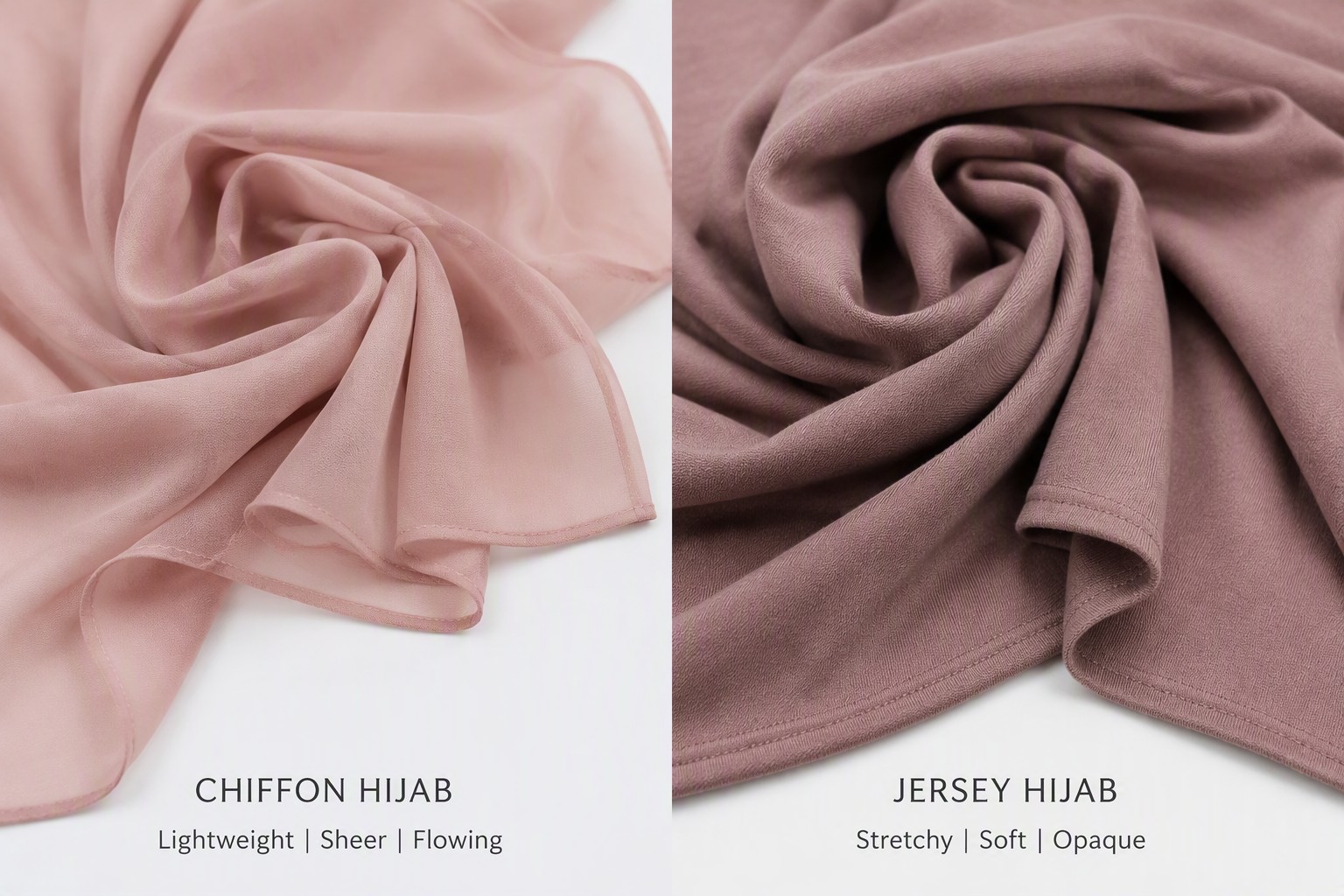
Quick Summary
A private label hijab manufacturer can help a brand coordinate the product and the presentation around it, from fabric and finishing to labels, folding, packaging, and launch timing. This guide explains how to prepare a clear private label brief, approve the physical product, and use a small pilot before expanding the collection. It also covers documentation, incoming checks, online controls, and final shipment review. Our team focuses on making brand presentation practical without adding unsupported claims or unnecessary complexity.
Introduction: Private Label Is a Product System, Not Only a Logo
Private label hijabs are often described as products with a brand label added. In practice, a successful private label launch connects the physical hijab, the label, the care information, the folding method, the package, and the brand story shown online. If those parts are developed separately, the final customer experience can feel unfinished even when the fabric itself is attractive.
A private label hijab manufacturer should help a buyer organize those decisions before production. The brand still owns the creative direction, but the factory can identify how fabric, dimensions, hem, label, packaging, quantity, and delivery timing interact. This makes the launch more predictable for boutique owners, social sellers, and modest fashion startups.
This guide explains a practical route from brand idea to packaged product. Our team focuses on OEM and ODM support, Modal/Jersey expertise, clear sampling, and small pilot quantities so brands can test the full presentation before expanding the range.
Part 1: Buyer Problem -- A Brand Can Look Complete Online but Arrive Incomplete
A brand may invest in a logo, photography, and social media launch while leaving the physical presentation until the last minute. The result can be a label placed in the wrong position, missing care information, packaging that does not fit the folded hijab, or a product whose colour does not match the campaign.
Private label also creates more approval points than a plain stock order. The buyer needs to approve the fabric, dimensions, colour, print or plain surface, hem, label artwork, care wording, hangtag, packaging, folding method, and shipping presentation. Without one controlled brief, different parts of the order can follow different versions.
The first order may be small, but it has a large role. It supplies launch content, influencer packages, customer orders, and feedback about whether the product feels worth its intended price. A factory should not treat a small private label run as a simplified bulk order with fewer checks.
A good supplier relationship begins by separating what is fixed from what can be adjusted. The brand identity, approved label artwork, and customer promise should be protected. Fabric weight, folding method, or packaging format may be refined if the physical sample shows a better route.
Part 2: Industry Trend -- Brands Are Owning More of the Customer Experience
Customers increasingly judge a modest fashion brand through the full journey, from an Instagram post to the parcel arriving at the door. A coordinated label and package can make a small collection feel intentional, while a poor fold or damaged presentation can reduce confidence before the hijab is worn.
This is why brands are using focused private label capsules. A small product family with a consistent fabric, colour story, label, and package can be easier to explain and improve than a large assortment assembled from unrelated stock. The supplier becomes part of the system that protects this consistency.
Private label also gives brands more control over replenishment. Once the product file records the fabric, colour, dimensions, label, package, and inspection requirements, a successful style can be repeated with fewer questions. The brand can then add new colours or artwork without losing the original product standard.
The best launch process is not necessarily the most complicated. It is the one that makes the important decisions visible, checks them on a physical sample, and leaves enough flexibility for a small brand to learn from real customer behaviour.
Part 3: Technical Knowledge -- Align Labels, Packaging and the Hijab
Start with the product itself. Decide whether the brand needs a fluid modal quality, a grippy jersey quality, a custom print, a plain colour, a specific finished dimension, or a particular edge. The label and package should be designed around the actual product rather than chosen before the fabric and fold are known.
Label position affects both appearance and comfort. A woven label, care label, or hangtag should be placed where it supports the brand without interfering with styling. The size, fold, stitch, colour, and care information need to be approved with a physical sample.
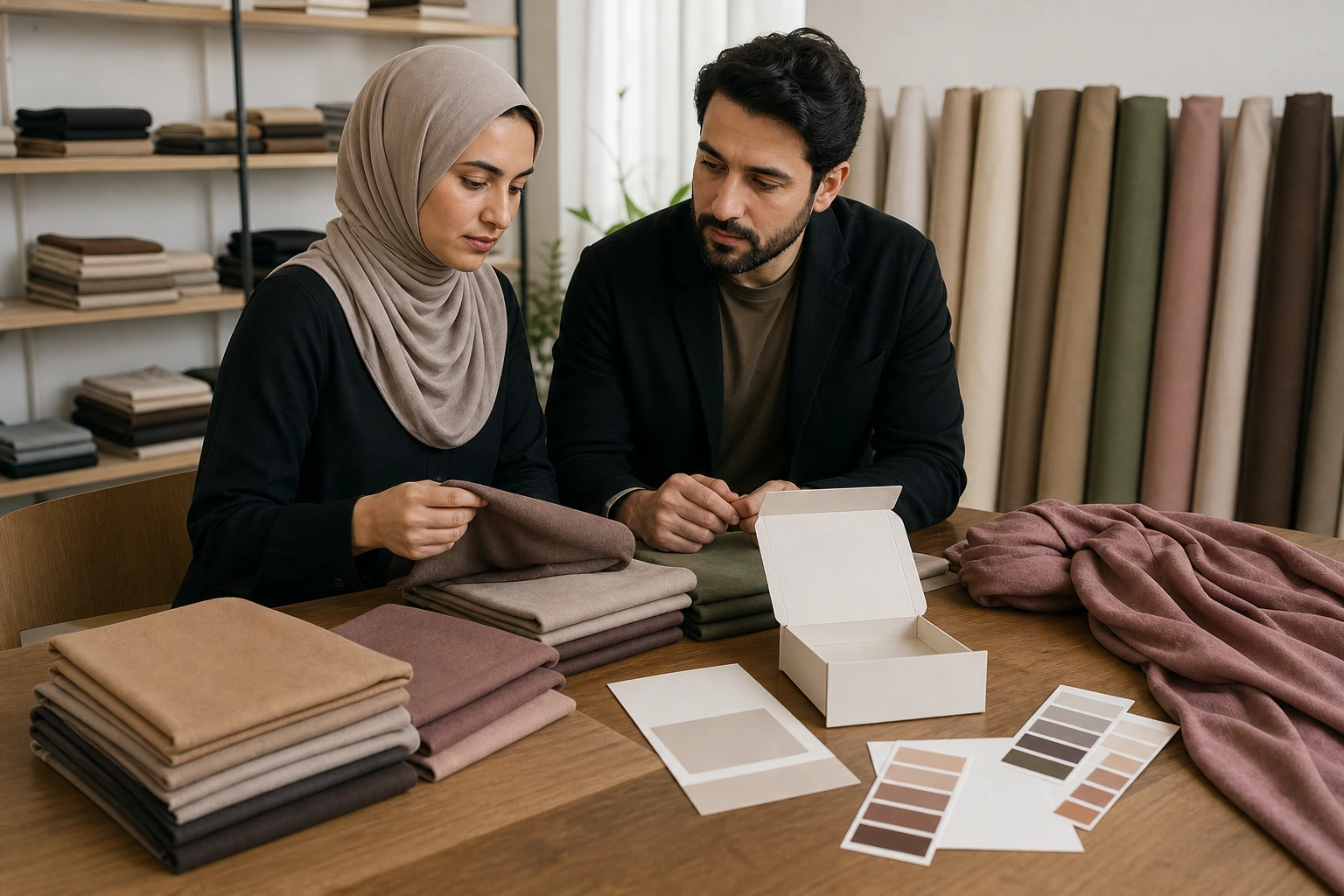
Packaging needs practical testing. The folded hijab should fit without excessive pressure, creasing, or movement. The package should protect the edge and surface while remaining consistent with the brand's intended presentation. If the package is too tight, too loose, or poorly sealed, the customer experience can suffer during shipping.
Colour management applies to labels and packages as well as the textile. A printed hijab, woven label, hangtag, and package may use different materials and production processes. They should be reviewed together so the brand colours feel coordinated rather than assumed to match automatically.
For OEM and ODM development, the technical file should record artwork versions, label placement, fabric, measurements, hem, packaging, folding, and approval dates. This creates a usable reference when the brand repeats the product or adds a new colourway.
Part 4: Our Factory Capability -- One Route From Brand Brief to Packaged Product
Our private label workflow begins with the brand brief. The team reviews target customer, positioning, product role, fabric, colour or artwork, finished dimensions, hem, label, care information, packaging, target quantity, and launch date. This lets the factory identify practical dependencies before sampling.
The development stage then connects the textile and presentation. Modal and jersey are considered according to their own feel, stretch, print response, and finishing needs. Our optimized equipment, colour management, and production experience help the team align the product with labels and packaging instead of treating them as last-minute additions.
The brand reviews a physical sample that includes the important customer-facing details. The product can be handled, styled, photographed, folded, labelled, and placed in the package. If a change is requested, it is added to the production file and reflected in the next approval.
After approval, the pilot production follows the same documented route as a future repeat order. OEM, ODM, custom printing, woven labels, care labels, hangtags, and packaging can be coordinated according to the confirmed scope. The purpose is a reliable launch system, not unnecessary complexity.
Part 5: Quality Control -- Incoming Material and Presentation Verification
Our three-stage QC process covers incoming materials, online production, and final shipment. For private label projects, incoming checks include the fabric, labels, tags, packaging components, and other approved materials. Each should match the current production brief before it enters the workflow.
The team verifies that the selected fabric quality, colour references, label artwork, label position, package format, and folding instructions are aligned. This prevents a correct hijab from being paired with an outdated label or unsuitable package.
Online checks review the first production section for fabric, colour, dimensions, hem, print, label placement, and package fit. Early confirmation is valuable because a small positioning error repeated across a private label run can affect every customer parcel.
Before shipment, finished goods are checked for appearance, dimensions, edge condition, loose threads, label security, folding, package condition, and quantity. The final review confirms that the product and its presentation are ready to leave the factory together.
Part 6: Brand Development Advice -- Launch Small, Learn Clearly, Repeat Confidently
A private label launch can begin with one core silhouette, one clear fabric direction, a focused colour selection, and a package that supports the intended price position. This gives the brand enough identity to test without creating too many variables at once.
Use the pilot to evaluate the whole customer experience. Photograph the package, test opening and folding, ask creators to style the actual product, and record customer comments about feel, colour, label, and presentation. These observations can guide the next order more effectively than assumptions made before launch.
Keep the approved sample and product file together. Include fabric, measurements, colour, artwork, label, care information, package, fold, inspection notes, and delivery details. A clear record makes repeat production easier and helps protect the brand when more people join the operation.
If you are preparing a private label collection, share your brand positioning, target customer, product role, fabric preference, presentation direction, and expected launch stage with our team. We can match those details to a practical OEM or ODM development route and support the project from sample through delivery.
A Practical Private Label Launch Checklist
Before the pilot is released, review the product and presentation as one checklist. Confirm the approved fabric and dimensions, label artwork and position, care information, package size, fold, seal, quantity, and shipment protection. Open several packed units to check whether the hijab remains neat and whether the label is visible in the intended way. Recording these observations gives the next production run a clear improvement list and helps the brand keep its launch promise.
Repeat-Order Questions for Private Label Packaging
Before replenishment, open a packed unit from the previous order and compare it with the current packaging plan. Confirm the package size, material, seal, fold, label position, care information, insert, and shipping protection. If any component changes, check that the folded hijab still fits and that the customer can identify the brand immediately. This simple comparison protects the launch experience while allowing a brand to improve the package over time.
Conclusion: The Package Should Keep the Product Promise
A private label hijab manufacturer contributes more than a sewn label. The factory helps coordinate the physical product, colour, finish, label, care information, folding, package, inspection, and delivery preparation. When those parts are approved as one system, the brand can present a more dependable experience to its customers.
Our team focuses on practical private label, OEM, and ODM support for brands that want to test a clear product idea before expanding. A controlled pilot can turn a logo and a concept into a repeatable product experience.
Frequently Asked Questions
What should be included in a private label hijab brief?+
Include brand positioning, target customer, fabric preference, finished dimensions, artwork or plain colour, hem, label type and position, care information, packaging, quantity, and launch timing.
Can a private label project start with a small quantity?+
Our pilot route can start at 100 pieces per colourway or design, subject to the selected fabric, labels, packaging, and finishing requirements. This lets the brand test the complete product presentation.
What private label details can be coordinated?+
Projects may include woven labels, care labels, hangtags, folding instructions, packaging, custom artwork, and other approved presentation details.
Why should packaging be approved with the product sample?+
Packaging affects folding, protection, unboxing, and the customer's first impression. Approving it with the physical hijab helps ensure the product fits and arrives in the intended condition.
How does QC protect a private label launch?+
A three-stage process checks incoming materials, online production, and finished goods. The final review also confirms labels, dimensions, hem, print, packing, and presentation details before shipment.
Can a manufacturer support a brand after the first launch?+
A documented product file can support repeat colours, replenishment, new artwork, and packaging updates. The brand can use real customer feedback to guide the next production decision.
Need a quote for your next order?
Free samples available. MOQ from 100 pieces. Ships to 50+ countries.
Request a Quote