Quick Summary
Evaluating a printed hijab supplier requires looking beyond sample quality to the operational systems that determine production consistency: incoming material verification, colour standard records, and inline monitoring during production runs. The most common sourcing failures occur not at sampling but on the first or second bulk order, when fabric batch variation, the absence of colour standard records, or inadequate inline monitoring causes colour drift that was not visible in the carefully produced sample. Our production team combines technician-level colour standard decision authority with structured brand account records and a three-point incoming GSM verification and dye affinity assessment protocol for every fabric batch, which ensures that approved sample quality is replicated across production runs and reorders. Brands that select a printed hijab supplier based on their verification process and documentation infrastructure rather than their sample portfolio are building a supplier relationship that can support consistent quality as the brand scales.
Introduction: What to Look for When You Evaluate a Printed Hijab Supplier
A printed hijab supplier is not simply a factory that can apply a design to fabric. The print process involves reactive ink chemistry, fabric-specific fixation protocols, colour management systems, and inline quality controls that vary significantly between suppliers. Two factories can produce visually similar samples from the same artwork file and deliver very different results across a full production run. The evaluation challenge is to identify those differences before placing a bulk order rather than after.
This sourcing guide is written for brands that have moved past the initial sampling stage and are now evaluating which printed hijab supplier to commit to for production runs. We cover the practical criteria -- print technology, incoming material verification, colour standard management, and team experience -- that determine whether a supplier can produce consistent results across repeat orders. We also explain how our production team approaches each of these areas.
Part 1: Buyer Problem -- Why Printed Hijab Sourcing Failures Happen After Sampling
Most printed hijab sourcing failures do not happen at the sample stage. They happen at the first or second production run, when the conditions that produced a good sample are not reliably replicated at scale. The common failure patterns include: colour drift between the sample and the bulk order, inconsistency between pieces within a single bulk order, and variation between the first bulk order and a reorder placed three to six months later.
Colour drift between sample and bulk happens when the factory produces the sample under controlled conditions -- carefully monitored ink delivery, optimal fixation temperature, hand-selected fabric -- and then runs the bulk order under standard production conditions. The gap between the care taken with the sample and the standard production workflow is where colour drift originates. A supplier that cannot describe their colour standard management system in concrete terms is likely operating this way.
Within-batch inconsistency happens when the print run lacks adequate inline monitoring. Reactive ink printing on stretch fabrics is sensitive to fabric tension, ink delivery rate, and fixation temperature. A print run that starts at the correct parameters can drift over a long run if these variables are not monitored and corrected. The result is a batch where the first 100 pieces and the last 100 pieces are visually different, which creates photography inconsistency and customer perception of quality variation.
Between-order variation happens when no colour standard record was created for the first order. Without a documented colour reference, a reorder is essentially a new development run that targets the buyer's memory of the first order rather than a measured standard. This is the most common cause of the buyer experience where the second order looks noticeably different from the first, even when both the buyer and the factory believed the second order was a straightforward reorder.
Part 2: Industry Trend -- The Shift Toward Documentation-Based Supplier Relationships
The printed hijab market has matured to a point where the most commercially stable brands are those that have moved from relationship-based to documentation-based supplier management. In a relationship-based model, quality consistency depends on the buyer's trust in the factory and the factory's willingness to maintain standards based on that trust. In a documentation-based model, quality consistency is managed through colour standards, construction specifications, and QC records that both parties can reference objectively.
Documentation-based supplier relationships are more scalable because the standards are transferable. A brand that holds colour standard records, construction specifications, and QC benchmarks for its designs can use those records to evaluate whether a new production run meets the established standard, to brief a second supplier if capacity constraints require it, and to train new team members on what the correct product looks like. None of this is possible in a purely relationship-based model.
The factories that have invested in documentation infrastructure -- colour spectrophotometry, structured QC records, digital artwork management -- are the suppliers that can support a brand through growth. The factories that rely on experienced staff memory and buyer relationship trust can produce excellent quality for established accounts but struggle to maintain consistency when staff change or when production volumes increase.
Part 3: Technical Knowledge -- The Incoming Material Checks That Determine Print Quality
Printed hijab quality starts with incoming fabric verification. The print result on a hijab is a direct function of the fabric substrate -- the GSM, the fibre blend consistency, the surface preparation, and the dye affinity of the specific fabric batch. A print colour that was developed and approved on one fabric batch can produce a different result on a new fabric batch with slightly different characteristics, even when the ink formulation and process parameters are unchanged.
The incoming fabric verification checks that matter most for printed hijab production are: GSM verification against the specification (acceptable tolerance typically plus or minus 5 percent), surface evenness and freedom from running marks or weaving defects that would disrupt print pattern registration, and dye affinity assessment for reactive printing substrates. Dye affinity testing involves printing a colour reference patch on each new fabric batch and comparing it against the established colour standard. If the colour reference patch falls outside the accepted delta-E tolerance, the ink formulation or process parameters must be adjusted before bulk production proceeds.
These incoming material checks are not standard practice across all printed hijab suppliers. Many suppliers proceed directly from fabric receipt to production without formal verification, relying on their established fabric supplier relationship as a quality guarantee. This approach works well when fabric supply is stable and consistent, but creates unpredictable quality variation when fabric batch characteristics shift -- which happens regularly in the stretch fabric market due to yarn sourcing variations.
Part 4: Our Factory Capability -- The Team That Makes Printed Hijab Consistency Possible
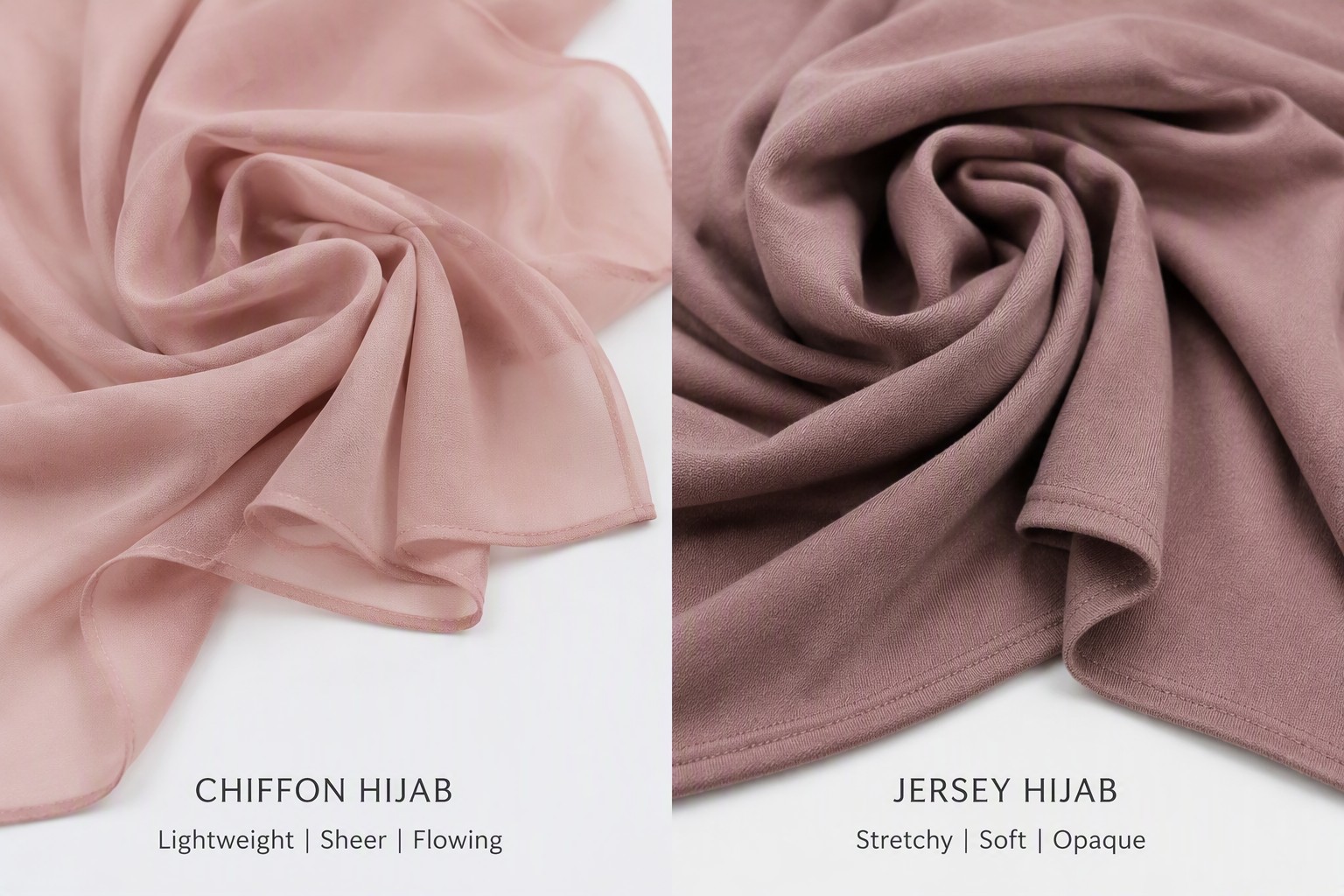
Our production team's approach to printed hijab manufacturing is built around technical specialisation rather than general textile production experience. Our print team members work exclusively on modal and jersey substrates, which means their process knowledge is specific to the characteristics of these fabrics rather than distributed across a broad range of materials. This focus allows our team to recognise and respond to fabric-specific print behaviour that a more generalist production team would not identify.
Our lead print technicians carry the responsibility for colour standard decisions: they determine whether a fabric batch's dye affinity check result requires a process adjustment, whether a reorder strike-off is within acceptable tolerance, and whether a print run's inline measurements indicate corrective action is needed. This decision authority at the technician level -- rather than requiring escalation to a supervisor for process adjustments -- allows corrections to be made in real time without production delays.
The institutional knowledge our team holds for each active brand account is structured: colour standard records with delta-E measurements and ink formulation parameters for each approved design, construction specifications with dimension tolerances for each style, and historical QC records showing the batch-to-batch variation profile for each account. When a brand places a reorder, our team references this structured account record rather than relying on memory of previous orders, which is the operational difference between a supplier that can replicate results and a supplier that aims to replicate them.
Our team also manages the communication interface with brand partners during production. When a reorder strike-off falls outside tolerance and requires buyer review, our team produces a written measurement report showing the delta-E comparison, the adjustment made, and the post-adjustment measurement. This report accompanies the strike-off sample, giving the brand partner the data they need to make an informed approval decision rather than a judgement based on visual impression alone.
Part 5: Quality Control -- Incoming Material Verification as the First QC Gate
Our incoming material verification process is the first quality gate in our production chain. Every fabric roll that enters our facility for a production order is inspected before being released to print production. The inspection covers three areas: dimensional and weight verification, surface quality inspection, and dye affinity assessment.
Dimensional and weight verification: we measure the GSM of each incoming fabric roll at three points -- near roll start, at the midpoint, and near roll end -- using a calibrated circular fabric cutter and a precision scale. The three measurements are averaged and compared against the specification GSM for the order. If any roll falls outside our accepted tolerance of plus or minus 5 percent of specification GSM, it is quarantined and our fabric supplier is notified. Fabric that does not meet the weight specification will not accept reactive ink consistently and is not suitable for colour-critical production.
Surface quality inspection: each roll is wound through a fabric inspection frame at 20 metres per minute under standard illumination, with our inspector marking any surface defects including running marks, weaving defects, contamination spots, and edge distortion. Defect rates above our acceptance threshold result in the roll being quarantined or downgraded to non-critical production use. Surface defects in the fabric substrate create print registration errors and visible quality variations in the finished hijab that cannot be corrected after printing.
Dye affinity assessment: for each new fabric batch from a supplier, we print a colour reference patch using the established ink formulation for the relevant brand account designs and measure it against the stored colour standard. If the measurement falls outside delta-E 1.5, we adjust the ink delivery parameters to compensate for the batch's dye affinity profile before proceeding to production. This assessment takes approximately 45 minutes per fabric batch but eliminates the risk of producing a full production run in a colour that does not match the approved standard.
Part 6: Brand Development Advice -- Choose a Supplier Based on Their Verification Process, Not Just Their Sample
The most reliable way to evaluate a printed hijab supplier is to ask about their incoming material verification process before reviewing their sample portfolio. A supplier that can describe their fabric GSM verification procedure, their dye affinity assessment method, and their colour standard record system in concrete terms has the operational infrastructure to produce consistent results across repeat orders. A supplier that responds to these questions with general reassurances about quality and experience is relying on trust rather than systems.
The second evaluation criterion is the colour standard record. Ask whether the supplier will provide a colour standard record after the first approved order, and whether that record will be used to verify reorders. A supplier that maintains colour standard records is making a commitment to replication that a supplier without records cannot make. The difference between these two supplier types becomes significant on the second or third reorder, when the novelty of the relationship has worn off and the operational systems are what determines the quality outcome.
The third criterion is inline monitoring. Ask whether the supplier monitors colour consistency during the production run and at what interval. A supplier that performs inline colour checks at regular intervals during printing has the ability to catch and correct drift before it affects the full batch. A supplier that inspects only the finished goods is finding problems after they have already affected production, which is too late for a correction.
If your brand is ready to evaluate a printed hijab supplier relationship that is built on documentation rather than trust alone, we welcome a conversation. Share your brand direction, your current design concepts, and any quality concerns you have had with previous suppliers, and we will explain how our production process addresses each of those concerns -- and where our process limitations are. A transparent conversation about process capabilities is the foundation of a supplier relationship that can support consistent results as your brand scales.
Frequently Asked Questions
What is the difference between a good sample and a reliable supplier?+
A good sample demonstrates that a factory can produce the desired result under controlled conditions. A reliable supplier is one that can replicate that result consistently across a full production run and across repeat orders. The difference lies in the operational systems -- colour standard records, inline monitoring, incoming material verification -- that the factory uses to manage production consistency. A sample can be produced carefully without these systems; a reliable production run cannot.
How do you verify that a new fabric batch will produce the same print colour as the approved sample?+
We perform a dye affinity assessment on each new fabric batch from a supplier. This involves printing a colour reference patch using the established ink formulation for the relevant designs and measuring the result against the stored colour standard using a spectrophotometer. If the measurement is within our accepted delta-E tolerance of 1.5, we proceed to production. If it falls outside tolerance, we adjust the ink delivery parameters to compensate for the batch dye affinity profile before proceeding. This assessment adds approximately 45 minutes to the fabric preparation stage but eliminates the risk of a full production run in an off-standard colour.
What documentation do you provide after the first approved production run?+
After the first approved production run, we create a brand account record that includes the colour standard (delta-E measurement against the approved strike-off, ink formulation parameters, fixation settings), the construction specification (dimensions, seam type, hem finish, label placement), and the first-order QC record (inline measurements, outgoing inspection result). This account record is retained in our production system and is used as the reference for all subsequent reorders, eliminating the colour development stage on reorders and reducing reorder lead time to 18 to 25 calendar days.
What happens if an incoming fabric roll does not pass your GSM verification?+
Fabric rolls that fall outside our accepted GSM tolerance of plus or minus 5 percent of specification are quarantined and not released to production. We notify our fabric supplier and request replacement rolls. Fabric that does not meet the weight specification will not accept reactive ink consistently and cannot be used for colour-critical production without compromising the print result. In practice, fabric GSM variation from our established suppliers is rare, but our incoming inspection process ensures that when it occurs it is caught before it affects a production order.
How do you handle colour drift within a production run?+
We monitor colour consistency during printing at regular intervals -- every 50 metres for modal fabric and every 30 metres for jersey fabric -- using a D65 standard illuminant lightbox and a handheld spectrophotometer. Measurements are recorded in the production log. If a measurement exceeds our accepted delta-E tolerance of 2.0, we pause the print run, adjust the relevant process parameter (ink delivery rate, fabric tension, or fixation temperature), verify the correction on a test section, and resume production. This inline correction process ensures that drift is caught and corrected before it affects a significant portion of the batch.
Can you produce a range of colourways from the same design artwork?+
Yes. We regularly produce the same design in multiple colourways for brand accounts that are building a coordinated range. Each colourway requires its own colour development round -- a strike-off approval for each colourway against the brand colour reference -- and its own colour standard record. For orders that include multiple colourways of the same design, we schedule the colour development rounds in parallel where possible to reduce the total pre-production lead time. Minimum order quantity applies per colourway rather than per design.
Need a quote for your next order?
Free samples available. MOQ from 100 pieces. Ships to 50+ countries.
Request a Quote