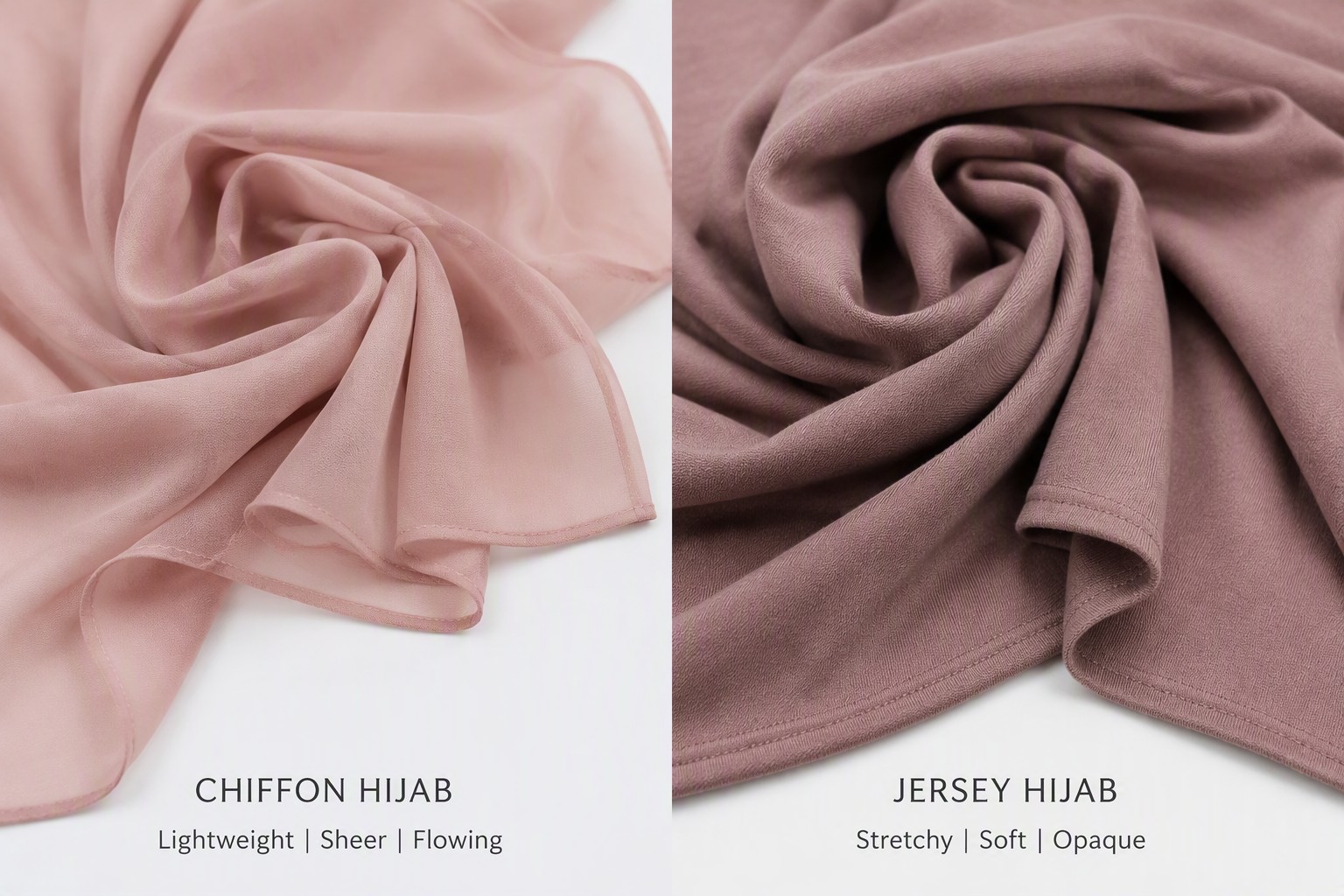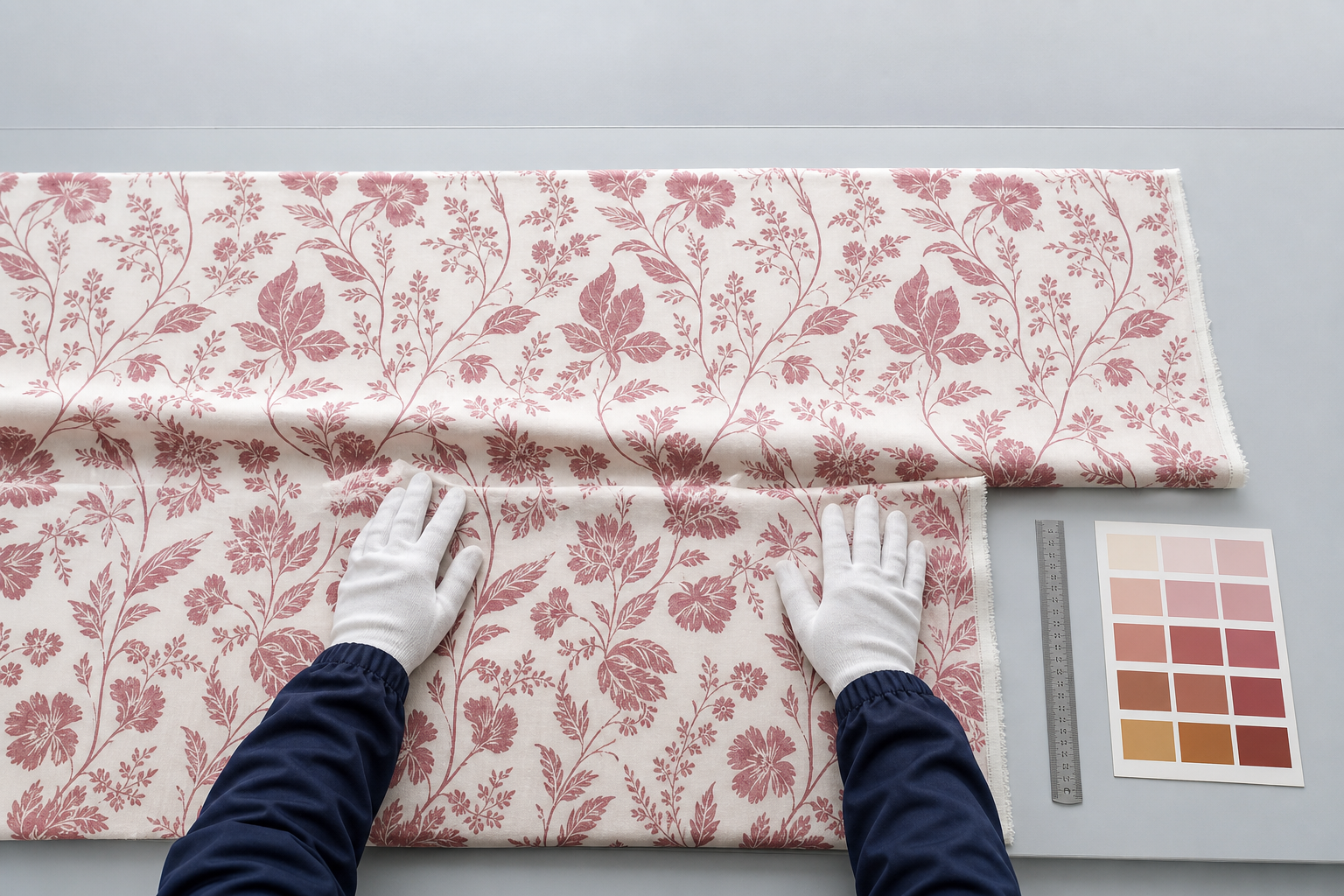
Quick Summary
A printed hijab supplier's production chain involves more decision points than most brands realise when they place a first order. From greige fabric selection and incoming assessment through pre-treatment chemistry, digital reactive dye printing, steam fixation, mechanical finishing, and wash fastness verification, each stage contributes to the final colour accuracy, drape, and durability of the product. Our team has operated this complete production chain for modal and jersey hijab printing since 2021, and we document each stage so brands can trace the quality decisions that shaped their order from raw material to finished goods.
Why Understanding the Production Chain Makes You a Better Buyer
Brands that place orders without understanding the production chain are at a disadvantage when something goes wrong. They cannot identify which stage produced the problem, which means they cannot have a productive conversation with the supplier about how to prevent it on the next order. They also cannot evaluate whether a supplier's corrective action addresses the root cause or just the symptom. A brand that understands the chain can ask specific questions -- about pre-treatment calibration, steaming parameters, or wash fastness test results -- that reveal far more about a supplier's production capability than general assurances about quality.
This factory story traces the complete production journey that a custom printed hijab order takes from raw material to finished goods at our facility. Each stage is described with enough technical detail to be useful for a buyer who wants to evaluate a printed hijab supplier's capability, not just their sample quality. The goal is to give brands the vocabulary and reference framework to ask better questions and interpret the answers more accurately.
Part 1: The Buyer Problem -- Quality Failures That Cannot Be Traced to a Source
When a printed hijab order arrives with a quality issue, the most common response from the supplier is a general assurance that it will not happen again. What is rarely offered is a specific explanation of which stage in the production chain produced the problem and what change will prevent recurrence. This is not necessarily evasion -- in many cases the supplier genuinely cannot trace the failure because their production process is not documented in enough detail to isolate the cause.
The quality issues that brands most commonly report -- colour shift between sample and bulk, wash fastness failure after three or four washes, inconsistent drape across units in the same order -- each have specific production stage origins. Colour shift between sample and bulk is almost always a pre-treatment or ink formulation consistency issue. Wash fastness failure is almost always a fixation issue (insufficient steam time or incorrect steaming parameters). Drape inconsistency is often a finishing tension issue, where mechanical finishing parameters were not held constant across the production run.
Brands that understand these connections can test for them specifically. A brand that knows wash fastness failures originate in the fixation stage can request wash fastness test results before shipment rather than discovering the problem after delivery. A brand that knows colour shift originates in pre-treatment can request the incoming fabric inspection record and the pre-treatment formulation used, which reveals whether the supplier is managing this stage systematically.
Part 2: Industry Trend -- Traceability Is Becoming a Procurement Standard in Modest Fashion
The modest fashion industry's most professionally operated brands have begun applying the same supply chain traceability standards that mainstream fashion brands use for ethical sourcing documentation. The motivation is partly regulatory -- EU supply chain transparency requirements are expanding -- and partly commercial: brands that can document the origin and quality history of their products have a meaningful marketing advantage with the segment of the modest fashion consumer base that cares about quality and production standards.
Wash fastness certification, fabric GSM consistency records, and pre-shipment inspection reports are moving from the category of "nice to have from a careful supplier" to "expected documentation for a professional procurement relationship." Brands that have operated for two or three seasons have seen enough quality failures to understand the value of systematic documentation, and they are increasingly selecting suppliers based on documentation capability as well as sample quality.
For printed hijab suppliers, this means that the investment in production documentation is becoming a market differentiation factor. A supplier that produces the same quality as a competitor but provides full traceability documentation has a stronger value proposition for brands that have grown past their first order and are building a repeatable procurement process. Our documentation approach was developed with this commercial reality in mind.
Part 3: Technical Knowledge -- The Six Stages and What Goes Right or Wrong at Each
Stage one is greige fabric sourcing. Greige is unfinished fabric before any dyeing, coating, or surface treatment. For modal hijab production, we source greige from established yarn-spinning and weaving suppliers whose lot-to-lot consistency we have verified over multiple orders. For cotton-jersey base fabrics used in jersey hijab production, we source from suppliers with documented GSM consistency records. Greige sourcing decisions affect every downstream quality metric, which is why we treat supplier qualification as an ongoing process rather than a one-time assessment.
Stage two is pre-treatment. The greige fabric is padded with an alkaline pre-treatment solution that removes manufacturing residues (sizing agents, wax, and dust) and prepares the fibre surface for reactive dye bonding. The formulation concentration and application rate are calibrated based on the specific fabric lot's measured absorbency. Modal fabric processed at our facility uses a specific pre-treatment programme developed through testing on multiple greige lots, which we adjust based on the incoming inspection data for each new fabric delivery.
Stage three is digital reactive dye printing. We print designs onto the pre-treated fabric using digital inkjet equipment with reactive dye ink sets. The printing parameters -- ink deposit level, print resolution, and feed tension -- are set based on the design type (flat geometric designs require different parameters than gradient or photographic designs) and the fabric weight. Each production order starts with a strike-off: a printed fabric sample produced on the actual production lot before the bulk run begins, which is reviewed and approved before printing continues.
Stage four is steam fixation. After printing, the fabric is steamed to bond the reactive dye to the cellulose fibre. The steaming parameters -- temperature range of 102 to 108 degrees Celsius, controlled humidity, and dwell time calibrated to print density -- determine the completeness of dye fixation, which directly affects wash fastness. Stage five is washing and finishing: the fabric passes through a washing sequence that removes unfixed dye, followed by mechanical finishing that sets the final drape characteristics and softens the hand feel. Stage six is cutting, hemming, and final inspection before packing.
Part 4: Our Production Chain -- How Each Stage Connects to the Next
Our team approaches the production chain as a system where each stage feeds into the next. The incoming fabric inspection data from stage one informs the pre-treatment calibration in stage two. The pre-treatment calibration result informs the strike-off review in stage three. The strike-off approval confirms that the production parameters are correctly set before the bulk run begins. The steam fixation parameters are set based on the print density of the approved design. The wash fastness test result in stage six confirms whether the fixation parameters were correct.
This chain of dependencies means that a problem at any early stage can cascade through subsequent stages if it is not identified and corrected. Our production documentation system is designed to make these connections visible: each stage records its input conditions (fabric lot number, pre-treatment batch reference, ink formulation code) alongside its output quality measurements, so that if a quality issue appears at a late stage, the source can be traced back through the chain to its origin.
For brands ordering from our facility, this means that the documentation we provide is not a summary of final results -- it is a record of the production decisions made at each stage and the measurements that confirmed those decisions were correct. A brand reviewing our documentation for a repeat order can verify that the same fabric lot parameters, pre-treatment formulation, and fixation conditions were used as on the previous successful order, rather than assuming consistency without evidence.
Part 5: Quality Control -- Wash Fastness Testing as the Final Production Confirmation
Wash fastness testing is the quality check that confirms whether the full production chain from pre-treatment through steam fixation performed correctly. We conduct wash fastness testing on samples pulled from each production run according to ISO 105-C06 (colour change under washing) and ISO 105-X12 (dry crocking, resistance to colour transfer under rubbing). Both tests are conducted at the production lot level, not just at the fabric or ink certification level, because the test result depends on the complete combination of fabric, pre-treatment, ink, and fixation conditions used for that specific production run.
Our minimum acceptable result before authorising shipment is Grade 4 on ISO 105-C06 colour change and Grade 4 on ISO 105-X12 crocking for standard colourways. Results that fall below Grade 4 on either measurement trigger a production review: we examine the steaming records for the batch, check the pre-treatment formulation applied to the fabric lot, and test an additional sample from the same batch before making a shipment decision. If the cause is identifiable and the additional sample confirms the issue, we discuss the options with the brand before proceeding.
We also conduct ISO 105-B02 light fastness spot checks on new colourways introduced in a production season. Light fastness is not a wash cycle performance metric, but it predicts how colourways will behave under sustained UV exposure -- relevant for brands whose customers wear hijabs outdoors regularly. We flag colourways with light fastness below Grade 4 to brands before bulk production begins, so they can make an informed decision about whether to proceed or adjust the colourway specification.
Part 6: Brand Development Advice -- Using Production Chain Knowledge to Build a More Reliable Supplier Relationship
The brands that build the most reliable manufacturing relationships are the ones that treat production documentation as the foundation of the relationship, not an afterthought requested only when something goes wrong. Asking for documentation from the first order establishes the expectation on both sides: the supplier understands that the brand is monitoring quality systematically, and the brand builds a reference library of production records that makes quality continuity on repeat orders verifiable rather than assumed.
Practically, this means requesting the incoming fabric inspection record, the strike-off approval record, and the wash fastness test result on the first order -- even if the order is a small test quantity. Reviewing these documents on arrival alongside the physical goods trains the brand to read the documentation accurately and identifies any gaps in the supplier's record-keeping before those gaps become a problem on a large commercial order.
For brands at the stage of placing or planning a first printed hijab order, our team provides full production documentation as standard. From the first inquiry through sampling, strike-off approval, production, and delivery, we communicate at each stage with the documentation and timeline updates that allow brands to follow the chain without needing to chase for information. If you are evaluating printed hijab suppliers and would like to understand how our production chain and documentation system work in practice for your specific product type, send us your design brief and order requirement -- our team will walk you through the relevant stages and give you a realistic picture of the timeline, documentation package, and what to expect at each milestone.
Frequently Asked Questions
What does the production chain look like for a custom printed hijab order?+
A custom printed hijab order moves through six main production stages: greige fabric sourcing and incoming inspection, pre-treatment (padding the fabric with chemistry that prepares the surface for reactive dye printing), digital inkjet printing with reactive dyes, steam fixation (bonding the dye to the fibre under controlled heat and humidity), washing and mechanical finishing (removing unfixed dye, softening the hand feel, and setting the final drape), and outgoing inspection including wash fastness verification. Each stage has its own quality checkpoints, and the decisions made at each stage affect the result at every stage that follows.
Why does pre-treatment matter so much for printed hijab quality?+
Pre-treatment is the step that determines how well reactive dyes bond to the fabric fibre. Under-treated fabric produces prints with lower colour density, weaker wash fastness, and a tendency for colour to migrate during steaming. Over-treated fabric can cause uneven dye uptake and a stiff or brittle hand feel. The correct pre-treatment formulation depends on the specific fabric type (modal behaves differently from cotton-jersey), the fabric weight, and the ambient humidity during application. Getting this stage right is the foundation of every quality metric that follows.
How long does the complete production chain take for a printed hijab order?+
For an order with an approved design and confirmed fabric stock, the typical timeline from production start to finished goods is 16 to 24 days. Pre-treatment and strike-off approval takes 3 to 5 days. The bulk printing run takes 4 to 8 days depending on order volume and design complexity. Steam fixation and washing take 2 to 3 days. Finishing, quality inspection, and packing take 3 to 5 days. Orders requiring new ink formulation or fabric sourcing add 5 to 7 days to the pre-production phase.
What wash fastness standard should I expect from a quality printed hijab supplier?+
For a commercially acceptable custom printed hijab, the minimum wash fastness standard is ISO 105-C06 Grade 4 (colour change) and Grade 4 (staining on adjacent fabric). At this level, the hijab will retain its colour through repeated domestic washing without significant fading or dye transfer. A supplier targeting brands in the premium modest fashion market should be able to achieve Grade 4-5 on both measurements for standard modal and jersey colourways. Some bright or fluorescent colourways have inherently lower fastness ceiling and should be tested specifically before committing to bulk.
How does steam fixation affect the hand feel of a printed hijab?+
Steam fixation bonds the reactive dye to the cellulose fibre under controlled heat and humidity. The parameters -- temperature, humidity level, and dwell time -- affect both the completeness of dye fixation and the physical behaviour of the fabric. Insufficient steam time produces incomplete fixation, which reduces wash fastness and can cause the fabric to feel slightly stiff or dry. Over-steaming high-density print areas can cause dye migration, producing a blurring effect at design boundaries. Correct steaming on modal fabric produces a soft, fluid drape characteristic of the material.
Can I receive production documentation for my printed hijab order?+
Yes. Our standard documentation package includes: the incoming fabric inspection record for the fabric lot used in your order, the strike-off approval record (the colour reference approved before bulk printing began), the first-piece confirmation record from the production run, the pre-shipment inspection report (covering colour accuracy, dimensional checks, hem quality, and AQL sampling result), and the wash fastness test result for your colourways. This documentation is prepared for each order and shared before shipment authorisation.
Need a quote for your next order?
Free samples available. MOQ from 100 pieces. Ships to 50+ countries.
Request a Quote