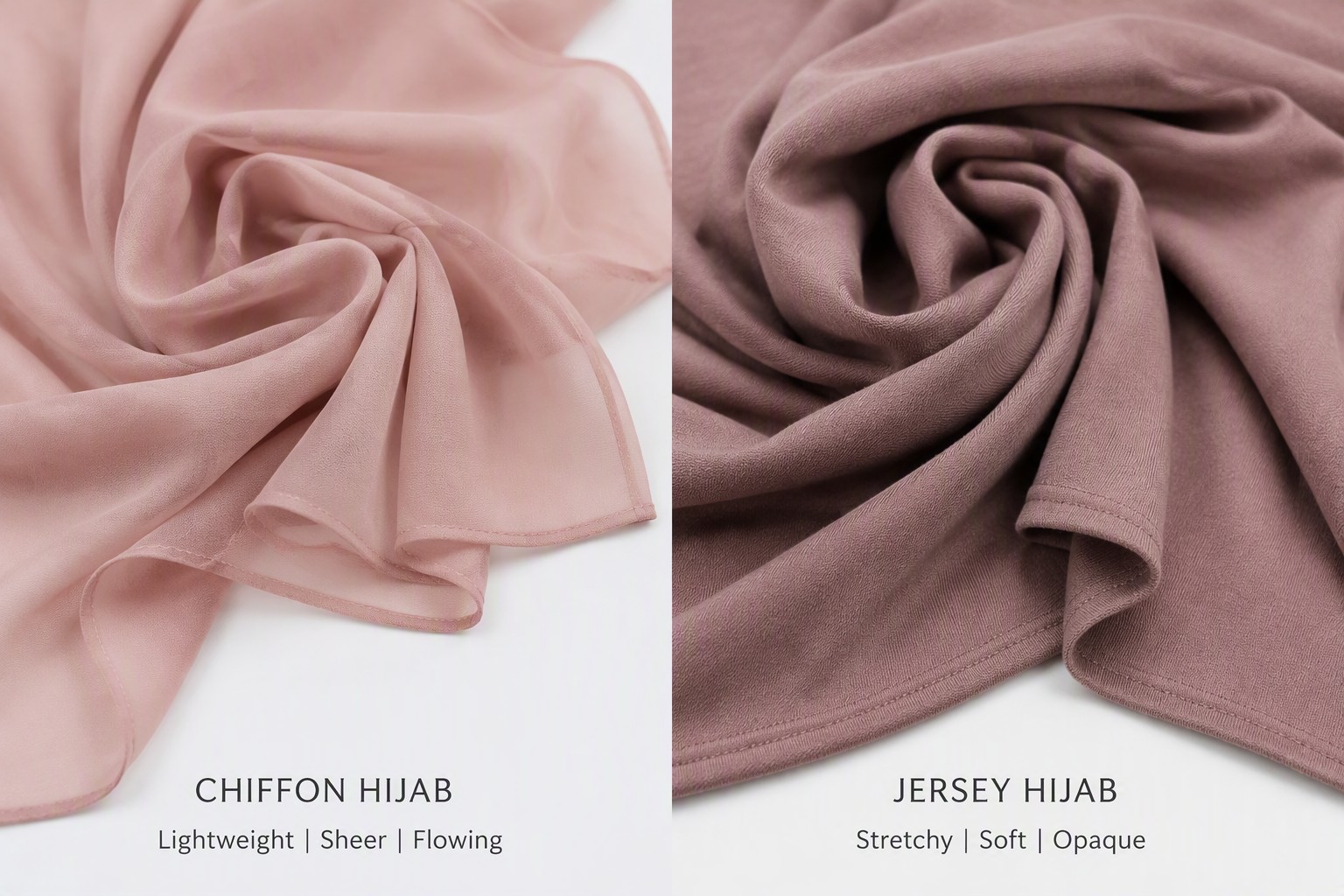
Quick Summary
A specialist printed hijab supplier invests in equipment calibrated specifically for lightweight modal and jersey knit fabrics, where standard reactive dye machinery produces tension distortion and colour inconsistency. Digital reactive dye printing on modal and jersey requires substrate-specific tension control, precise curing temperature by colour density, and ink profiling adjusted for fabric GSM. Wash fastness testing to ISO 105-C06 and ISO 105-X12 is the objective measure of whether print parameters are correctly set for the specific fabric-ink combination in production. Our team operates and continuously optimises the print equipment in-house, which means parameter adjustments are made by the production team rather than outsourced to a third-party printer. Brands that verify print equipment capability and wash fastness test results before placing bulk orders reduce the risk of colour fade complaints from their end customers.
Why Print Equipment Specification Determines Printed Hijab Quality Before Any Other Factor
Most discussions about hijab supplier quality focus on fabric, QC process, or communication responsiveness. These matter -- but they are downstream of a more fundamental factor: whether the print equipment in use is calibrated for the specific substrate being printed. A supplier using general textile printing machinery to print modal and jersey knit hijabs will produce measurably different results from a supplier operating equipment configured specifically for lightweight, stretch-prone natural fibre substrates. The difference shows in colour accuracy, registration precision, and wash fastness results -- and it compounds across repeat orders as fabric batch variation introduces new variables that only substrate-specific profiling can manage.
This factory story explains how print equipment specification, tension control, curing parameters, and wash fastness testing relate to each other in the production of consistent, export-quality printed hijabs. For brands evaluating a printed hijab supplier for the first time, understanding this relationship provides a framework for asking the right questions and interpreting the answers.
Part 1: The Buyer Problem -- Colour Inconsistency Across Orders
The most common quality complaint from brands working with their first or second printed hijab supplier is colour inconsistency between orders -- or within the same order. A first production run delivers colour that matches the approved sample. The reorder, placed with the same specifications on the same supplier, arrives noticeably different. Or a single bulk order contains pieces where the print colour shifts across the batch.
This problem has a specific technical cause: the supplier is not controlling the variables that determine reactive dye colour output consistently. Reactive dye colour is the result of four interacting parameters -- ink concentration, steaming temperature and duration, fabric pH at the point of dyeing, and washing completeness after fixation. A change in any one of these parameters produces a colour shift. Suppliers who do not document and control all four parameters on every production run cannot guarantee colour consistency, regardless of how closely the Pantone reference was matched at the sample stage.
For Instagram and TikTok brands building a colourway library, this is not a minor inconvenience. When a brand launches a second colourway drop intended to complement a first season collection, colour shift in the reorder undermines the coherence of the product line. End customers notice, and the returns and complaints that follow are disproportionate to the cost difference between controlled and uncontrolled production.
Part 2: Industry Trend -- Small Brands Demanding Export-Grade Documentation
A notable shift in the printed hijab supplier market over the past two years is the rise of documentation requirements from small and mid-size brands. Where previously only large wholesale buyers and retail platform suppliers required test certificates and production reports, brands operating at 100 to 500 pieces per order are now routinely requesting wash fastness certificates and batch documentation before confirming supplier relationships.
This shift is driven by two developments. First, platforms such as TikTok Shop and Amazon Handmade have introduced product quality compliance requirements that extend to apparel and accessories. Brands selling through these channels need evidence of production standards to respond to compliance queries. Second, the modest fashion consumer market has matured. Buyers who discovered hijab brands through social commerce over the past three years have developed quality expectations shaped by their experience with multiple suppliers, and colour fade complaints have become a documented pattern in community review spaces.
For printed hijab suppliers, this trend creates a meaningful capability filter. Factories that operate without documented QC processes and without regular wash fastness testing are progressively less able to serve the brands that are growing fastest in the market. Factories that can provide batch-specific test certificates alongside standard production documentation are gaining preferred supplier status with emerging brands that intend to scale.
Part 3: Technical Knowledge -- How Reactive Dye Printing Parameters Control Colour Output
Digital reactive dye printing on modal and jersey knit fabrics involves four distinct process stages, each with parameters that must be correctly set for the specific substrate: pre-treatment, printing, fixation, and washing.
Pre-treatment applies a chemical solution to the fabric surface that prepares the fibres for dye bonding. For modal, the pre-treatment formulation affects dye uptake uniformity -- fabric that is unevenly pre-treated produces colour that appears consistent before washing but shows variation after the first wash cycle as unfixed dye molecules release unevenly. Pre-treatment concentration must be calibrated for each fabric batch because GSM and fibre composition affect absorption rate.
The printing stage requires substrate-specific ink profiling. A colour profile translates a digital Pantone or swatch reference into ink density values for the specific substrate. A profile calibrated on 160 GSM modal will produce different colour output on 140 GSM modal or on a jersey knit blend, even if the visual appearance at the printer looks similar. Factories that use a single standard profile across all substrates accept colour variation as a consequence of substrate change. Factories that maintain substrate-specific profiles can reproduce colour accurately across different fabric batches.
Fixation -- typically through continuous steaming at 100 to 102 degrees Celsius for 8 to 12 minutes -- is where the reactive dye bonds permanently to the fibre. Under-steaming produces poor wash fastness. Over-steaming can cause colour shift in sensitive hues, particularly reds and purples where dye stability varies by molecular structure. The correct steaming parameters differ by colour density and dye class, which means a production team managing multiple colourways in a single production run must adjust steaming parameters by colour rather than applying a single setting across the batch.
Post-fixation washing removes unfixed dye molecules. Incomplete washing is a direct cause of colour bleeding in end-use -- where a printed hijab transfers colour to other garments in a consumer wash load. Washing completeness is verified by measuring the wash liquor at the end of the wash cycle: clear or near-clear liquor indicates complete dye removal; coloured liquor indicates residual unfixed dye. Factories that skip this verification step because it adds time to the production cycle produce hijabs with acceptable initial appearance but poor wash performance.
Part 4: Factory Capability -- Print Equipment Configured for Hijab Substrates
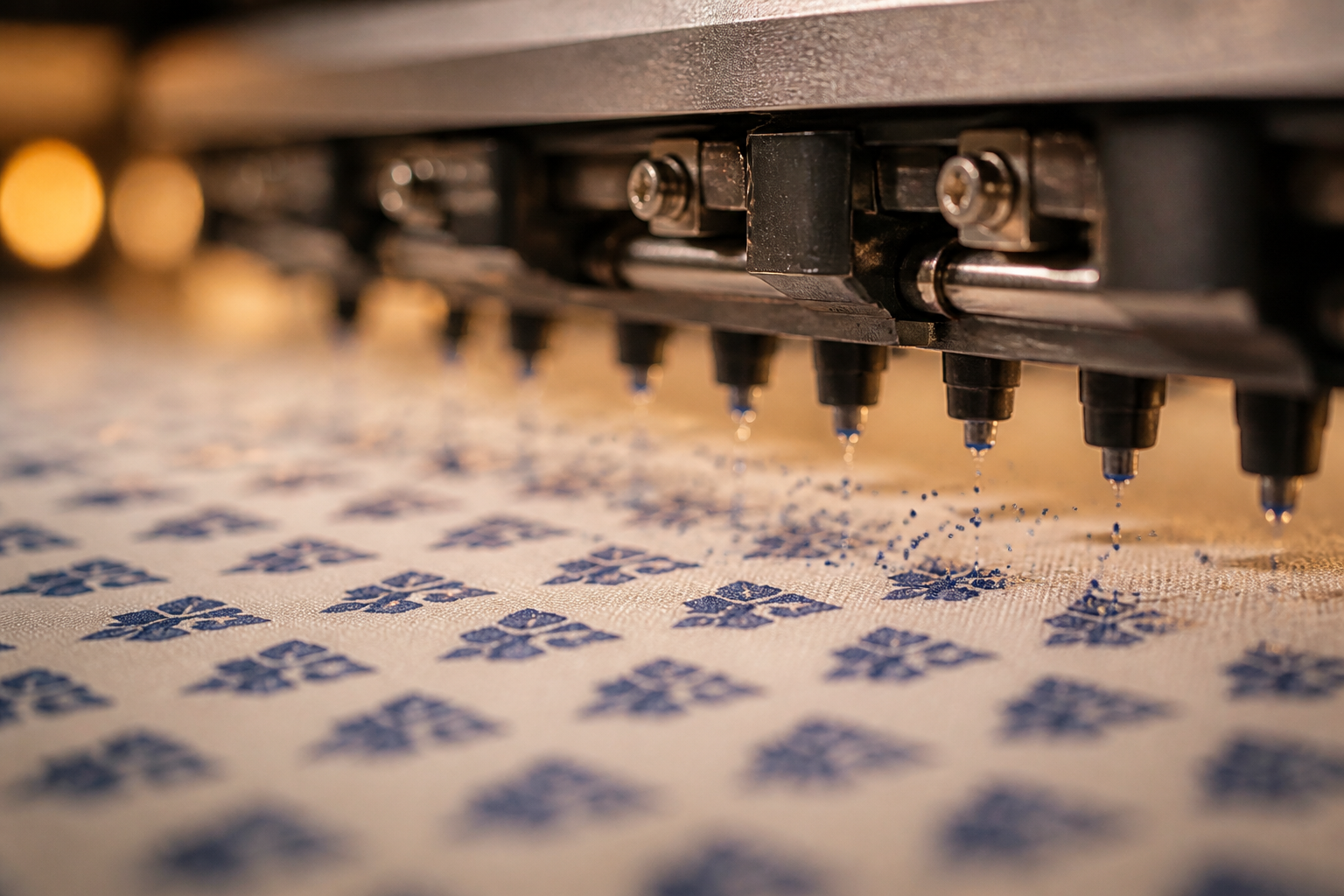
Our team operates digital reactive dye printing equipment that has been progressively modified for the specific characteristics of modal and jersey knit hijab fabrics. The base machines are industrial textile printers with 1800 DPI resolution capability, but the modifications -- tension control, substrate feed rate, and ink profiling -- are where the hijab-specific investment is concentrated.
Tension control is managed by an electronic feedback system that monitors fabric feed rate at the entry and exit of the print zone continuously. Modal and jersey fabrics have different stretch characteristics depending on roll weight and fabric temperature at the point of printing -- a cold fabric from storage behaves differently from fabric that has been conditioned at production floor temperature for several hours. Our system adjusts the feed rate in real time to compensate for these variations, maintaining consistent tension across the full print run rather than only at the point of machine setup.
Ink profiling is maintained per substrate specification, with separate profiles for our primary modal weights (140 GSM and 160 GSM), our jersey modal blend, and our jersey knit base fabric. Each profile is calibrated against a reference colour standard on new fabric batches before production runs begin, using spectrophotometric measurement rather than visual comparison. The calibration record is retained as part of the batch documentation. When a fabric supplier changes a batch parameter -- even within the same nominal specification -- the spectrophotometric check identifies the delta before bulk printing begins, rather than after.
Curing temperature for the steaming stage is set per colour density group rather than as a single batch setting. Our production team has built a reference library of curing parameters for the colour families we produce regularly, with documented adjustments for colours at the edges of dye stability ranges. This reference library is the product of production experience accumulated across modal and jersey knit printing over multiple years, and it is maintained and updated when new dye classes are introduced or when supplier formulation changes require recalibration.
Part 5: Quality Control -- Wash Fastness Testing as Production Standard Verification
Our QC process for printed hijab orders is structured around three stages -- incoming fabric inspection, inline production checks, and final goods testing. The wash fastness testing that forms part of the final goods stage is where we verify that the production parameters applied through the print, fixation, and washing stages have achieved the colour permanence standard the order requires.
Wash fastness testing follows ISO 105-C06 for colour fastness to laundering and ISO 105-X12 for colour fastness to rubbing. Tests are run on five pieces selected from the finished batch, not from a separate test swatch printed outside the production run. Testing on actual production pieces ensures that the result reflects the full production variable set -- including the specific fabric batch, the ink profile used, the steaming parameters applied, and the washing completeness achieved -- rather than a controlled test sample that may not represent production conditions.
The minimum acceptable result for export-quality orders is grade 4 on both ISO 105-C06 and ISO 105-X12. For orders destined for markets where light fastness matters -- retail display or outdoor wear -- we additionally run ISO 105-B02 on request. When test results fall below the threshold, the batch is held and the production parameters are reviewed before any pieces are released for shipment. The root cause -- whether pre-treatment inconsistency, steaming parameter deviation, or incomplete washing -- is identified, corrected, and re-tested before the order proceeds.
Test certificates are issued with the batch reference number, the fabric batch identifier, the colour name and Pantone reference, and the test result per standard. This allows the buyer to match the certificate to the specific production batch they received, and to present it to retail buyers, platform compliance teams, or customs authorities if required. For brands building long-term supplier relationships, the accumulation of batch certificates across multiple orders provides a documented quality history that supports scaling into wholesale and retail channels.
Part 6: Brand Development Advice -- Building a Colourway Library With Documented Standards
For brands developing a colourway library across multiple seasons, the most valuable thing a printed hijab supplier can provide -- beyond consistent quality on the first order -- is a documented record of the production parameters that produced that quality. When a brand reorders a successful colourway six months later, the parameters should be retrievable, not reconstructed from memory or approximated from a general profile.
Our production documentation for each colourway includes the Pantone or swatch reference, the ink profile version used, the fabric batch identifier, the steaming parameters applied, and the wash fastness test results. When you reorder, this documentation becomes the production brief for the repeat run -- the team references the previous batch parameters as the starting point, runs a pre-production colour check against the stored reference, and confirms the check before committing the full run. This process reduces the colour variation that is common in repeat orders placed without documented standards.
For brands at the stage of developing their first colourways, the practical implication is to treat the first order not just as a quality test but as a standards-setting exercise. The approved sample, the wash fastness certificate, and the production parameters together constitute the quality standard for that colourway. If the supplier cannot provide that documentation, the brand has no defined standard to hold the supplier to on reorders -- and colour consistency becomes a matter of luck rather than process.
Our team supports brands through this standards-setting process from the first order. If you are at the stage of placing a small initial run to validate quality before committing to a seasonal production plan, we structure the first order to generate the complete documentation set -- sample approval record, production parameters, and wash fastness certificates -- that gives your brand a defensible quality standard from the beginning. The same small-run order that validates quality for your first launch becomes the reference standard for every subsequent reorder, and the path from a 100-piece test run to a 500-piece seasonal order becomes a documented scaling process rather than a quality gamble.
Frequently Asked Questions
What print method does a specialist printed hijab supplier use for modal fabric?+
Digital reactive dye printing is the standard method for modal hijabs because reactive dyes bond at the molecular level with natural fibres, producing wash-fast colour that does not sit on the fabric surface. The process requires substrate profiling -- adjusting ink density curves for the specific GSM and weave of each modal fabric -- followed by steaming to fix the dye and washing to remove unfixed molecules. Factories using pigment printing on modal produce lower wash fastness results, which shows in colour fade after 5 to 10 washes.
How does tension control affect printed hijab quality?+
Modal and jersey knit fabrics stretch under mechanical tension during printing. If tension is not actively controlled, the substrate distorts as it passes through the printer, producing print registration errors -- where repeat patterns do not align correctly -- and dimensional inconsistency in the finished hijab. Specialist equipment uses electronic tension sensors and feedback loops to maintain consistent fabric feed rate regardless of roll weight variation. This is a meaningful quality differentiator between factories using hijab-specific equipment and those running hijabs on general textile printers.
What ISO wash fastness standards apply to exported printed hijabs?+
ISO 105-C06 covers colour fastness to domestic and commercial laundering -- the most relevant test for hijabs sold into European and North American markets where machine washing at 30 to 40 degrees is standard consumer behaviour. ISO 105-X12 covers colour fastness to rubbing, both dry and wet. ISO 105-B02 covers light fastness, which matters for hijabs displayed in retail environments. A grade of 4 or above on a 5-point scale on C06 and X12 is the standard expectation for export-quality printed hijabs. Factories that provide test certificates with batch numbers allow buyers to verify that results relate to actual production fabric rather than pre-production samples.
How often should a printed hijab supplier run wash fastness tests?+
At minimum, a new wash fastness test should be run for every new fabric batch and every new colour in production. Fabric batch variation -- even within the same GSM specification -- affects dye uptake, which means a colour profile calibrated on one fabric batch may produce different wash fastness results on a subsequent batch. Responsible suppliers run incoming fabric checks including a spot wash fastness test on each new roll before committing the full batch to production. For established repeat colours on confirmed fabric suppliers, monthly batch testing is a reasonable frequency for ongoing quality monitoring.
Can I receive wash fastness test certificates with my order?+
Yes. For custom printed hijab orders, our standard documentation package includes the wash fastness test results for the production batch -- covering ISO 105-C06 and ISO 105-X12 -- along with the production report referencing the fabric batch number, ink profile used, curing temperature applied, and the GSM measurement of the bulk fabric. This documentation allows you to present evidence of production standards to retail buyers or platform compliance teams if required.
What is the minimum order for a custom printed hijab with full wash fastness documentation?+
Custom printed hijab orders with full production documentation -- wash fastness certificates, GSM measurement, colour batch report -- are available from 100 pieces per colourway. This minimum applies to both modal and jersey knit substrates. Brands placing first orders at 100 to 200 pieces receive the same documentation package as larger accounts, which means the quality evidence available to present to retail buyers scales with the brand from the first order.
Need a quote for your next order?
Free samples available. MOQ from 100 pieces. Ships to 50+ countries.
Request a Quote