Quick Summary
A printed hijab supplier is responsible for more than transferring artwork onto fabric; the supplier must help keep colour, placement, surface feel, and finishing consistent. This factory story follows the production decisions behind a custom printed modal or jersey hijab, from artwork review to repeat-order records. It explains how online colour checks and a three-stage QC process support small brands that need dependable visual results. Our team focuses on stable production systems rather than one-time sample appearance.
Introduction: The Story Behind a Consistent Printed Hijab
A printed hijab often begins as a digital artwork file. The customer, however, does not receive a file; they receive a textile with a specific hand feel, colour, scale, edge, and finish. The distance between those two things is where supplier expertise matters. A printed hijab supplier must control the relationship between artwork, fabric, ink, tension, fixation, cutting, and hemming.
This factory story follows the practical route behind a B2B printed modal or jersey hijab. It is not a claim that every order uses one identical setting. Different substrates and designs need different decisions. The goal is to show how a disciplined workflow helps a brand protect the visual identity of a collection.
For Instagram brands, boutique owners, and modest fashion startups, a small collection can still require serious control. The first shipment may appear in every campaign image and creator video. Our production experience allows brands to develop a focused print, verify the physical result, and build records that support a repeat order.
Part 1: Buyer Problem -- Artwork Approval Is Not the Same as Fabric Approval
A digital artwork can look perfect on a monitor while the fabric result changes because the substrate absorbs light and colour differently. A pale background may appear warmer, a fine line may soften, or a repeated motif may look larger after the finished hijab is cut and hemmed. The buyer needs to approve the artwork and the textile result as connected but separate decisions.
Print scale is another frequent source of disappointment. A pattern that looks balanced on a square design board may feel too dense on a long rectangular hijab. The supplier should discuss the finished dimensions, border position, repeat, and likely cut lines before the sample is produced.
Colour references also need a clear hierarchy. Screen colours, Pantone references, physical swatches, and printed strike-offs communicate different things. If the buyer and supplier do not agree which reference controls the approval, an argument may appear after the order is already in production.
A final problem is treating a pilot as a reduced version of bulk production without reviewing the process. The first run should create useful evidence: which fabric was selected, how the colour was stabilized, how the print was checked, and what finishing method produced the approved result.
Part 2: Industry Trend -- Signature Prints Need Repeatable Supply Chains
More brands are using a signature print or coordinated print family to make their collections recognizable. The print becomes part of the brand language, so a colour shift or changed scale can weaken the connection between product releases. This increases the value of production records and physical references.
Small-batch launches also make experimentation easier. A brand can test one print in a limited quantity, review customer response, and decide whether to change the border, colourway, or fabric. This model depends on a supplier that is willing to discuss adjustments rather than pushing every design into a standard route.
Customers now see textile products through close-up video, natural-light photography, and repeat-order comparisons. Surface texture and colour stability are exposed quickly. A printed hijab supplier should therefore consider how the item will look under the conditions in which it will actually be shown.
A reliable print programme also supports private label growth. Once the colour, artwork, fabric, hem, label, and packaging are controlled, the brand can build a coherent launch system instead of treating every new design as an isolated project.
Part 3: Technical Knowledge -- From Artwork File to Printed Textile
The first technical step is artwork review. The team checks the file format, repeat, scale, colour direction, edge relationship, and any fine details that may need adjustment for the selected fabric. A useful review identifies what the factory can preserve directly and what needs a controlled sample before approval.
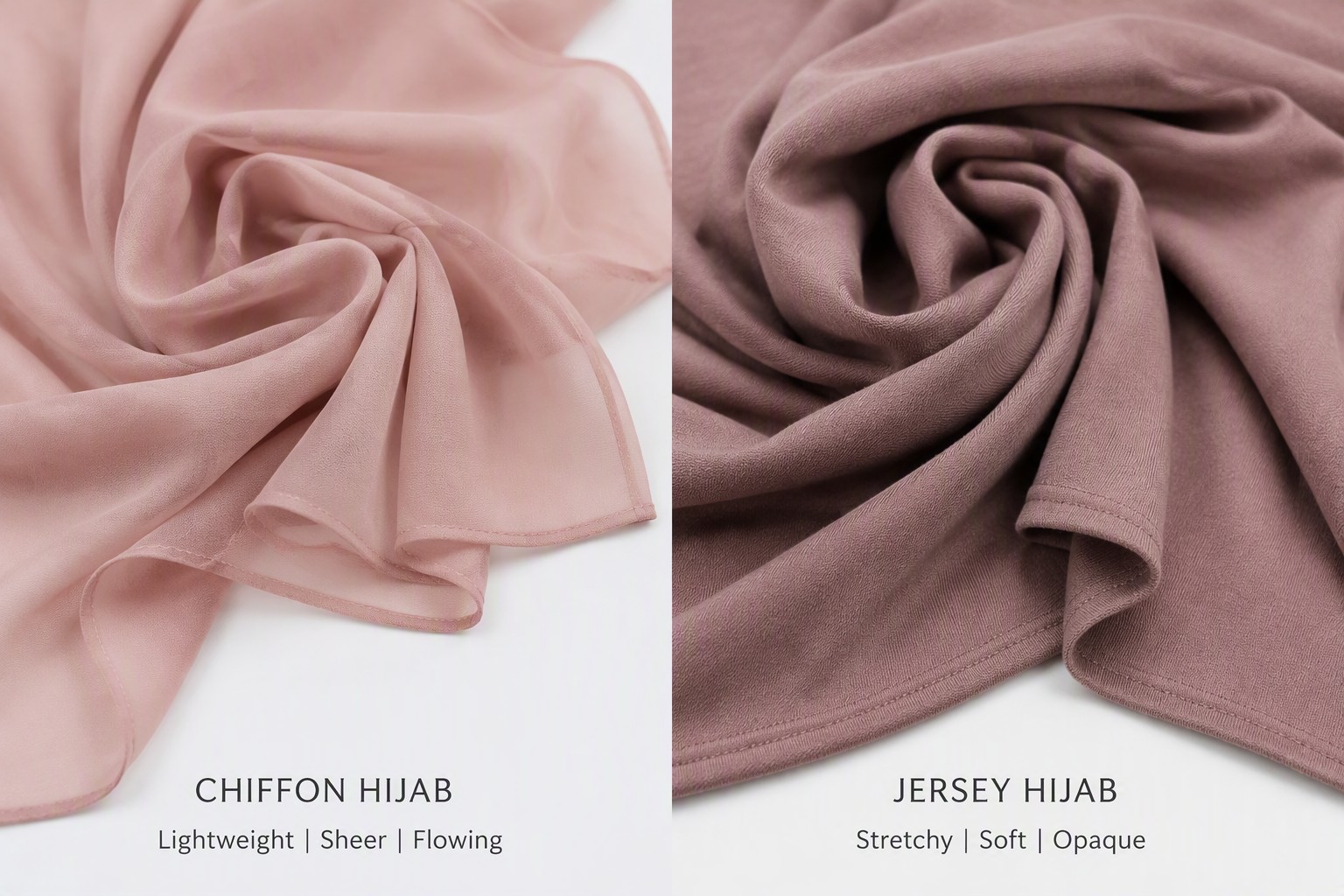
The second step is substrate selection. Modal offers a fluid, soft surface, while jersey brings stretch and recovery. The same artwork may need a different print scale or handling route on each. Selecting the fabric after the artwork is finalized can create unnecessary compromises.
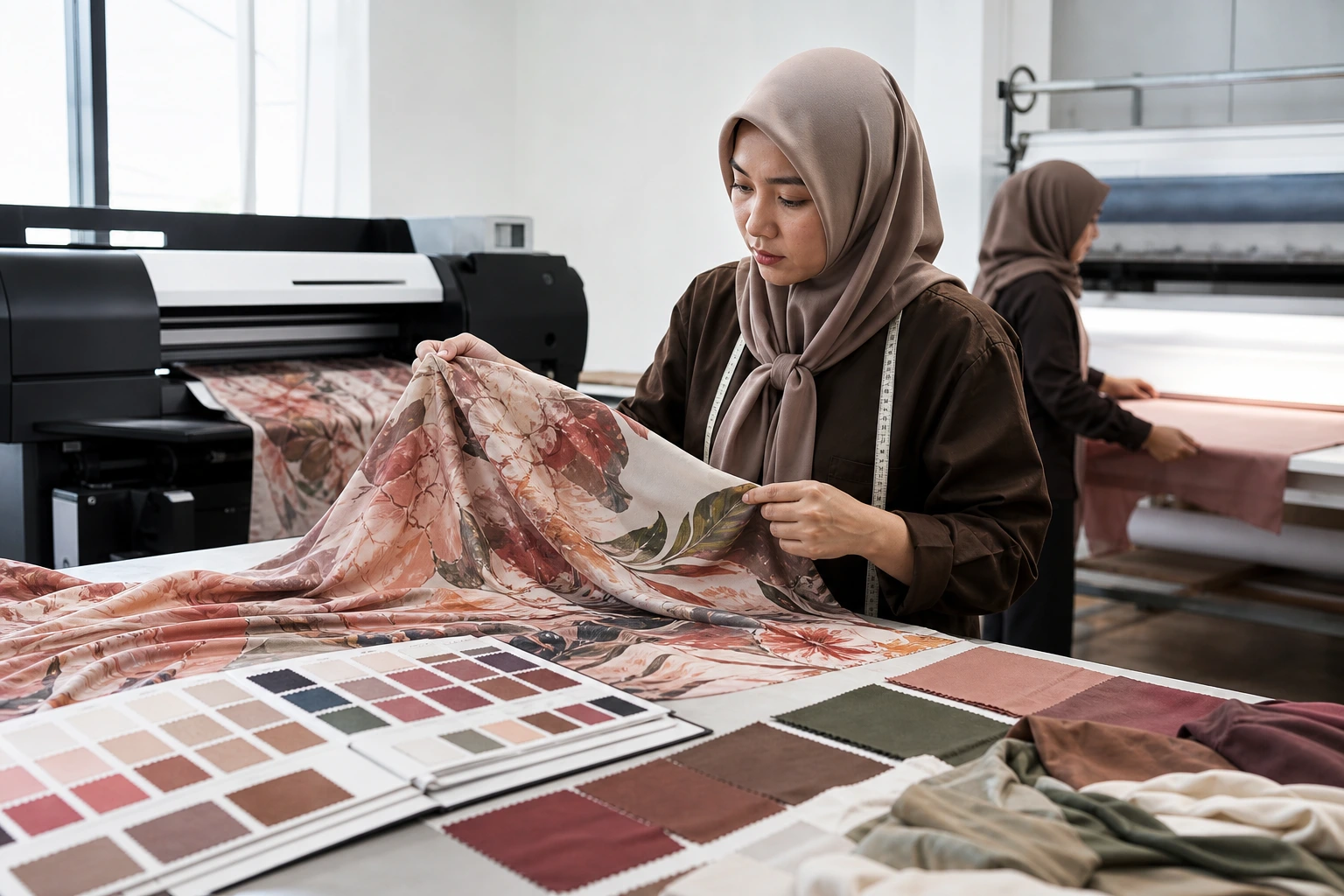
Colour management then connects the design to the textile. The production file should identify the approved physical reference, colour workflow, fabric quality, and viewing conditions. A strike-off allows the buyer to assess the result before the bulk run, especially for low-contrast neutrals, gradients, and dark shades.
Print stability also depends on tension and fixation. The fabric must move through the equipment in a controlled way, and the printed result must receive the appropriate finishing route for the selected substrate. The objective is not only a bright first impression; it is a result that remains suitable after normal handling and washing.
Finally, the printed textile becomes a finished hijab through cutting and edge work. Border alignment, dimensions, hem width, and label position should be checked against the approved sample. These details determine whether the artwork remains visually balanced on the product the customer receives.
Part 4: Our Factory Capability -- A Story of Connected Production Decisions
At our factory, a printed hijab order moves through connected decisions rather than separate departments working from different assumptions. The team begins by understanding the brand's customer, product role, artwork, fabric preference, dimensions, finishing, quantity, and launch schedule.
Artwork is then reviewed with the selected modal or jersey quality. Our optimized printing equipment, colour management workflow, and fabric-specific handling are aligned before sampling. This helps the brand see how its design behaves on the actual substrate instead of approving a result that only exists on screen.
After the physical sample is reviewed, the approved decisions are recorded. The file links the artwork version, colour reference, fabric, dimensions, hem, label, packaging, and inspection requirements. If the brand requests a change, the new version replaces the old one clearly.
The pilot then runs with the same logic as a future repeat order. The quantity may be smaller, but the production brief, online checks, finishing review, and shipment preparation remain meaningful. OEM, ODM, and private label details can be coordinated within the same product route.
Part 5: Quality Control -- Online Colour and Alignment Checks
Our three-stage QC process covers incoming material, online production, and finished goods. For printed hijabs, the online stage is the moment when colour or alignment drift can be identified before it affects the entire run.
The first production section is compared with the approved sample under controlled lighting. The team checks colour relationship, print density, repeat position, edge balance, fabric movement, and early signs of streaking or tension distortion. The buyer's approved reference remains the basis for the comparison.
Online checks are especially useful for a print with a border or directional motif. If the artwork shifts in relation to the cut line, the finished product may look different even if the centre appears correct. Reviewing the actual production section helps the team correct the process while the order is still manageable.
The accepted first section and any adjustment are recorded in the production file. This gives the operator a clear working reference and gives the buyer a traceable explanation if a question arises later. Final inspection then checks the finished pieces, dimensions, hem, loose threads, print defects, and packing condition.
Part 6: Brand Development Advice -- Make the Print a Reusable Asset
Treat the first print as a product system. Keep the approved artwork, physical strike-off, fabric quality, colour reference, dimensions, hem, label, packaging, and inspection notes together. That file becomes valuable when the brand creates a second colourway or repeats the original design.
Use content to test more than appearance. Show the print in natural light, close up the surface, demonstrate the drape, and let customers see how the border sits when styled. This produces feedback about both the creative design and the physical product.
Start with a manageable quantity and scale the designs that earn demand. A small pilot can reveal whether the colour story works, whether the fabric matches the customer, and whether the packaging supports the intended price position. The goal is not to make every design permanent; it is to learn efficiently.
If you are developing a custom print, share the artwork, fabric preference, colour direction, product dimensions, and target customer with our team. We can explain the sampling questions and support the route from print approval through production, QC, packing, and delivery.
A Practical Print Approval Sequence
For a new print, buyers can reduce uncertainty by reviewing three physical references in order: the original artwork, the printed strike-off, and the first production section. Compare the motif scale, border relationship, colour balance, surface appearance, and finished cut position at each stage. Photograph the approved textile in consistent light and keep the physical sample with the production file. This creates a useful visual record when the brand later requests a new colourway or repeat run.
Repeat-Order Questions for Printed Hijabs
Before repeating a printed hijab, compare the retained strike-off with a new fabric and colour reference. Confirm the artwork file, repeat scale, border position, substrate, print route, fixation, hem, and packing method. If the brand wants a new colourway, approve that colour separately rather than assuming the original recipe will transfer without review. This keeps creative development flexible while protecting the standard of the established product.
Conclusion: A Stable Print Is Built Across the Whole Process
A printed hijab supplier protects a design by controlling more than the printer. Artwork, fabric, colour, tension, fixation, cutting, hemming, online inspection, and records all contribute to the finished result. When those decisions are connected, a brand has a stronger chance of repeating the product that customers recognize.
Our team focuses on practical print development for B2B brands that need colour stability, small-batch support, Modal/Jersey expertise, and clear OEM or ODM communication. A disciplined first run can turn a promising artwork file into a repeatable collection asset.
Frequently Asked Questions
What does a printed hijab supplier need before sampling?+
The supplier needs the artwork, target fabric, colour references, intended print scale, finished dimensions, edge treatment, label and packaging requirements, target quantity, and approval timing.
Why can the same artwork look different on modal and jersey?+
The substrates absorb, stretch, and reflect colour differently. Fabric construction, surface preparation, tension, print route, and fixation all influence the final appearance.
Can printed hijabs be produced in small batches?+
Our pilot route can begin at 100 pieces per colourway or print design, depending on the selected fabric and finishing. The purpose is to help the brand test the product before scaling.
How is colour stability checked during production?+
The first production section is compared with the approved physical reference under controlled lighting. The team also checks print alignment, surface appearance, and early signs of process drift while the order is running.
Can a printed hijab supplier support repeat orders?+
Repeatability improves when the approved sample, fabric quality, artwork version, colour workflow, finishing, inspection notes, and packing method are retained in the production file.
Can custom printed hijabs include private label packaging?+
Yes. Woven labels, care labels, hangtags, folding requirements, and packaging can be included when they are defined and approved as part of the product brief.
Need a quote for your next order?
Free samples available. MOQ from 100 pieces. Ships to 50+ countries.
Request a Quote