Quick Summary
Working with an OEM hijab factory in China gives Western brands access to specialised modal and jersey production expertise, custom print capability, and small-MOQ flexibility that is difficult to source domestically. The key to a successful first OEM order is understanding how production teams are organised, how inline quality checks work in practice, and how to structure the approval process so that bulk output matches your sample. Brands that invest in the factory qualification step -- asking the right questions about team experience, first-piece confirmation, and escalation procedures -- build the supply relationships that support long-term collection growth. This guide covers the full evaluation and onboarding process for brands approaching a China OEM hijab factory for the first time.
Introduction: Why Western Hijab Brands Choose OEM Manufacturing in China
For independent hijab brands building their first manufactured collection, China OEM manufacturing offers a combination that is difficult to replicate through domestic production or generalist import sourcing: specialist fabric knowledge, custom print capability at small quantities, and a production infrastructure that has been developed specifically around the needs of the global modest fashion market.
The decision to work with an OEM hijab factory in China is not primarily a cost decision -- though unit economics are competitive. It is a capability decision. The factories that have been producing hijabs for international brands for several years have developed production teams, equipment, and quality processes specifically around the technical requirements of modal and jersey knit fabrics, reactive dye printing, and the dimensional standards that matter to end customers in Europe, North America, and the Gulf states.
This guide is for brand owners placing their first OEM hijab order with a China factory, or evaluating a switch from an existing supplier. It focuses on what to look for in the production team, how inline quality checks protect the order, and how to structure the approval process to give the relationship the best chance of long-term success.
Part 1: The Buyer Problem -- What Goes Wrong on First OEM Orders
The most common failure pattern on a first OEM hijab order from China is not a factory quality problem -- it is an approval process problem. The brand approves a sample, places a bulk order, and receives goods that differ from the approved sample in ways that feel subtle individually but add up to a product that photographs differently, receives different customer feedback, and creates a reorder conversation that starts with a complaint rather than a purchase order.
The differences most commonly cited by brands in this situation are colour -- either brighter, muddier, or with a different undertone than the approved sample -- and hand feel, where the bulk fabric is slightly stiffer or thinner than the sample that generated the buying decision. Both variations are preventable with a properly structured approval process, but they require the factory to have the right quality infrastructure and the brand to know what questions to ask before production begins.
A secondary failure pattern is communication breakdown at the problem-resolution stage. When a first-piece check reveals a deviation, the factory's response -- whether they pause production, acknowledge the issue transparently, and propose a specific remedy -- is the clearest indicator of how the relationship will function under pressure. Factories that minimise or dismiss small deviations at the sample stage tend to apply the same judgement during bulk production, and the problems accumulate.
Part 2: The OEM Hijab Market in 2026 -- How Manufacturing Relationships Have Changed
The OEM hijab manufacturing landscape in 2026 looks meaningfully different from five years ago. The growth of independent modest fashion brands -- many of them launched and scaled through Instagram and TikTok -- has created a buyer segment that requires small-run custom capability, fast development cycles, and the kind of direct communication that was historically available only to large-volume buyers.
Factories that have adapted to this buyer profile have invested in production team structures that support frequent style changeovers, short print runs, and detailed client communication. The factories that have not adapted continue to serve high-volume wholesale buyers effectively but are not well suited to the independent brand buyer who needs 150 pieces of one print, 150 of another, and wants to move quickly from sample to bulk.
The result is a meaningful differentiation within China OEM hijab manufacturing between volume-first factories and custom-first factories. For Western brands building original collections, identifying the right category of factory before the first sample request saves considerable time and avoids the frustration of working with a production partner whose infrastructure is not matched to the order profile.
Part 3: Technical Knowledge -- What OEM Hijab Production Actually Involves
OEM hijab production for modal and jersey fabrics involves a sequence of technical steps that each carry quality risk if not managed correctly. Understanding this sequence helps brands ask better questions during factory qualification and set up the approval process in the right places.
The sequence begins with fabric sourcing and incoming inspection -- verifying that the bulk fabric matches the specification in GSM, fibre composition, and surface finish before any further processing. For modal specifically, the fibre content should be confirmed by lot number, since modal is available in multiple grades and a change in grade affects both print receptivity and hand feel.
After incoming inspection, the fabric is prepared for printing: scouring removes surface finishes that would interfere with dye adhesion, and pretreatment applies the alkali solution that enables reactive dyes to bond with the modal or cotton fibre. Skipping or under-applying pretreatment is one of the most common causes of wash fastness failure in printed hijabs -- the dye appears vibrant at production but fades significantly after the first two or three washes.
Printing is followed by fixation washing, which removes unfixed dye and locks the bonded dye into the fibre. The temperature and duration of the fixation wash must be calibrated to the dye formulation being used. Factories that run modal and jersey printing as a core activity -- rather than as a side capability -- have developed wash programmes that are calibrated specifically to their dye suppliers and fabric grades, rather than applying a generic setting across all fabric types.
Part 4: People Behind the Production -- How Team Experience Shapes OEM Output Quality
The quality of an OEM hijab order is determined less by the factory's equipment list and more by the knowledge and judgement of the people operating that equipment. Our team includes craftspeople who have worked with modal and jersey knit fabrics specifically for several years -- not garment production generalists who are applying skills developed on woven fabrics to a fundamentally different material category.
The distinction matters because modal and jersey knit behave differently at every stage of production. The fabric feeds differently through printing equipment, requiring tension calibration that experienced operators adjust based on the specific fabric weight and knit construction of each batch. The pretreatment chemistry for jersey knit requires different concentration levels than woven modal, and the fixation wash time needs to be adjusted based on the dye load of the specific print file. These are judgement calls that experienced operators make as a matter of course; they are not decisions that can be fully scripted into a standard operating procedure.
Our team structure gives production decisions to the craftspeople closest to the material. When a fabric lot arrives and the tension characteristics differ slightly from the previous batch -- something that happens regularly because natural fibre fabrics are not perfectly uniform -- the operators responsible for that day's print run have the authority and experience to adjust settings without waiting for a management decision. This responsiveness is what prevents minor material variations from becoming visible quality variations in the finished garment.
Our production experience allows brands to benefit from accumulated knowledge about which fabric grades work best with which print styles, which dye formulations hold most consistently across reorders, and which design elements require special handling during printing. This institutional knowledge is available to clients from the first order, not something built up over years of trial and error at the brand's expense.
Part 5: Quality Control -- Inline Checks and First-Piece Confirmation
Inline quality control is where OEM hijab factories differ most visibly in their approach to managing output consistency. The standard at well-organised factories is to inspect the first finished piece from each new production run before bulk sewing continues. This first-piece confirmation compares the garment against the approved sample across a defined checklist: finished dimensions within tolerance, print placement within the agreed registration allowance, colour match against the approved reference under a standardised light source, and construction quality across seams, edges, and any label or care tag attachment.
Our first-piece confirmation uses a calibrated light box with D65 daylight-equivalent illumination, which matches the lighting conditions used in our colour management workflow and in most professional photography settings. Reviewing colour under consistent lighting eliminates the ambiguity that comes from assessing colour under production floor lighting, which can make a colour appear on-target that would read noticeably different in the customer's hands.
When a first-piece check identifies a deviation, the production line is stopped. The deviation is documented with photographs and measurements, and the resolution -- whether reprinting, reprocessing, or adjusting sewing settings -- is confirmed before the bulk run resumes. This documentation is shared with the client on request, so brands have a clear record of any adjustments made during production rather than discovering them at the finished goods inspection stage.
For clients who want to participate in the first-piece review remotely, our team can conduct a video walkthrough of the confirmed first piece at the point of approval. This gives the brand's buyer a direct view of the production output before bulk commitment, without requiring travel. The video call is scheduled at a point when correction is still practical, not after the full run is complete.
Part 6: Building a Long-Term OEM Relationship -- From First Order to Repeatable Collection
The brands that get the most value from an OEM hijab factory relationship are the ones that approach it as a long-term development partnership rather than a transactional sourcing arrangement. This means sharing more information than the minimum required to place an order -- communicating target retail price points, brand positioning, and the markets being served so the factory can make recommendations that serve the brand's interests rather than just completing the brief.
It also means being honest about order volume trajectory. A factory that understands your brand is growing from 150 pieces per colourway now toward 500 pieces within 18 months will invest differently in the relationship than one that sees only the immediate order. Factories that work with independent brands at the growth stage know that the early orders are not the commercial peak of the relationship -- they are the foundation of it.
The operational structure of a long-term OEM relationship -- shared colour archives, documented production specifications, a clear reorder protocol -- develops naturally when both parties invest in the first order correctly. Getting the approval process, the quality benchmarks, and the communication cadence right at the start builds the muscle memory that makes subsequent orders run more smoothly with less intervention on either side.
For brands at the evaluation stage, the most productive next step is to place a small test order -- 100 to 200 pieces of your core product -- with the full approval process in place: strike-off review, first-piece confirmation, and finished goods check before shipment. This test order costs a fraction of a full seasonal commitment and generates the data you need to make the full commitment with confidence. If the factory handles the small order well, the infrastructure for scaling is already in place. Our team is glad to walk through what a structured first test order looks like and how to set it up to give you the clearest possible read on factory capability.
Frequently Asked Questions
What does OEM mean in hijab manufacturing?+
OEM stands for Original Equipment Manufacturer. In the hijab context, it means the factory produces garments to the brand's own specifications -- fabric, dimensions, print, finish, and labelling -- rather than selling a standard stock product. The brand owns the design; the factory provides the production capability. This is distinct from ODM (Original Design Manufacturer), where the factory also contributes to or owns the design.
What is a realistic MOQ for a first OEM hijab order in China?+
Specialist OEM hijab factories that work with independent brands typically accept first orders from 100 to 200 pieces per colourway. Volume manufacturers may require 500 to 1,000 pieces. The MOQ is often negotiable on first orders because the factory is also evaluating the client relationship. Understanding the factory's reasoning behind their MOQ -- whether it is driven by fabric minimums, print setup, or dye batch size -- tells you a great deal about how they manage their production floor.
How do I verify the experience of a China OEM hijab factory before placing an order?+
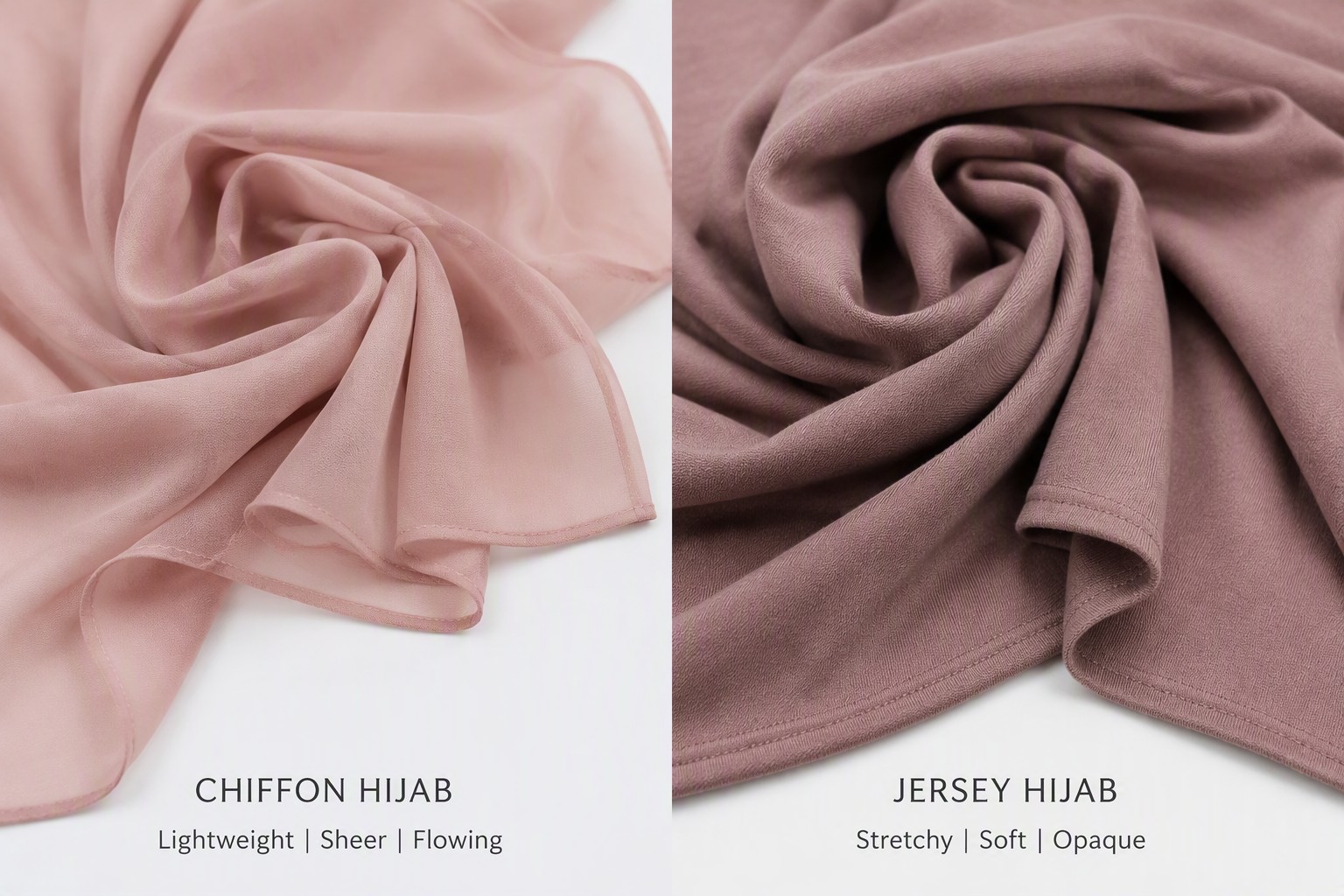
Request client references for brands in a similar category and market segment. Ask specifically about the factory's experience with the fabric type you intend to use -- modal and jersey knit require different handling than woven chiffon or satin. Ask how many craftspeople work on hijab production specifically, and whether they have dedicated teams for printed fabric versus plain fabric orders. A factory that can answer these questions with specifics rather than generalities has the operational depth to support a consistent OEM programme.
What is a first-piece confirmation and why does it matter for OEM orders?+
A first-piece confirmation is the process of inspecting the very first finished garment off the production line before bulk sewing continues. The confirmed first piece is checked against the approved sample for dimensions, print alignment, colour accuracy, and construction quality. If any element deviates from specification, production is paused and the issue is resolved before thousands of pieces are made incorrectly. Factories that skip this step to save time create problems that are expensive and time-consuming to remedy at the finished goods stage.
How do I manage colour accuracy when working with a China OEM hijab factory remotely?+
The most reliable approach is to supply a physical Pantone chip or a physical fabric swatch as the colour reference, and to request a strike-off sample -- a small test print on your production fabric -- before bulk production begins. Review the strike-off in the lighting conditions your customers will see the product in, not just under office fluorescents. For ongoing reorders, maintain a physical reference archive at the factory so the colour target does not drift between orders.
What documentation should an OEM hijab factory provide with each order?+
A well-organised OEM factory should be able to provide a production report covering fabric lot numbers, print batch references, and inspection results for each order. Wash fastness and fibre composition certificates should be available on request. For private label orders, labelling compliance documents -- care instructions, country of origin labelling -- are the factory's responsibility to produce correctly. Requesting these documents on the first order establishes the expectation for all subsequent orders.
Need a quote for your next order?
Free samples available. MOQ from 100 pieces. Ships to 50+ countries.
Request a Quote