Quick Summary
Choosing an OEM hijab factory in China is not only a price comparison; it is a decision about how reliably a brand can turn a product idea into repeatable stock. This guide explains how fashion founders can align brand positioning, fabric selection, artwork, labels, packaging, and production records before placing a pilot order. It also shows why documented traceability and a three-stage quality process matter when a collection moves from first sample to repeat production. Our team focuses on practical communication so brands can test a clear concept, learn from the market, and scale the designs that earn real demand.
Introduction: Your Factory Partner Also Shapes Your Brand Experience
A modest fashion brand can have an excellent logo, a clear social media voice, and strong product photography, yet still struggle if its manufacturing partnership is not organized. The customer sees the final scarf, but behind that product are decisions about fabric hand feel, colour consistency, edge finishing, labelling, packing, and replenishment. If those decisions are made informally, the brand may look consistent online while the physical orders vary from one shipment to the next.
Working with an OEM hijab factory in China can give a brand access to textile expertise, flexible development, and coordinated production. It can also create confusion if the buyer sends incomplete artwork, changes specifications during sampling, or evaluates suppliers only by the first unit price. A reliable partnership starts by making the brand's commercial idea understandable in factory terms.
This guide is written for boutique owners, Instagram fashion brands, TikTok sellers, and modest fashion startups that want to develop custom modal or jersey hijabs. Our production experience allows brands to use a structured first order as a learning step rather than treating every new colour or print as an untested bulk gamble.
Part 1: The Buyer Problem -- A Brand Idea Is Not Yet a Production Brief
Many sourcing conversations begin with a moodboard and a sentence such as, 'We want a premium, soft hijab in our signature colours.' That is a useful brand direction, but it does not yet define a product. A factory still needs to know the fabric family, finished size, weight target, print position, edge treatment, label location, packaging, quantity, and approval process.
When these points are left open, buyers may compare quotations that describe different products. One supplier may quote a lightweight modal with a narrow baby hem, while another assumes a heavier jersey with a different finish. The lower price is not necessarily better value; it may simply represent a different specification. A complete brief makes the comparison more meaningful and reduces changes after sampling.
A second problem is brand inconsistency across channels. The colour shown in a campaign may be warmer than the physical product, the label may sit in a different corner, or the packaging may not match the brand's intended unboxing experience. These small differences become more visible when customers share user-generated content and compare repeat purchases.
A third problem is unclear ownership of approvals. If the founder, designer, sourcing agent, and factory each hold different versions of the artwork or sample notes, production can follow an outdated instruction. The solution is not more messages; it is one controlled production file with a named approved version.
Part 2: Industry Trend -- Brands Are Building Smaller, More Focused Collections
Modest fashion brands are increasingly using focused capsules instead of broad collections with many untested styles. A small colour story can be easier to photograph, explain, and promote. It also lets the brand learn which combinations perform before it expands into new fabrics or more complex print programmes.
This approach changes what buyers need from a factory. The supplier must be comfortable discussing prototypes, small colour runs, repeat standards, and adjustments. It must also understand that a pilot order is not necessarily a one-off sample; it may be the first stage of a longer product programme.
Direct communication is becoming more important as brands seek faster feedback. A sourcing manager may need to ask why a print appears different on modal than on jersey, whether a hem can be changed, or how a repeat order will be matched to the original. An OEM partner with specialized fabric experience can answer those questions more usefully than a catalogue-only intermediary.
The commercial benefit of a focused collection is not only lower stock exposure. It also gives the brand a clearer story. When the fabric, colour palette, print language, and packaging work together, the buyer is building an identifiable product line rather than listing unrelated accessories.
Part 3: Technical Knowledge -- Translate Brand Language Into Measurable Specifications
Words such as soft, fluid, opaque, lightweight, and structured are useful internally but need measurable interpretation before production. 'Soft' may refer to fibre choice, finishing, or fabric weight. 'Opaque' may depend on colour, light direction, and the wearer's styling. 'Lightweight' should be connected to a target GSM range and intended climate.
For custom printed modal, the brief should identify the fabric quality, artwork scale, colour references, print side, finished dimensions, and edge finish. Modal's absorbency and drape influence how a reactive print develops, so the approved strike-off should be reviewed as a physical textile rather than only as a digital proof.
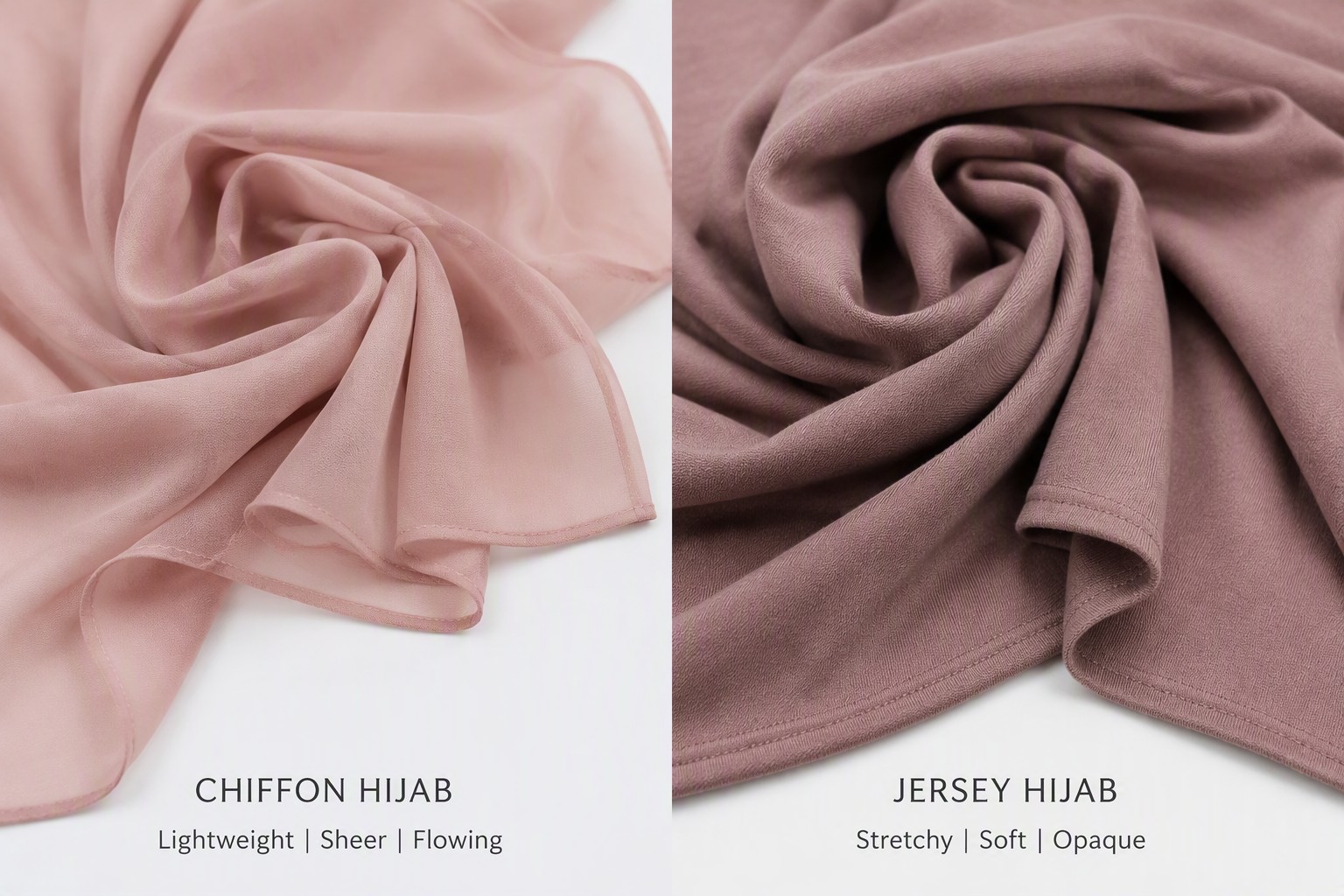
For jersey, the brief should also address stretch, recovery, fabric direction, and the way the finished hijab will be folded or worn. A knit can respond differently when it is relaxed on a table, pulled during cutting, or washed after hemming. Testing the actual selected quality is more useful than relying on a photograph of another jersey product.
Colour management is another bridge between brand and factory. A Pantone reference, a physical swatch, a screen colour, and a printed strike-off are not identical sources. The buyer and factory should agree which reference controls approval, how the sample is viewed, and what happens if the substrate changes. This reduces arguments after the order is already in production.
OEM and ODM development can include original artwork, custom labels, branded packaging, or a modified silhouette. Each additional element should be listed in the technical brief with its approval point. Separating design decisions from production tolerances helps the factory identify risks without changing the brand's creative direction.
Part 4: Factory Capability -- Brand Development as a Sourcing System
Our factory capability is organized around the decisions a brand must make before it scales, rather than around a single machine or one large production number. The development team first maps the brand concept to a fabric and finishing route, then aligns artwork, labels, packaging, and quantity with that route. This gives the buyer one connected view of the product instead of separate quotations for unrelated details.
For a new collection, the team can compare modal and jersey options against the intended use, drape, print effect, and target customer. We do not treat the two substrates as interchangeable. The selected fabric affects pre-treatment, printing, tension, fixation, washing, cutting, and hemming. Identifying that dependency early helps a brand avoid changing the product accidentally to meet a factory shortcut.
The development route also connects pilot quantities to later replenishment. A first order can establish the approved sample, colour reference, artwork version, label position, packing method, and inspection requirements. If the style performs well, those records become the starting point for a repeat order. This is a brand-building system: each successful shipment makes the next decision clearer.
Our team focuses on practical OEM and ODM communication. Buyers can share their brand positioning, target customer, product role, and launch plan, and the factory can recommend a suitable combination of fabric, print approach, finishing, and pilot quantity. The objective is not to force every brand into the same catalogue option, but to match the development route to the product idea.
Part 5: Quality Control -- Documented Traceability From Approval to Packing
A three-stage QC process is stronger when every decision leaves a usable record. Our first stage checks incoming materials and confirms that the selected fabric and accessories match the approved development direction. The second stage checks the first production section, colour handling, print stability, dimensions, and finishing while the order is running. The third stage reviews finished goods before packing and shipment.
For B2B buyers, the important question is what can be traced if a result is questioned later. The production file can connect the approved physical sample to the artwork version, fabric lot, colour reference, machine or finishing settings, inspection notes, testing result, and packing confirmation. If a deviation is identified, the corrective action is recorded rather than discussed only in an unsearchable chat thread.
This approach is particularly useful for repeat orders. A colour that was approved for one modal lot may need a controlled comparison on the next lot. A jersey hem that worked at one stretch setting may require a different check if the fabric construction changes. Traceability gives the technician and buyer a shared reference point and makes a deliberate adjustment possible.
Documentation is not a replacement for physical inspection. It is the evidence that inspection happened against an identified standard. Buyers should review the level of documentation that matches their market, customer expectations, and compliance needs, and should confirm any required third-party testing or audit before production begins.
Part 6: Brand Development Advice -- Build a Repeatable Product Before Expanding the Range
A practical brand launch can begin with one core silhouette, one main fabric, and a small number of colourways. This creates enough variation for the customer to choose while keeping the development variables understandable. Once the first products show demand, the brand can add a second fabric or more complex artwork with better evidence.
Use the technical brief as a brand asset, not only as a factory document. Keep the approved sample photographs, physical colour reference, care information, label layout, packaging instruction, and inspection notes in one version-controlled folder. When a new team member or agency joins, they can understand the product without rebuilding the history from scattered messages.
Plan content and production together. If a print needs close-up photography, a drape video, or a colour comparison, make sure the pilot sample is available before the campaign date. If the product will be sold as a core repeat style, prioritize colour stability and record retention from the first order rather than trying to reconstruct those details after a successful launch.
Finally, treat supplier communication as part of the brand experience. Clear questions, complete files, and timely approvals help the factory protect the product. In return, the buyer should expect specific answers about materials, timing, tolerances, testing, and corrective actions. A professional OEM relationship is built through this repeated exchange of usable information.
Conclusion: Choose a Factory That Can Grow With the Brand
An OEM hijab factory in China should be evaluated by more than its quotation. The right partner can help a brand translate positioning into a product brief, select a suitable modal or jersey quality, stabilize colour and finishing, document the order, and repeat a successful style with fewer surprises. That capability is especially valuable to brands that are testing a collection rather than buying anonymous stock.
If you are comparing suppliers, share your brand positioning, target customer, product role, preferred fabric, artwork direction, and expected launch stage with our team. We can use that information to match a practical OEM or ODM route, identify the right development questions, and outline a sample and pilot plan suited to your brand instead of sending a generic catalogue answer.
Frequently Asked Questions
What should a brand send to an OEM hijab factory before requesting a quotation?+
Send a concise brand brief, target customer profile, fabric preference, finished dimensions, artwork or reference images, colour references, hem preference, label and packaging requirements, target quantity, and preferred launch timing. This gives the factory enough context to identify technical questions before quoting.
Can an OEM hijab factory support a small pilot order?+
Our pilot programme can start at 100 pieces per colourway or print design, subject to the selected fabric and finishing requirements. A pilot lets a brand review the physical product and market response before moving to larger quantities.
How do modal and jersey hijabs differ in OEM development?+
Modal is a soft, fluid cellulosic fabric that needs careful absorbency, tension, fixation, and washing control. Jersey has a knitted loop structure with stretch and recovery, so feed tension, cutting, and hemming settings must be adjusted to prevent edge distortion and shape loss.
What production records should a B2B buyer request?+
Useful records include the approved sample reference, fabric lot, colour profile, artwork version, inspection checkpoints, testing results, packing confirmation, and any corrective action. The exact record set should match the product risk and the buyer's compliance requirements.
How can a brand reduce colour differences on repeat orders?+
Keep the approved physical sample and colour reference with the production file, and ask the factory to compare a repeat strike-off before bulk production. Repeating the same fabric quality, colour workflow, fixation settings, and inspection conditions also reduces avoidable variation.
Does OEM production include private label details and packaging?+
OEM and ODM projects can include custom woven labels, care labels, hangtags, folding instructions, and packaging requirements when these are defined in the technical brief. The final scope should be confirmed before sampling so each detail can be checked with the finished product.
Need a quote for your next order?
Free samples available. MOQ from 100 pieces. Ships to 50+ countries.
Request a Quote