Quick Summary
Modal and jersey are the two dominant fabrics for premium custom printed hijabs. Modal offers a silkier hand feel, superior colour depth, and stronger premium positioning. Jersey delivers better stretch recovery, higher opacity, and broader everyday wear appeal. For brands building printed collections, modal suits luxury and occasion lines while jersey suits everyday and activewear-adjacent ranges. Both fabrics require different print process settings; working with a manufacturer experienced in both avoids colour inconsistency and wash-fastness failures.
If you are building a custom printed hijab collection, fabric choice is not a detail - it is the foundation of your brand positioning, your price point, and your customer's daily experience. Modal and jersey are the two fabrics most premium hijab brands work with. They look similar in a product brief, but they behave very differently in production, on the print table, and on the head.
This guide is written for Instagram fashion brands, boutique owners, and modest fashion startups who are moving from stock designs into custom printing and need to make an informed fabric decision before they commit to a development order.
Part 1: The Buyer Problem - Why Fabric Choice Feels Complicated
Most brands sourcing printed hijabs for the first time focus on the print itself - the pattern, the colour palette, the exclusivity. The fabric beneath the print is treated as a given. This is where collections run into problems.
A print that looks sharp and colour-accurate on a sample can fade, crack, or shift tone after three washes if the fabric was not correctly matched to the print process. A fabric that feels luxurious in hand can look flat in photographs if its GSM is too low. And a price point that seemed workable at MOQ 50 pieces collapses when the minimum for a custom print on the right fabric is 200 pieces per colourway.
Understanding the technical difference between modal and jersey - before the development order, not after the sample round - saves brands one to three revision rounds and four to eight weeks of development time.
Part 2: Industry Trend - Why Printed Hijabs Are Growing in Premium Markets
The premium modest fashion segment has shifted significantly over the past three years. Buyers in the US, UK, Canada, and Australia are no longer satisfied with solid-colour basics from generic suppliers. They are looking for pieces that communicate identity, aesthetic, and brand affiliation.
Custom printed hijabs answer this demand directly. An exclusive floral print, a geometric pattern aligned with a brand's visual language, or a seasonal colourway printed on a premium fabric creates a product that cannot be replicated by a competitor sourcing from the same stock supplier.
Instagram and TikTok have accelerated this shift. Visual differentiation now drives wholesale buying decisions. Boutique owners who used to reorder the same solid jersey in twelve colours are now asking for exclusive prints in two colourways with private labels. The economics are the same - the brand value is substantially higher.
Part 3: Technical Knowledge - Modal vs Jersey, Fabric by Fabric
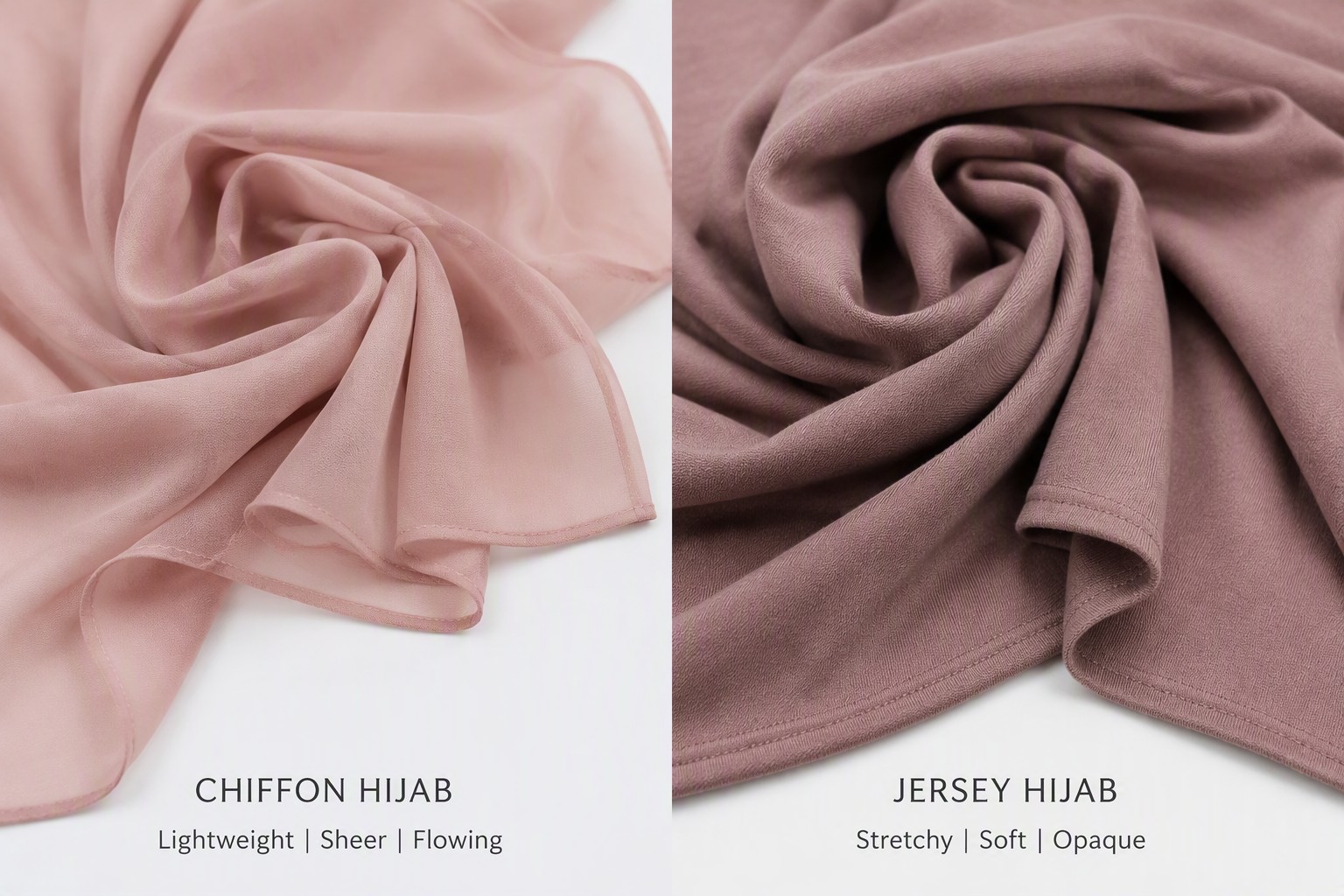
Modal is a semi-synthetic fibre made from beech wood pulp. Its molecular structure is smoother than cotton and most synthetic alternatives, which produces its characteristic silky hand feel and fluid drape. In print production, this smooth surface absorbs ink more evenly, which translates to better colour depth and sharper pattern edges.
The trade-off is opacity. Modal at 160 GSM is not fully opaque. Brands targeting markets where full coverage is essential either specify a higher GSM (165 to 180) or add a chiffon underscarf recommendation to their product packaging.
Jersey is a knit fabric rather than a woven one. Its structure gives it four-way stretch, which is why it is the dominant everyday hijab fabric globally - it grips without pins, moves with the wearer, and recovers its shape after a full day of wear. At 200 to 240 GSM, it is fully opaque without layering.
For printing, jersey requires more careful process calibration. The stretch in the fabric means the print must be applied at the correct tension and cured at the correct temperature to prevent cracking when the fabric is stretched in wear. A manufacturer without experience in stretch-fabric printing will produce results that look sharp in samples but degrade quickly in use.
Part 4: Factory Capability - What a Qualified Manufacturer Does Differently
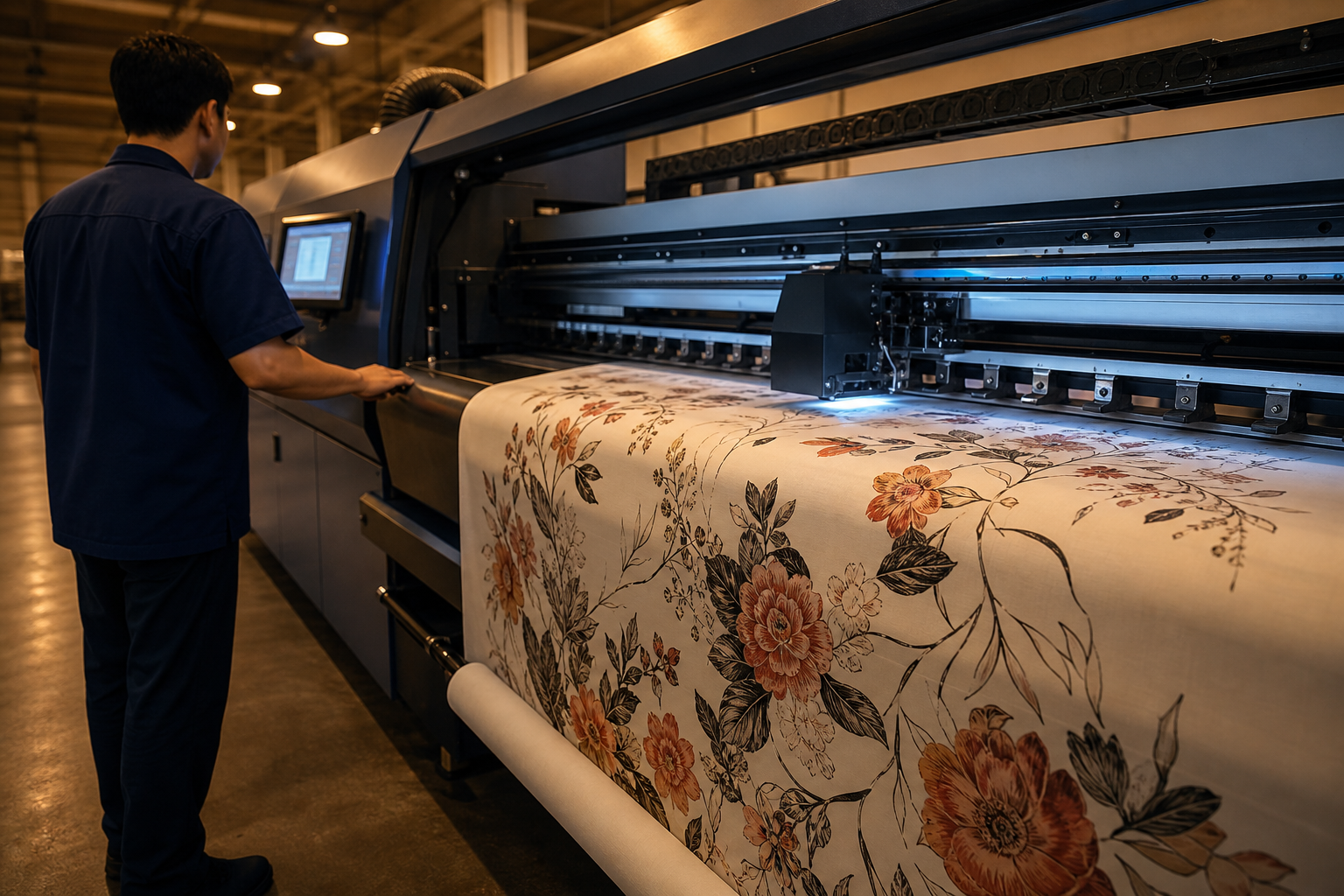
The print process for modal and jersey is not interchangeable. Our production team runs separate calibration protocols for each fabric type, adjusting ink viscosity, substrate temperature, and print pressure based on the specific GSM and fibre composition of each batch.
For modal, colour management begins at the fabric inspection stage. We test each fabric lot for dye absorption variance before it reaches the print table. Variance above a defined threshold means the lot is quarantined - it does not go into a client's print run regardless of schedule pressure. This is the step most small manufacturers skip, and it is the primary cause of dye-lot inconsistency in the final product.
For jersey, our team has developed specific tension control settings for printed areas across seam lines and folded edges - the two points where print cracking most commonly occurs. These settings were developed through production iteration, not theoretical specification, which means they reflect real behaviour of the fabric under real wear conditions.
Both fabric lines run through the same final wash fastness test protocol before any bulk order leaves the facility. We test to ISO 105-C06 (colour fastness to washing) and ISO 105-X12 (colour fastness to rubbing), and we retain test records for each production run.
Part 5: Quality Control - The Steps Between Sample and Bulk
Sample approval does not guarantee bulk consistency. This is a structural reality of textile manufacturing, not a failure of any individual supplier. The variables between a 10-piece sample run and a 200-piece bulk run - fabric lot, ink batch, ambient humidity, machine calibration drift - create real opportunities for colour and quality deviation.
Our QC protocol for custom printed orders runs three stages. First, an incoming fabric inspection that checks GSM, colour consistency, and surface defect rate against the approved standard. Second, an in-line print inspection after the first 20 pieces of each bulk run, comparing against the approved sample under standardised lighting. Third, a final AQL inspection before packaging, checking print registration, edge sharpness, colour match, and stitching quality.
Brands receive a production report with inspection data for each bulk order. This is not standard practice in the industry - but it gives our clients documentation they can use with their own retail buyers, which matters increasingly for brands supplying boutiques and multi-brand retailers who conduct their own supplier audits.
Part 6: Brand Development Advice - Choosing the Right Fabric for Your Collection
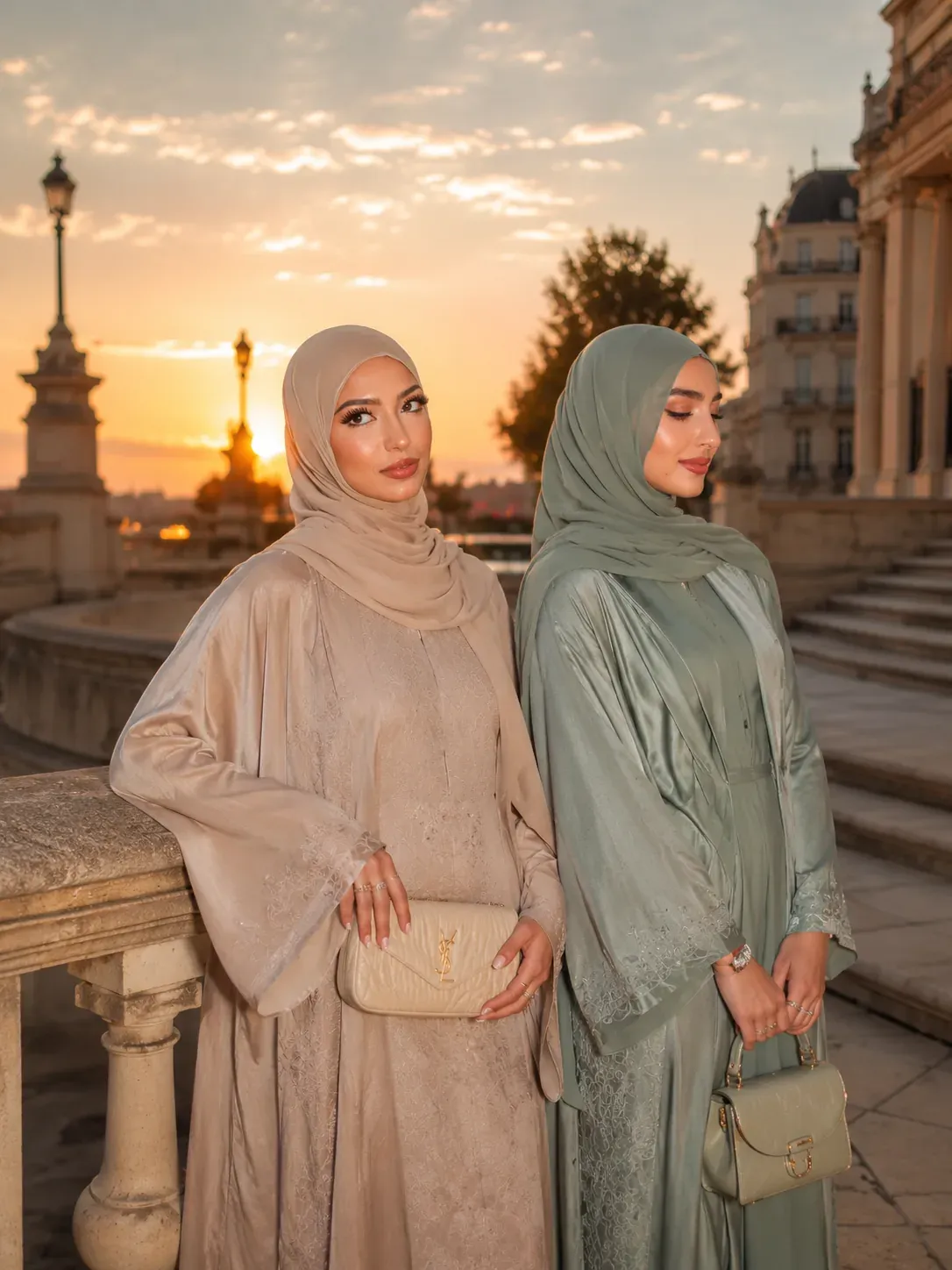
If your brand is positioning in the luxury or occasion segment - think Eid collections, editorial pieces, limited drops - modal is the stronger choice. Its visual and tactile premium signals align with higher retail price points and photograph exceptionally well for campaign content.
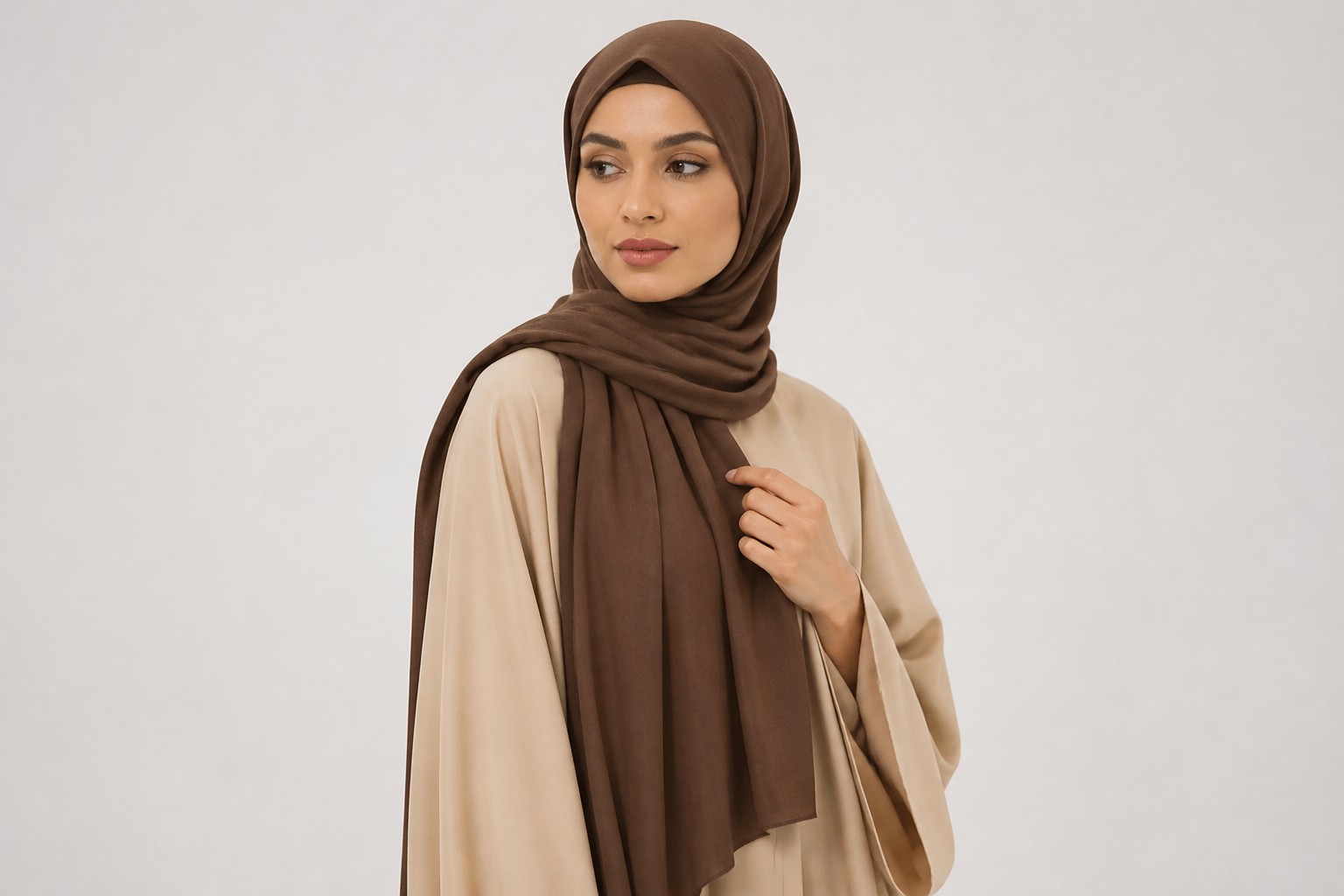
If your brand is building an everyday wear range that needs to function across climates, hair types, and activity levels, jersey is the more practical foundation. Its stretch and opacity address the most common customer objections before they arise.
Many brands we work with do both: launch with a modal printed hero piece that drives social media attention and brand positioning, then build out a jersey core collection that generates the repeat purchase volume that sustains the business.
Starting with MOQ 100 to 200 pieces per colourway across both fabrics allows a brand to test market response before scaling either direction. The development investment is the same; the information return is considerably higher.
Brands at the sample stage or ready to scale are welcome to share a brief. Our team will respond with fabric options, print process recommendations, and a production timeline.
Modal vs Jersey: At a Glance
| Factor | Modal | Jersey |
|---|---|---|
| Hand feel | Silky, fluid drape | Soft, stretchy, structured |
| GSM range | 140-80 GSM | 200-40 GSM |
| Print colour depth | Excellent - absorbs ink evenly | Good - requires process adjustment |
| Opacity | Medium - may need lining | High - fully opaque |
| Stretch recovery | Moderate | Excellent four-way stretch |
| Premium positioning | High - luxury & occasion | Medium-high - everyday premium |
| Price point | Higher unit cost | Mid-range unit cost |
| Best for | Fashion brands, occasion wear | Lifestyle brands, daily wear |
Frequently Asked Questions
Which fabric is better for custom printed hijabs - modal or jersey?+
It depends on your brand positioning. Modal absorbs pigment more evenly and produces richer colour output, making it the stronger choice for premium printed collections. Jersey requires print process adjustments but offers better opacity and stretch, which suits everyday lifestyle brands.
What GSM should I specify for a premium modal hijab?+
For premium modal hijabs, specify 160 to 180 GSM. Below 140 GSM the fabric becomes too sheer for most markets. Above 180 GSM it loses its characteristic fluid drape. Most premium brands land at 160 to 165 GSM.
Can custom prints be applied to both modal and jersey?+
Yes. Both fabrics accept digital heat transfer and reactive dye printing. Modal tends to produce more accurate colour reproduction with less process calibration. Jersey requires tighter temperature and pressure control to prevent print cracking on stretch areas.
What is the minimum order quantity for custom printed modal hijabs?+
For custom printed modal hijabs with an exclusive pattern, minimum order quantities typically start at 100 to 200 pieces per colourway. This covers the print setup cost while remaining accessible for small brand launches and test runs.
How do I prevent colour fading on printed hijabs after washing?+
Wash fastness depends on three factors: ink selection, fabric pre-treatment, and curing temperature. A manufacturer with colour management protocols tests each print batch against ISO wash fastness standards. Ask for test reports before approving bulk production.
Is modal or jersey better for Instagram and TikTok fashion brands?+
Modal photographs with a more luxurious appearance due to its sheen and fluid drape - it performs well in flat-lay and on-model content. Jersey reads as more wearable and approachable. Many fashion brands launch with modal for hero campaign images and jersey for core collection depth.
Need a quote for your next order?
Free samples available. MOQ from 100 pieces. Ships to 50+ countries.
Request a Quote