Quick Summary
Modal is one of the fastest-growing fabric choices in premium hijab sourcing, prized for its silk-like hand feel, lightweight drape, and breathability. Choosing the right modal hijab supplier requires evaluating not just fabric quality but print compatibility, colourway consistency across repeat orders, and the supplier team's depth of experience with the material. Brands that build a sourcing relationship around modal tend to develop stronger differentiation and higher perceived value in competitive markets. Production documentation and transparent QC reporting are reliable indicators of supplier reliability for long-term scaling.
Modal has moved from a niche premium option to a mainstream sourcing priority for hijab brands targeting the mid to high end of the market. Its combination of softness, drape, and breathability addresses the most common complaints about everyday hijab wear -- stiffness, heaviness, and discomfort in warm climates -- and its versatility as a print substrate has made it the fabric of choice for brands building signature colourway collections.
This guide is written for buyers at two stages: those evaluating modal as a fabric option for the first time, and those who have already committed to modal but are assessing their current supplier against alternatives. Both need the same foundation: a clear understanding of what good modal sourcing looks like, and the right questions to ask before placing a bulk order.
Part 1: Why Modal Sourcing Goes Wrong for Growing Hijab Brands
The most common sourcing failure with modal is inconsistency between sample and bulk production. Modal fabric is available in a wide range of qualities, and suppliers who use premium fabric for samples but shift to a lower-grade variant for bulk orders create a problem that only surfaces after the goods have shipped. The tell-tale signs are a noticeable difference in hand feel between the first order and subsequent reorders, slight changes in drape weight, and in some cases a reduction in colour saturation.
The second sourcing failure specific to modal is print adhesion problems caused by inadequate fabric pretreatment. Reactive dye printing on modal requires the fabric to be scoured and pretreated to remove sizing and natural oils before the dye is applied. Suppliers who skip or abbreviate this step to reduce production time produce prints that appear acceptable on arrival but begin to crack or fade after a small number of washes. This failure is difficult to detect from a visual sample inspection alone, which is why wash fastness test documentation matters.
The third failure is ordering a fabric weight that does not match the intended end use. Modal hijabs for everyday drape typically work best between 140 and 170 GSM. Lighter weights below 130 GSM may feel luxurious but can be insufficiently opaque for hijab wear without a separate underlayer, which creates a customer return problem. Heavier weights above 180 GSM lose the lightweight quality that makes modal distinctive. Confirming GSM with a test report rather than relying on a supplier's verbal specification prevents this error.
Part 2: Why Modal Is Growing in the Premium Hijab Market
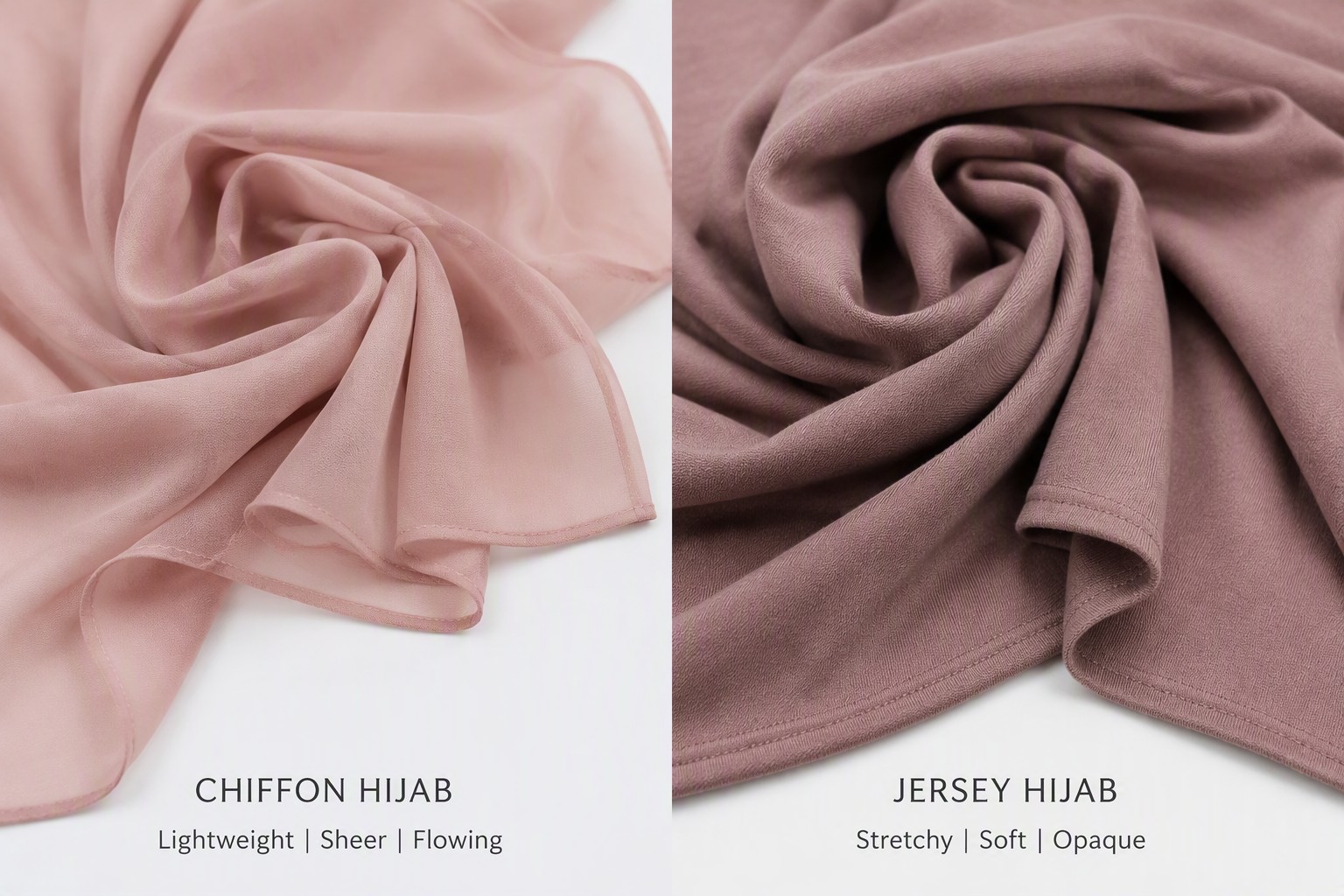
The shift toward modal in premium hijab sourcing is driven by two converging trends: consumer demand for comfort fabrics and the growth of custom print as a brand differentiation strategy. As hijab buyers have become more informed and more demanding, fabric hand feel has become a primary purchase criterion alongside aesthetics. Modal delivers a tactile quality that jersey and chiffon cannot match at the same weight and price point, which positions it naturally in the premium segment.
The custom print opportunity has further accelerated modal adoption. Brands building signature colourway collections or exclusive print designs find that modal's smooth surface provides a cleaner print substrate than textured fabrics, allowing finer detail and more accurate colour reproduction. This makes modal particularly suitable for brands whose differentiation strategy is rooted in distinctive visual identity rather than price competition.
Sustainability positioning has also contributed to modal growth in markets where eco-conscious purchasing is a factor. Beech wood pulp, the source material for standard modal, is a renewable resource, and several modal fabric certifications -- including OEKO-TEX STANDARD 100 -- are recognised by buyers who ask about material sourcing. Bamboo modal carries similar sustainability claims and resonates strongly with certain market segments in Western Europe and North America.
Part 3: Technical Knowledge -- Evaluating Modal Fabric and Print Quality
Evaluating a modal hijab supplier's fabric quality requires looking at four parameters: fibre purity, fabric weight consistency, surface finish, and dye uptake capacity. Fibre purity affects hand feel and durability -- modal blended with a high percentage of polyester to reduce cost loses the softness that defines the material. Ask for the fabric composition certificate rather than relying on verbal description.
Fabric weight consistency across a production run is tested by taking GSM samples from multiple points in the fabric roll and comparing them against the specified weight. A variance of more than 5% across a single roll indicates inconsistent raw material sourcing or production conditions. Suppliers who provide GSM test reports as standard practice rather than on request are demonstrating a more systematic approach to quality.
Surface finish affects print sharpness. Modal that has been properly calendered -- a finishing process that smooths and compacts the fabric surface -- produces cleaner print edges and more consistent colour fill than fabric with an unfinished or brushed surface. When reviewing samples, check print edges under moderate magnification; a clean, defined edge indicates adequate fabric preparation, while feathering or bleeding indicates surface irregularity.
Dye uptake capacity determines the achievable colour depth and saturation. Modal's cellulose fibre structure accepts reactive dyes well, but the pretreatment process must remove surface sizing completely for the dye to bond evenly. Uneven dye uptake appears as subtle tonal variation across the fabric surface -- visible in solid-colour pieces under good lighting and more apparent after washing.
Part 4: What Experienced Production Teams Know That Equipment Specs Cannot Tell You
Equipment specifications matter in hijab manufacturing, but the decisions that determine production quality are made by people, not machines. The experience level of the production team -- specifically the craft technicians who manage colour mixing, dye ratios, and print parameter adjustments -- determines whether a technically capable facility actually delivers consistent quality on custom orders.
Our modal production work is led by technicians who have spent years working specifically with cellulose-based fabrics. This specialisation matters because modal and bamboo modal respond differently to reactive dye chemistry than cotton does, and the adjustment of dye concentration, fixation time, and wash-off temperature requires hands-on calibration rather than fixed parameters. A technician who has spent years with cotton-only production will apply different instincts to modal troubleshooting than one who has worked extensively with the material.
The production team also carries decision-making authority over inline quality checks. When the first production run of a new colourway comes off the line, our team conducts a comparison against the approved pre-production sample before the full run continues. If the colour is off by more than the agreed Delta E tolerance, the run is paused and the dye mix is adjusted rather than allowing a full batch to be produced at an off-specification colour and then negotiated after the fact. This decision-making authority at the production level -- rather than escalating every deviation to a quality manager -- is what allows us to catch and correct issues before they scale.
For OEM and private label orders, our production staff also manages the integration of customer-specific requirements into the standard production flow: custom label placement, hang tag attachment method, specific folding and packaging instructions. These details are captured in a production specification document that travels with the order through every stage, reducing the reliance on verbal handoffs between departments.
Part 5: Quality Control Through Documentation -- Why Paper Trails Protect Your Brand
The most underappreciated quality control mechanism in hijab production is documentation. Physical inspection catches defects that are present at the moment of inspection, but documentation creates a traceable record that allows quality failures to be diagnosed, attributed, and prevented in future orders. For brands that are scaling and placing repeat orders, a supplier who maintains structured production records is a lower-risk partner than one who relies on inspection alone.
Our standard documentation package for each production order includes a fabric intake report with GSM measurement and visual defect log, a pre-production colour approval record signed off against the customer's reference, an inline production check record covering the first-off confirmation and any mid-run adjustments, and a final outgoing inspection record with AQL sampling results. These documents are retained and made available to customers on request.
For brands that sell to wholesale buyers or retail platforms with supplier audit requirements, this documentation provides the evidence base for quality claims. A buyer who asks "what is your defect rate on modal production?" can be answered with data rather than assurance. A buyer who asks "what happened with the colourway variation on our last order?" can be answered with a specific inline adjustment record rather than a general apology.
Documentation also protects the supplier-brand relationship when disputes arise. A clear production record that shows the approved pre-production sample, the inline checks, and the outgoing inspection provides an objective basis for resolving disagreements about whether a quality issue originated in production or in transit, which prevents the kind of ambiguous disputes that damage long-term sourcing relationships.
Part 6: Building a Sourcing Strategy Around Modal -- Advice for Growing Brands
If you are adding modal to your product range for the first time, treat the first order as an investment in supplier qualification rather than a revenue-generating production run. Order a small quantity -- 50 to 100 pieces -- in one or two colourways, evaluate the sample against the criteria outlined in this guide, wash test the pieces personally before photographing them for social media, and assess the supplier's communication quality and responsiveness throughout the process.
The communication quality of a supplier during the sample and development stage is a reliable predictor of their behaviour when problems arise during bulk production. A supplier who provides proactive updates, responds to technical questions with specific answers rather than reassurances, and acknowledges when a sample revision is needed rather than defending a substandard result is a supplier who will handle production issues responsibly at scale.
For brands that already have a modal product in their range, the sourcing review question is: am I getting consistent quality across reorders? Colourway drift between orders, subtle changes in hand feel, and increasing defect rates on incoming shipments are all indicators that your current supplier's quality management is not keeping pace with your order volume. If any of these patterns are present, requesting a fresh pre-production sample on the next reorder -- rather than approving production based on the previous order's approval -- is the most practical corrective step.
If you would like to share your brand positioning and current fabric direction, our team can recommend specific modal fabric grades and print process options that align with your quality requirements and market segment. We work with brands at different stages of development and can match the sourcing approach to where you are now and where you are planning to grow.
Frequently Asked Questions
What makes modal fabric suitable for hijabs?+
Modal is a semi-synthetic fibre derived from beech wood pulp. It has a naturally soft hand feel comparable to silk, excellent drape and flow, and high moisture absorption that makes it comfortable for extended wear. For hijab applications, modal's lightweight structure -- typically 130 to 180 GSM -- allows it to drape elegantly without adding bulk, and it holds both solid dye and digital print well when properly pretreated.
How is modal different from bamboo modal or standard viscose?+
Standard modal and bamboo modal share similar fibre characteristics but differ in raw material source and sustainability positioning. Bamboo modal is derived from bamboo pulp and is often marketed as more eco-conscious, though the production processes are comparable. Standard viscose is a lower-cost alternative with a similar drape but inferior wash durability and a tendency to lose shape over time. For premium hijab brands, modal or bamboo modal is preferable to viscose for long-term product reputation.
What print method works best on modal hijabs?+
Digital sublimation printing and reactive dye printing both work on modal, but with different results. Reactive dye printing bonds directly with the cellulose fibre and produces colours that are deeply saturated and wash-resistant, making it the preferred method for modal hijabs intended for everyday use. Digital sublimation is faster and supports more complex print designs but requires a polyester content in the fabric to bond effectively, which changes the hand feel. Most premium modal hijab suppliers use reactive printing for quality-driven orders.
What MOQ should I expect for custom modal hijabs?+
Custom modal hijabs with bespoke colourways or print designs typically require a minimum of 100 to 200 pieces per colourway from quality suppliers. Sample development orders of 30 to 50 pieces are usually available at a higher unit cost. Suppliers who cannot accommodate sample orders before bulk commitment represent a higher risk for brands that have not yet validated a colourway with their customer base.
How do I verify a modal hijab supplier's quality before placing a bulk order?+
Request a pre-production sample in your specified colourway and assess it against four criteria: hand feel consistency with the fabric specification, colour accuracy against your Pantone reference, print sharpness and edge definition, and wash fastness after two machine wash cycles. Ask the supplier to provide a fabric test report showing GSM, tensile strength, and wash fastness ratings. Suppliers who can provide this documentation without being asked are generally more reliable than those who cannot.
Can modal hijabs be produced with private label packaging?+
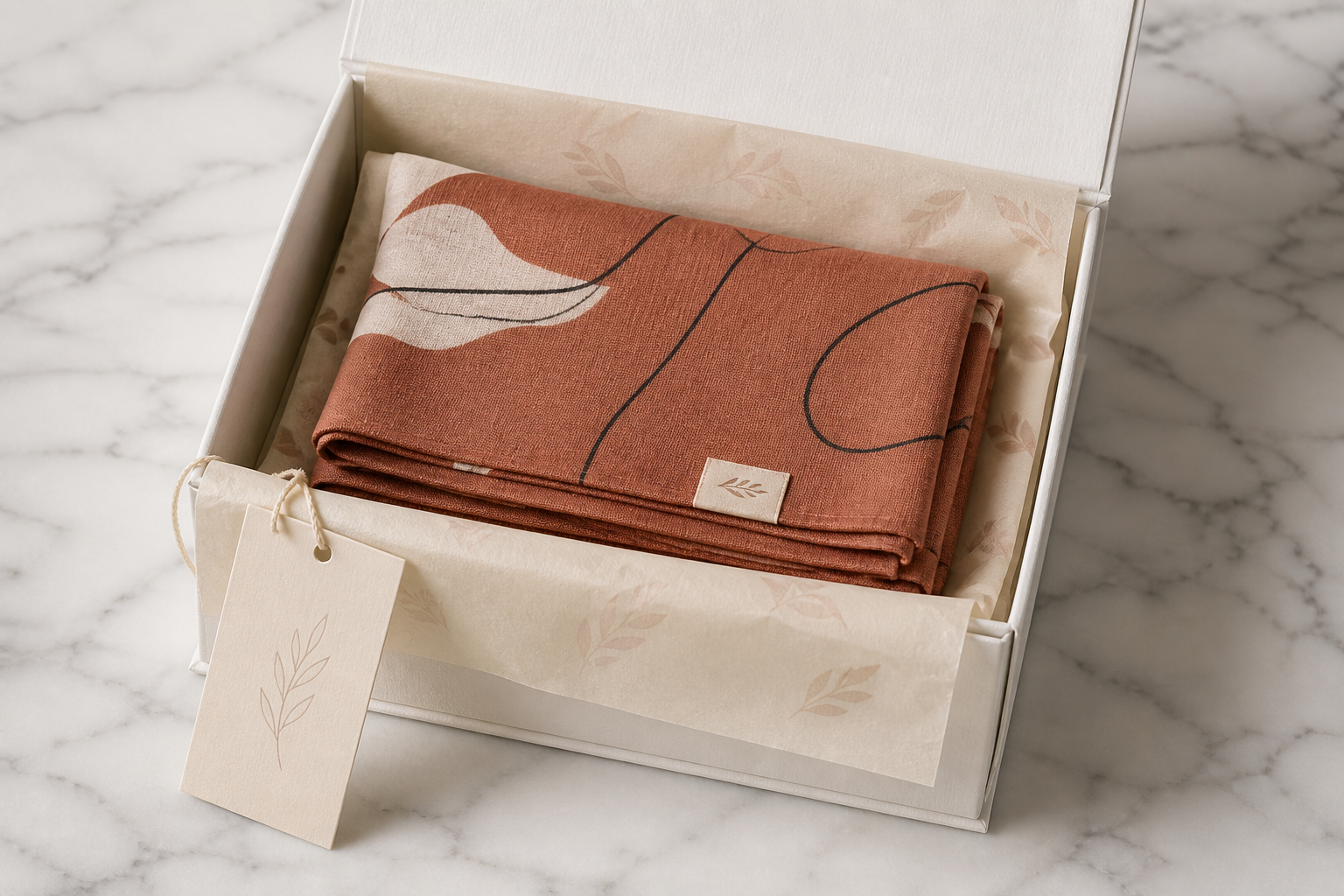
Yes, most modal hijab suppliers that offer OEM or ODM services can accommodate private label packaging including custom hang tags, woven labels, polybag printing, and branded tissue paper. Packaging development typically adds 5 to 10 days to the production timeline and may carry a setup fee for the first order. Confirm packaging specifications and approval process with your supplier before production begins to avoid delays.
Need a quote for your next order?
Free samples available. MOQ from 100 pieces. Ships to 50+ countries.
Request a Quote