Quick Summary
A modal hijab supplier should help a brand understand how fabric construction affects softness, drape, colour, print appearance, and edge finishing. This guide explains what buyers should inspect in a modal sample and how to turn subjective words such as fluid or premium into practical production requirements. It also covers sampling, colour management, three-stage QC, and the way a small pilot can support a safer product launch. Our team focuses on making modal development clear for B2B buyers.
Introduction: Why Modal Requires More Than a Softness Claim
Modal is often selected because it feels soft and falls smoothly around the face and shoulders. For a B2B brand, however, those qualities are only the beginning of the product decision. The finished hijab also needs consistent dimensions, suitable opacity, stable colour, clean printing, and an edge finish that remains presentable after handling and washing.
A modal hijab supplier should help buyers connect the fabric's feel with the manufacturing route. Absorbency, fabric weight, surface preparation, printing, fixation, cutting, and hemming all influence the final result. When one part changes without the others being reviewed, the product may no longer match the sample shown in the brand's content.
This product guide is for modest fashion brands, boutique owners, social commerce sellers, and sourcing teams developing custom modal or private label hijabs. Our production experience allows brands to test a focused product, learn how customers respond, and make a more informed decision before expanding the assortment.
Part 1: Buyer Problem -- The Sample Looks Right Until It Is Worn
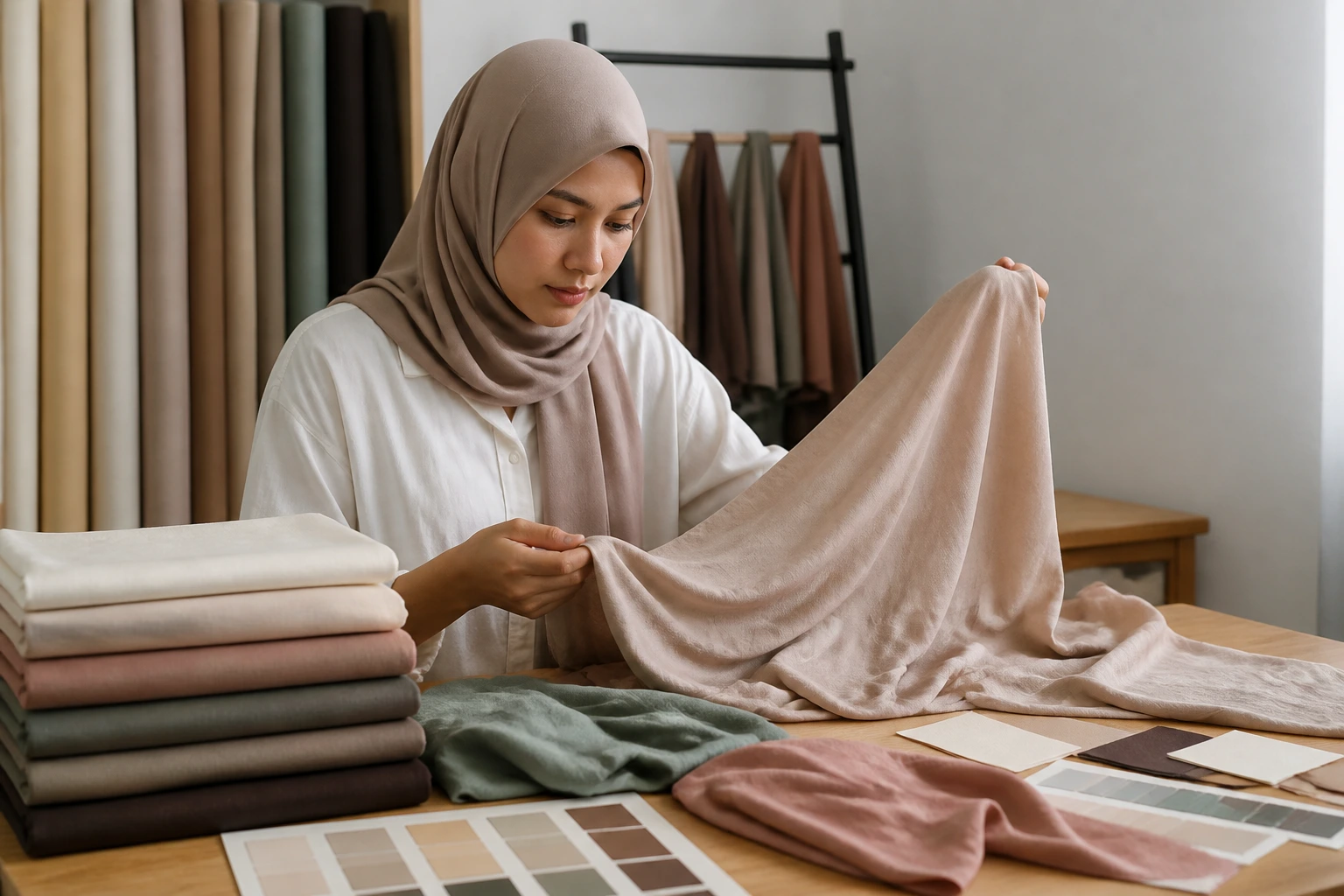
A fabric sample on a table can look attractive while behaving differently on a person. Some qualities appear fluid when relaxed but feel too slippery during styling. Others look opaque under studio lighting but become more transparent in daylight. A buyer should therefore examine a modal hijab by folding, wrapping, draping, and photographing it in more than one environment.
Another common problem is comparing samples that are not actually equivalent. A supplier may send different fabric weights, finishes, or constructions while describing each as modal. The buyer then evaluates price and appearance without knowing whether the hand feel is coming from the fibre, the weight, the finishing treatment, or the way the fabric was presented.
The production brief should state what the product must achieve. Instead of only saying soft and lightweight, define the intended use, desired coverage, finished dimensions, edge treatment, colour direction, and target customer. These points help the factory recommend a realistic fabric quality rather than guessing from a moodboard.
A small launch also needs the same care as a large order. The first shipment supplies photography, creator samples, and early customer impressions. If the first modal quality is inconsistent, the brand may spend its marketing budget promoting a product that cannot be repeated.
Part 2: Industry Trend -- Fluid Essentials and Focused Colour Stories
Many modest fashion brands are building collections around versatile essentials rather than a large number of unrelated products. A soft modal hijab can serve as a daily base, a coordinated colour accent, or a canvas for a signature print. This makes fabric consistency especially important because the same style may appear repeatedly across campaigns and seasons.
Focused colour stories also reduce the risk of overstocking. A brand can begin with a small selection of neutrals and one or two distinctive shades, then add colours according to sell-through and customer feedback. A supplier that retains the colour reference and production records can make that expansion more orderly.
Customers increasingly evaluate products through close-up videos and styling demonstrations. Camera footage reveals surface texture, edge movement, opacity, and colour under different light. Buyers should choose a modal supplier whose physical samples can withstand this level of visual inspection rather than relying only on polished catalogue images.
The trend also favours flexible development. A brand may request a plain colour first, then introduce a print or private label detail after the core quality is accepted. A factory with modal printing and finishing experience can preserve the base feel while adapting the design route.
Part 3: Technical Knowledge -- What to Check in Modal Fabric
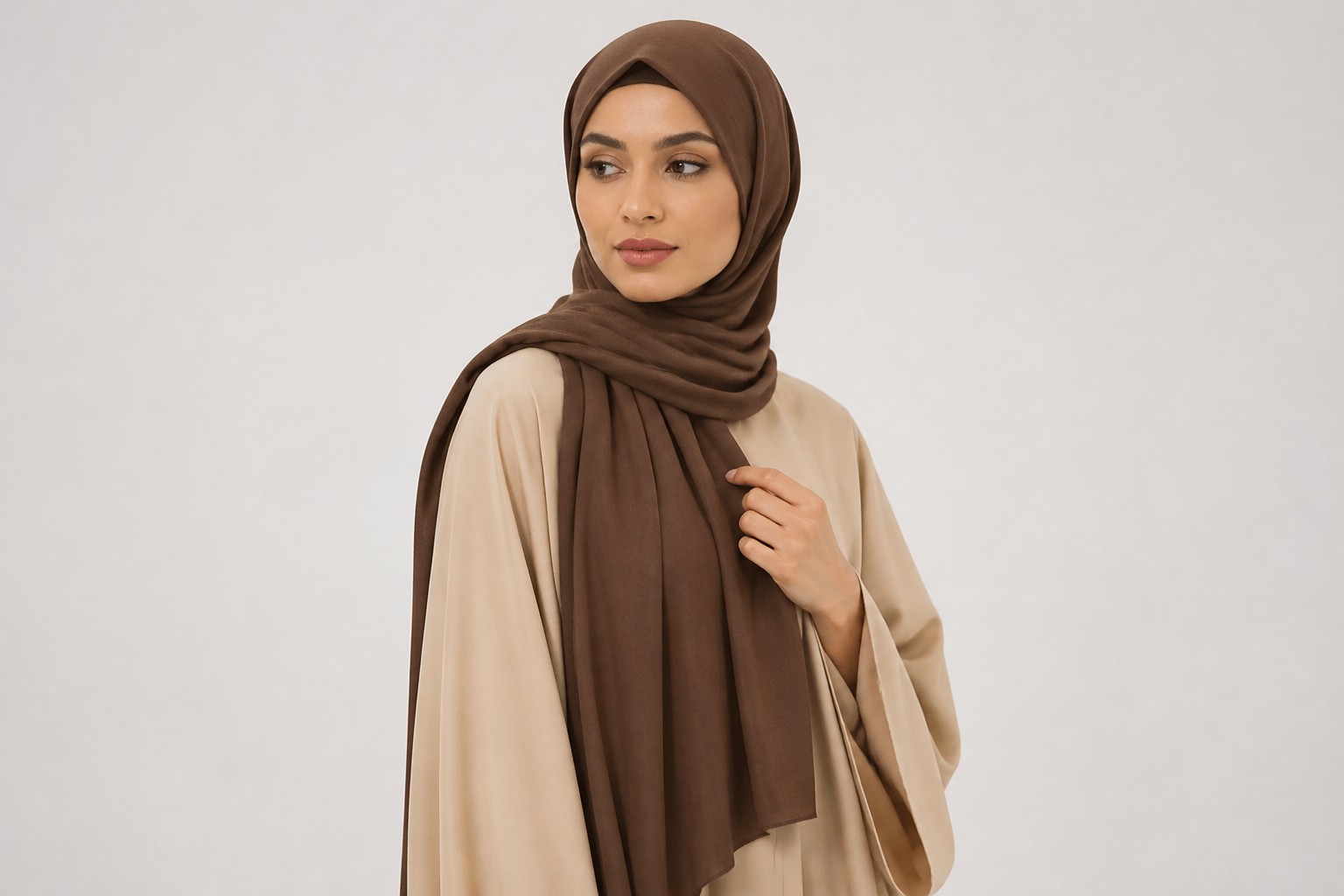
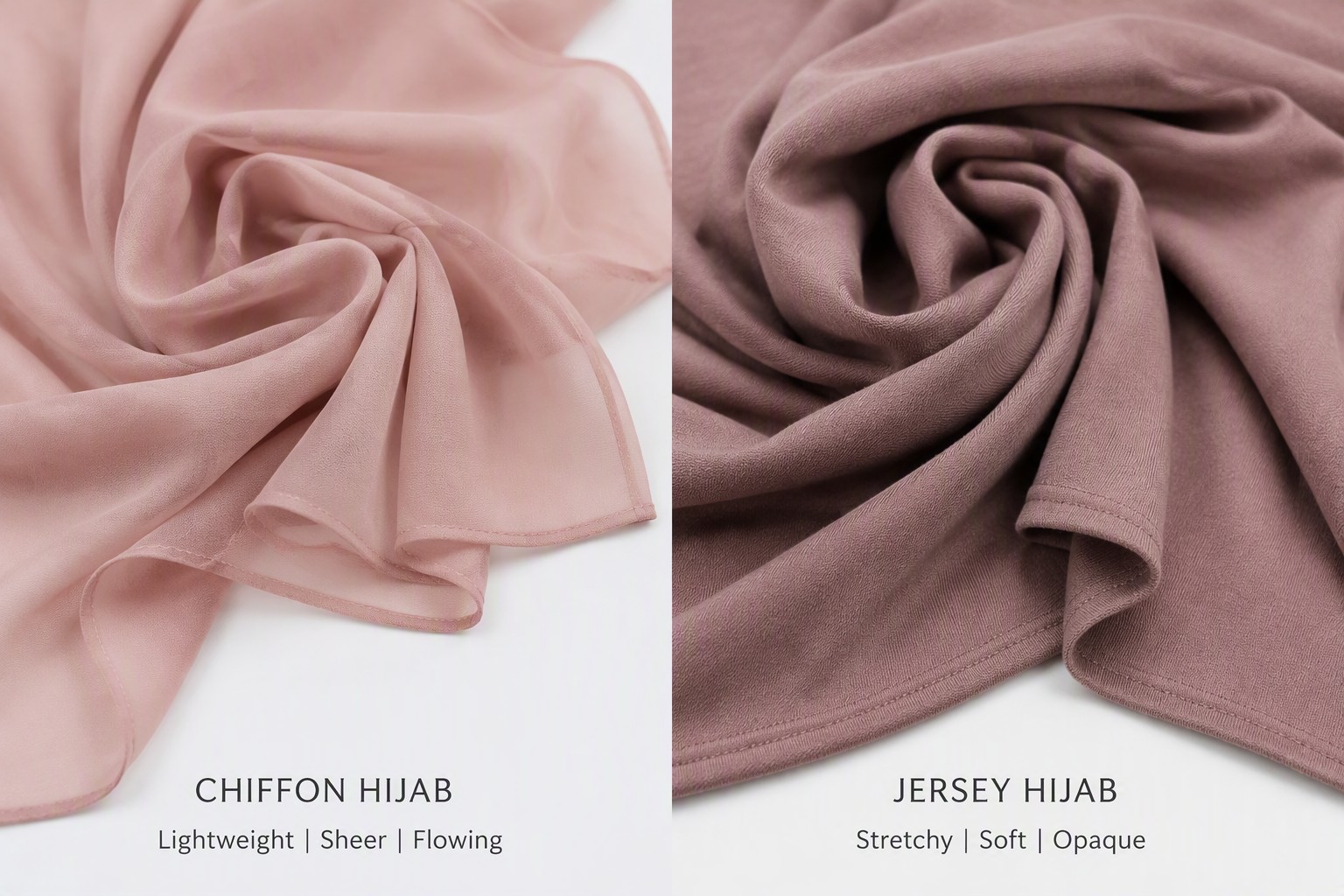
Begin with the surface. Run the fabric between your fingers and note whether the touch is smooth, dry, warm, or slippery. Then observe the drape when the hijab is folded, held by one corner, and wrapped. A good product brief should describe the desired behaviour in a way the factory can compare with the approved sample.
Check the fabric's visual coverage under daylight and indoor light. Dark shades and dense prints may appear more opaque than pale or open designs. If coverage matters to the brand, compare the actual chosen colour and print rather than applying a general statement to every colourway.
For printed modal, inspect line sharpness, colour depth, repeat alignment, reverse-side appearance, and the relationship between the print and the fabric surface. A delicate design may need different treatment from a saturated geometric pattern. The strike-off should be evaluated as a textile, not only as a digital image.
Finished dimensions and edge construction also affect styling. A narrow or uneven hem can change how the product frames the face. The buyer should measure length, width, corner shape, hem width, and label position, then keep the approved sample as a physical reference for repeat production.
Colour management should define the controlling reference. Screen colours are useful for communication but can vary by device. A physical swatch, approved strike-off, and recorded colour workflow create a stronger basis for production decisions. This is particularly important for warm neutrals, muted greens, and low-contrast gradients.
Part 4: Our Factory Capability -- Modal Development From Fabric to Finished Hijab
Our modal workflow begins with requirement clarification. The team reviews the brand's intended customer, wearing occasion, preferred drape, colour direction, artwork, finished size, edge treatment, label needs, packaging, quantity, and launch timing. These details establish the purpose of the sample before fabric and printing decisions are made.
The next stage is material selection and preparation. Modal qualities can respond differently to pre-treatment, ink absorption, tension, drying, and fixation. Our optimized printing equipment and fabric-specific settings are used to protect colour stability and print consistency while maintaining the intended hand feel.
Sampling then connects the technical route to the buyer's real experience. The brand can review touch, drape, colour, print scale, dimensions, hem, label, and packaging. If a change is needed, it is recorded in the product file so the next sample reflects a clear decision rather than a vague verbal request.
For OEM, ODM, and private label projects, the factory can coordinate custom artwork, woven labels, care labels, folding instructions, and packaging. The objective is to make the finished item coherent as a product line, not to add unnecessary details that do not serve the brand.
Part 5: Quality Control -- Wash and Rubbing Stability Before Shipment
Our three-stage QC process starts with material verification, continues with online checks, and ends with finished-goods inspection. For modal products, wash and rubbing stability are important because the surface, colour, and print must remain suitable after normal handling. The exact test plan should reflect the selected quality, colour, print type, and target market.
Before shipment, samples from the finished production are checked through controlled washing and rubbing procedures. The team observes colour change, staining, surface appearance, shrinkage, and edge condition. A result that looks acceptable before washing but changes noticeably afterwards should be investigated before the shipment is approved.
The test result is linked to the production record, including the approved fabric, colour reference, artwork version, and finishing route. This helps the buyer understand what was checked and gives the factory a reference for repeat orders. Documentation is especially useful when a brand adds a new colour or changes the print coverage.
Wash testing does not replace visual inspection. The final review also checks dimensions, edge straightness, hem consistency, loose threads, print defects, and packing condition. Together, the checks help ensure that the product reaches the customer with both the expected feel and the expected appearance.
Part 6: Brand Development Advice -- Make One Modal Quality Repeatable
A brand can reduce risk by making one modal quality its reference product before adding many variations. Decide the core drape, coverage, edge finish, and customer use first. Then develop colours and prints within that quality so the collection feels connected and future replenishment has a stable starting point.
Use the first pilot to gather practical evidence. Photograph the fabric in daylight, create styling videos, ask customers about feel and coverage, and note how the package arrives. This feedback helps the brand distinguish a genuine product improvement from a change that only looks attractive in a studio image.
Keep the physical approved sample with the digital product file. Include measurements, fabric description, colour reference, artwork, label placement, packaging, inspection notes, and care information. A clear file protects the brand when the team grows or when a repeat order is placed months later.
If you are developing a modal core collection, share your customer profile, usage scenario, colour direction, artwork, target quantity, and launch stage with our team. We can match the brief to a practical sample and pilot route, then support the project through production, QC, packing, and delivery.
A Practical Modal Sample Review for Buyers
Before approving a modal sample, create a simple review sequence. First inspect the relaxed fabric in daylight, then fold and wrap it to assess movement, coverage, and styling control. Next compare the colour and print under a second light source, measure the finished piece, and examine the hem and label. Finally, wash or handle the sample according to the agreed test plan and record what changed. This sequence gives the brand a repeatable way to compare future colourways without relying on memory or a single photograph.
Conclusion: Evaluate the Fabric and the Supplier Together
A modal hijab is a complete product, not only a soft piece of fabric. Its value depends on drape, coverage, colour, print response, dimensions, finishing, and repeatability. A suitable supplier should explain how those factors connect and should provide a process that lets the brand verify them before scaling.
Our team focuses on practical modal development for B2B brands that need clear communication, flexible pilot quantities, controlled colour management, and a reliable route from sample to repeat order. A well-defined first product can become the foundation for a stronger and more recognizable collection.
Frequently Asked Questions
What makes modal suitable for custom hijab development?+
Modal is valued for its soft hand feel, fluid drape, and comfortable surface. Its absorbency and print response also make it useful for custom colours and artwork when the fabric, pre-treatment, printing, and fixation route are controlled together.
What should buyers inspect on a modal hijab sample?+
Inspect softness, drape, opacity, surface smoothness, finished dimensions, print clarity, colour depth, edge straightness, hem consistency, and the way the fabric behaves after handling or washing.
Can a modal hijab supplier support a small MOQ?+
Our pilot route can begin at 100 pieces per colourway or print design, subject to the selected quality and finishing requirements. This gives a brand a physical product for testing before a larger commitment.
How can brands reduce colour differences in modal?+
Use an agreed physical colour reference, review a printed strike-off, keep the approved sample, and record the fabric quality and colour workflow. Repeat orders should be compared with the approved reference under controlled lighting.
Can modal hijabs include private label details?+
Yes. The brief can include woven labels, care labels, hangtags, packaging, and folding instructions. Each detail should be approved with the sample before bulk production.
What is the benefit of testing before scaling?+
A pilot lets the brand evaluate hand feel, drape, styling, photography, customer response, and packaging in real conditions. The result can then guide repeat colours or a broader collection.
Need a quote for your next order?
Free samples available. MOQ from 100 pieces. Ships to 50+ countries.
Request a Quote