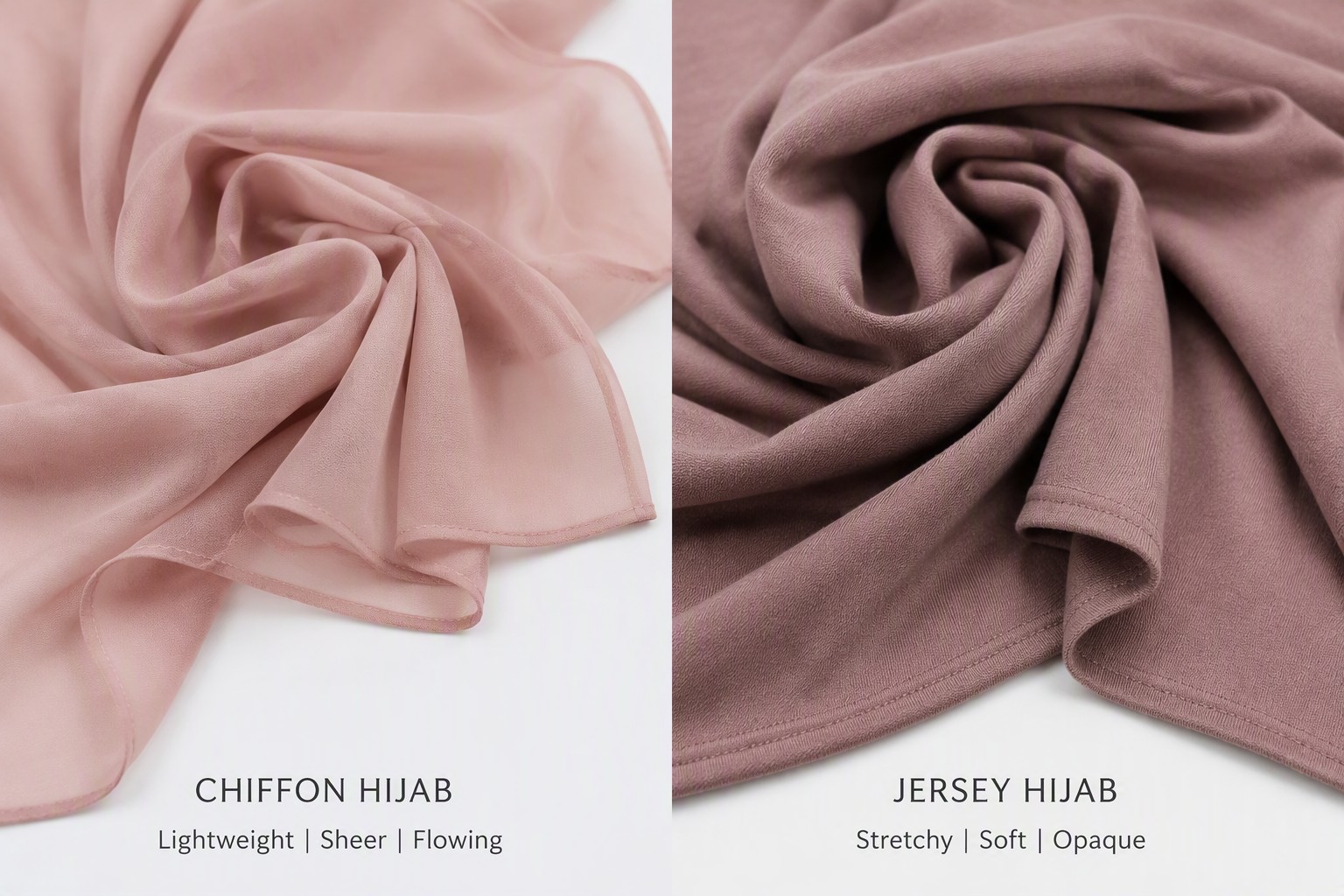
Quick Summary
Manufacturing premium custom printed modal headscarves requires specialized engineering to preserve the natural softness of cellulosic beechwood fibers while executing vibrant color saturation. As a dedicated modal hijab supplier, our factory operates custom-calibrated digital reactive printing lines equipped with magnetic blanket tension compensation and precise 102°C saturated steam fixation chambers. We eliminate common industry flaws like surface stiffness, print bleed, and diagonal warp distortion. Every production batch undergoes standardized ISO 105 wash fastness testing to ensure Grade 4 commercial durability. We partner with boutique founders and social-first modest wear brands to translate their unique aesthetic visions into retail-ready collections.
Inside the Mill: Why Crafting the Perfect Modal Hijab Demands Specialized Engineering
Step onto the production floor of a conventional textile printing mill, and you will hear the rhythmic clatter of high-speed rotary screen presses churning out hundreds of meters of synthetic polyester chiffon per minute. These commodity lines are built for raw volume, brute mechanical force, and chemical speed. But walk through the glass acoustic doors into our dedicated modal hijab printing workshop, and the entire atmosphere changes. Here, the hum of precision digital print carriages moves with calculated grace, temperature and relative humidity are electronically stabilized around the clock, and the scent of warm steam carries the earthy sweetness of pure cellulosic fibers.
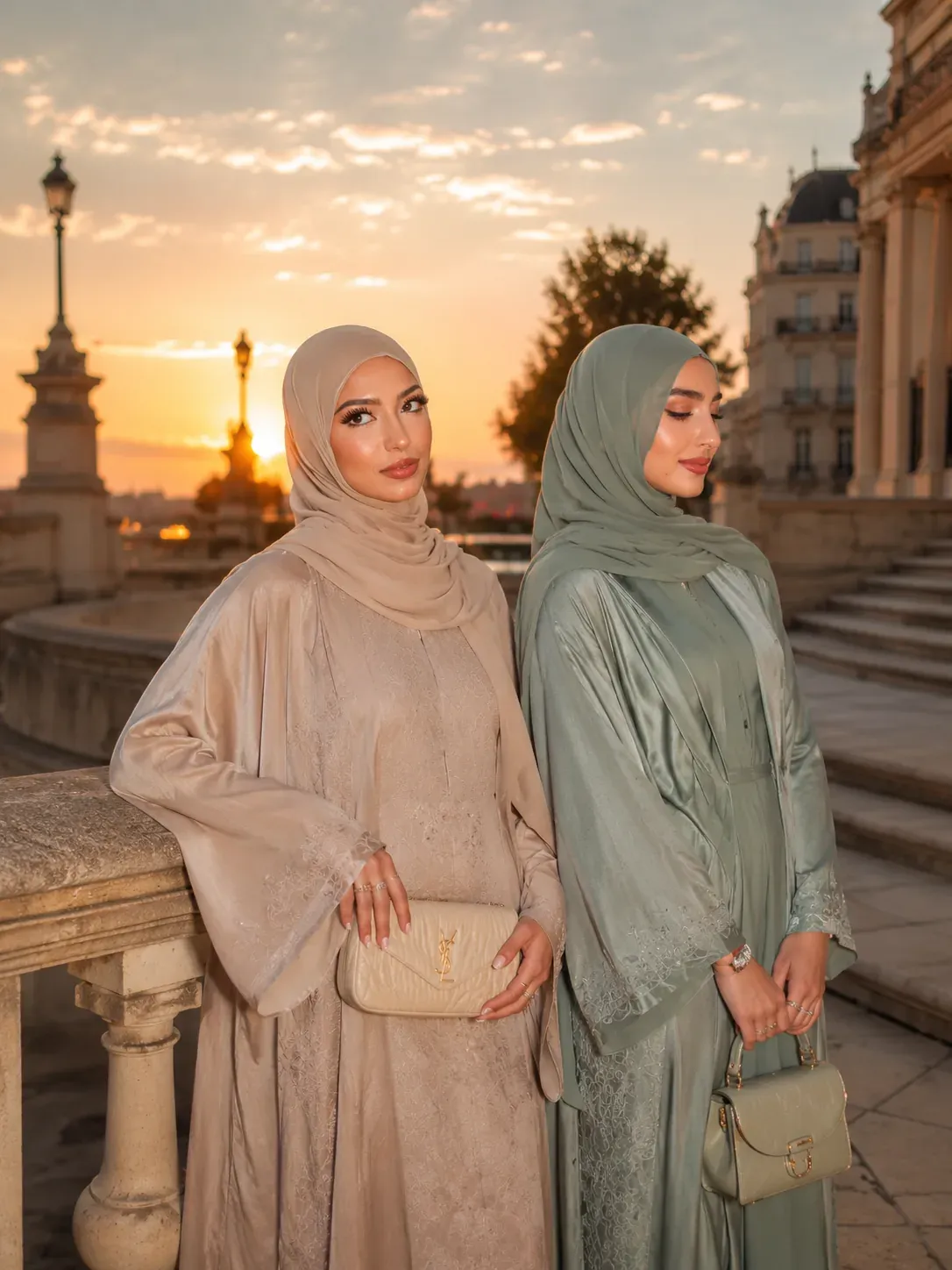
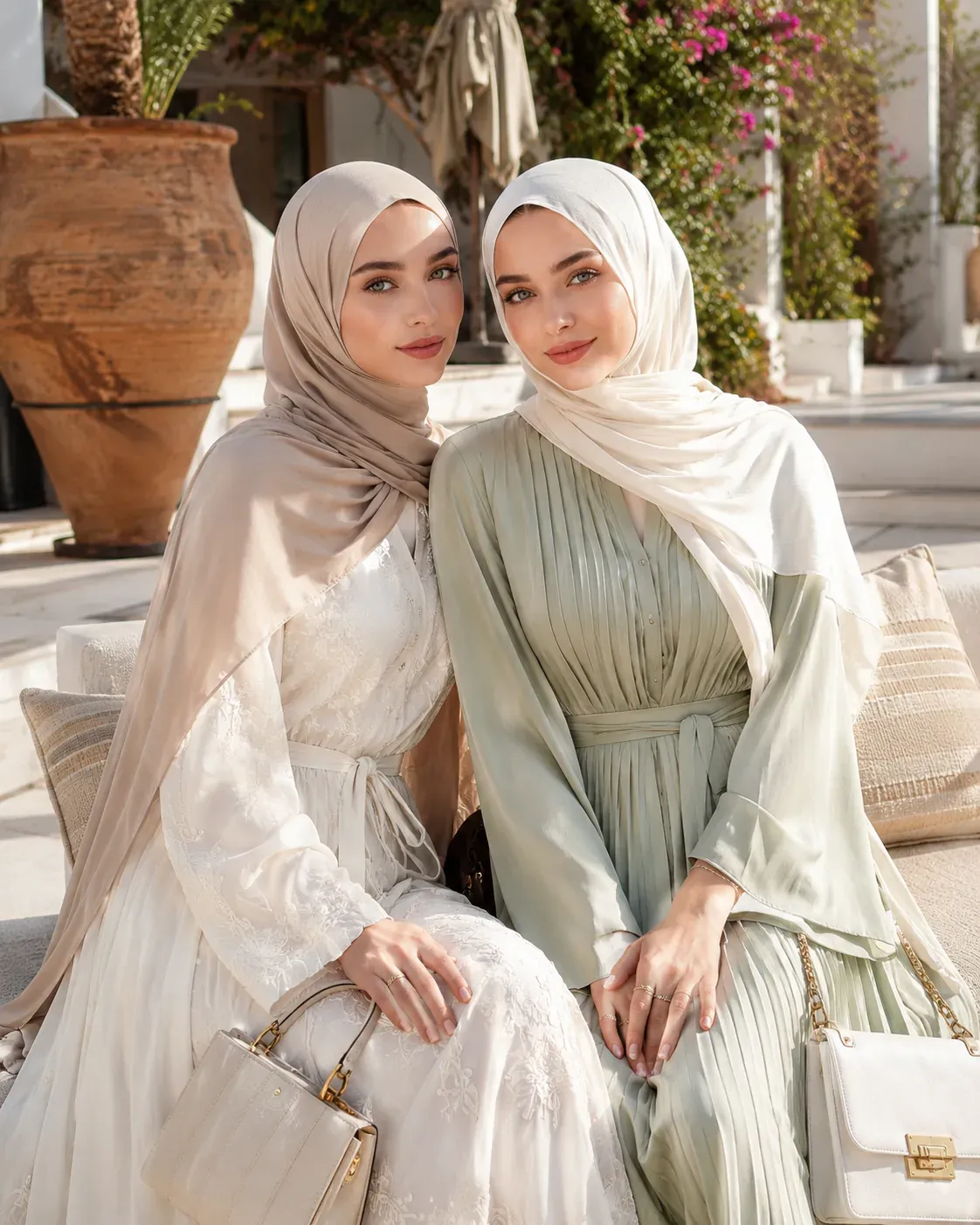
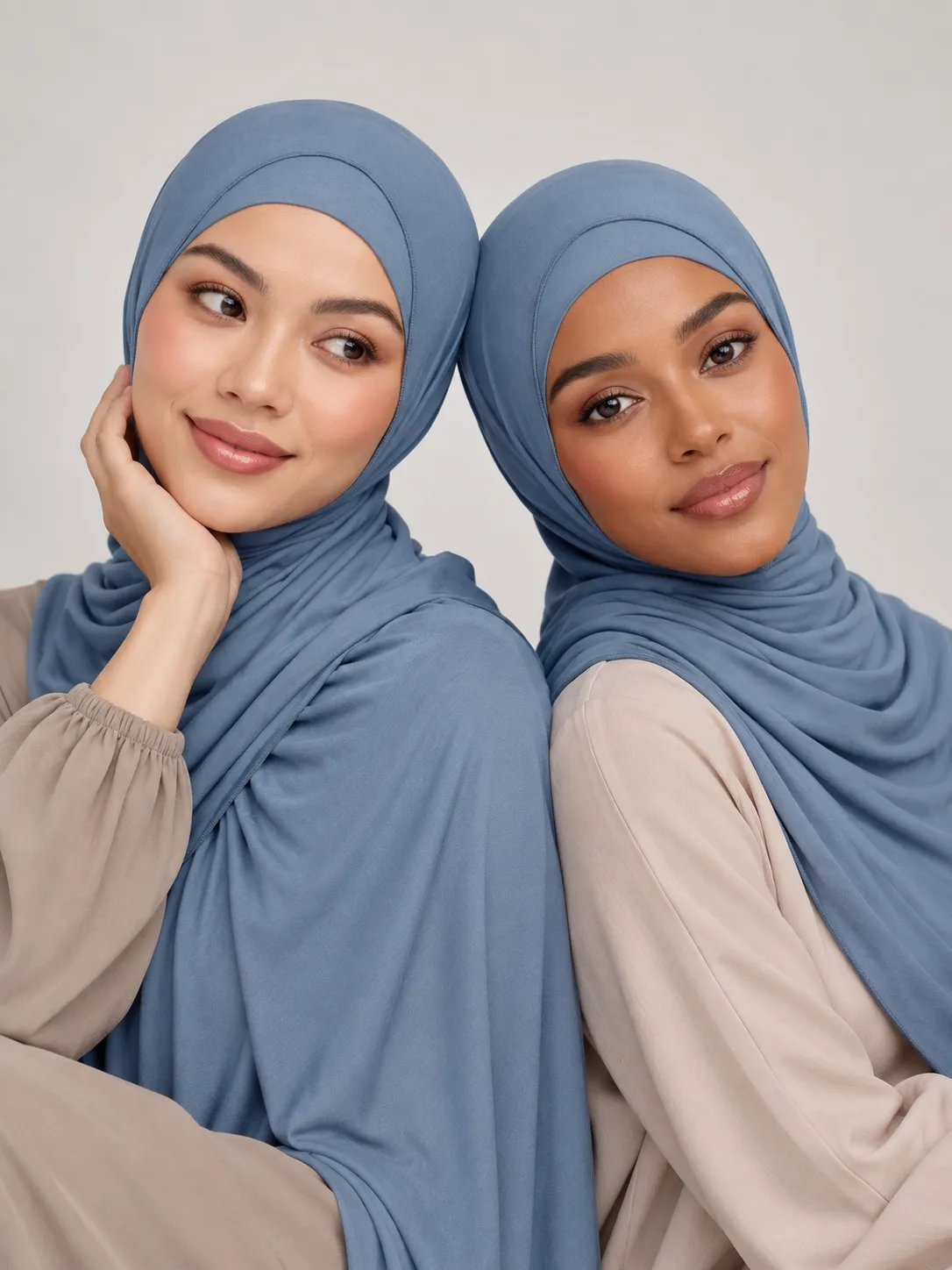
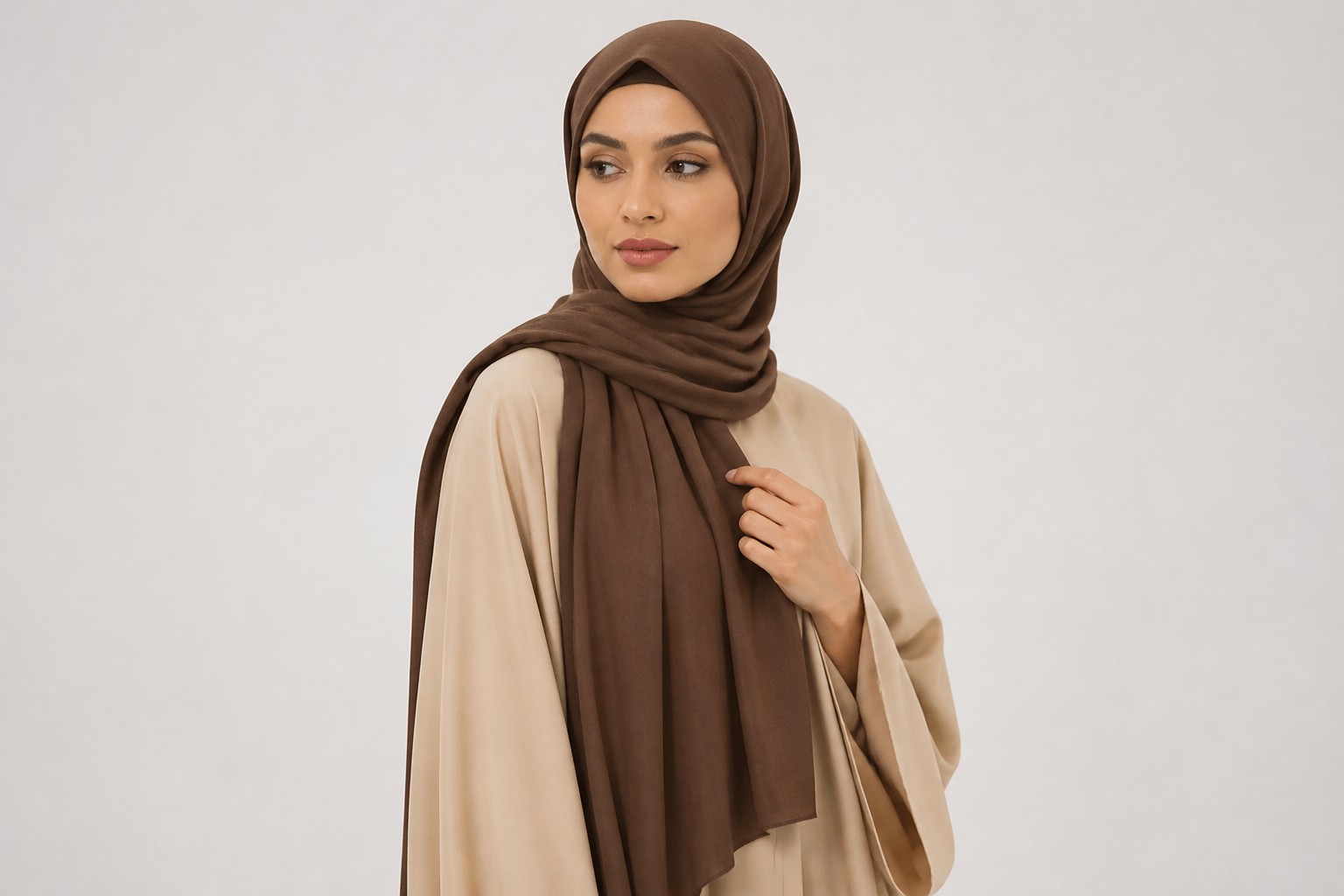
Modal is not just another textile; it is an aristocratic fiber that refuses to be bullied by standard industrial machinery. Derived from sustainably harvested beechwood trees and spun into micro-fine yarns (often 80s to 100s count), modal possesses a liquid, buttery drape that feels like silk against the skin while offering the effortless breathability of natural cotton. For modest fashion brands catering to discerning women in London, Paris, New York, and Dubai, modal headscarves have rapidly evolved from a seasonal novelty into the undisputed crown jewel of their core collections.
Yet for all its consumer allure, modal is notoriously unforgiving to manufacture. A fraction of excess tension on the printing bed skews geometric borders into uneven parallelograms. An improper dye chemistry turns an ethereal desert rose hue into muddy brown. An uncalibrated steam cycle leaves the fabric stiff and coarse, destroying the very drape that justifies a luxury retail price point. As a specialized modal hijab supplier, our factory story is not about being the biggest factory in the world; it is about the relentless technical calibration required to master this delicate fiber from raw greige roll to finished, hand-folded scarf.
Part 1: The Buyer Problem -- The Modal Dilemma of Bleed, Stiffness, and Skewed Edges
Every modest fashion founder has an origin story that involves a frustrating manufacturing disappointment. Typically, it begins when a brand creative director creates a breathtaking collection of watercolor floral or geometric patterns. Seeking to elevate the brand beyond common polyester georgette, the founder specifies modal fabric. They reach out to a generic online textile vendor who promises cheap prices and rapid turnaround. Weeks later, the delivery cartons arrive at the brand’s studio -- and the disillusionment begins.
The first visible defect is surface stiffness. Instead of the featherlight, fluid drape shown in sample swatches, the production scarves feel paper-crisp or slightly waxy to the touch. When draped over the head, the scarf flares outward awkwardly rather than cascading smoothly down the shoulder line. This occurs because the vendor used low-cost pigment printing: coating synthetic acrylic binder resins on top of the fabric surface, effectively encasing the supple modal fibers inside a microscopic layer of glue.
The second failure is pattern distortion and crooked hems. Fine linear borders that should have run parallel to the perimeter of the scarf undulate in erratic waves. When folded diagonally, the opposite corners fail to align by two or three inches. Because the supplier processed the delicate modal fabric through high-tension rotary rollers designed for rigid woven polyester, the soft modal fibers were stretched lengthwise during printing. Once cut from the roll and exposed to washing, the fibers snapped back elastically, distorting the rectangular geometry and causing perimeter baby hems to pucker into unsightly ruffles.
Finally, there is the devastating issue of dye bleeding and color fade. Customers wash the scarf after two wears, only to discover that deep terracotta and midnight navy inks have bled into ivory cream backgrounds, accompanied by chalky white streak lines along fold creases. These costly product returns and brand reputation damages stem directly from partnering with generalist trading intermediaries who lack specialized modal processing equipment.
Part 2: Industry Trend -- The Global Migration to Sustainable, Skin-Friendly Modesty
To understand why mastering modal manufacturing is critical for modern fashion labels, one must examine the profound behavioral shifts taking place among modest wear consumers worldwide. Over the past five years, synthetic fabrics like polyester chiffon, georgette, and nylon satin have faced increasing consumer backlash. Gen Z and millennial Muslim women, who wear headscarves for ten to sixteen hours each day, are acutely aware of scalp health, hair friction, and thermal comfort. Synthetic fibers trap heat, create static electricity that damages delicate hair follicles, and release microplastics with every domestic wash cycle.
Enter micro-modal. As a plant-based cellulosic fiber manufactured through closed-loop solvent recovery processes, modal absorbs fifty percent more moisture than cotton, allowing continuous evaporative cooling in humid climates. Its ultra-smooth microscopic fiber surface creates virtually zero friction against the hair shaft, preventing breakage and reducing the need for tight undercaps. Furthermore, conscious consumers actively seek out OEKO-TEX Standard 100 certified garments that guarantee zero toxic formaldehyde, azo colorants, or heavy metal residues against their skin.
On social media platforms like Instagram and TikTok, visual presentation rules supreme. Modest fashion influencers gravitate toward modal hijabs because of their distinctive optical drape: when styled in loose, effortless wraps, modal forms deep, photogenic ripples with a subtle matte sheen that catches studio ring lights without the cheap, reflective glare of synthetic polyester. High-end modest labels can command retail prices of $35 to $55 USD for a bespoke printed modal hijab -- compared to just $12 to $18 for synthetic chiffon -- providing robust profit margins that support sustainable brand expansion.
Part 3: Technical Knowledge -- The Triad of Cellulose Fiber, Reactive Dye, and Tension Dynamics
Achieving museum-grade print fidelity on modal requires understanding the three fundamental scientific interactions that take place inside the printing workshop: the morphology of regenerated cellulose, the covalent chemistry of reactive dyes, and the mechanical physics of fabric stabilization.
First, consider the fiber itself. Modal is a regenerated cellulosic fiber produced from sustainably farmed beechwood pulp. Unlike natural cotton, which has irregular ribbon-like convolutions, modal filaments are uniform and circular in cross-section with an open amorphous polymer network. This internal structure makes modal highly absorbent, allowing dye liquors to penetrate deeply into the fiber core. However, when wet, modal absorbs up to thirty percent of its weight in water, causing the fiber to swell and lose up to twenty-five percent of its longitudinal tensile strength. If wet modal is pulled across spinning metal guide bars, the individual warp yarns slip past each other, creating permanent weave distortion.
Second is the dye fixation chemistry. True reactive printing does not rely on mechanical adhesives. The reactive dye molecule consists of a chromophore (the color-producing component) attached to a reactive anchor group, such as monochlorotriazine or vinyl sulfone. When the printed modal is exposed to saturated steam in an alkaline environment, a chemical substitution reaction occurs: the hydroxyl groups (-OH) of the cellulose polymer form permanent covalent ether linkages with the dye molecule. The color literally becomes an integral part of the fiber itself. Because no resin binder remains on the fabric face, the natural breathability and softness of the beechwood fibers are preserved 100 percent.
Third is the challenge of droplet rheology. Because modal is so hydrophilic, a droplet of liquid ink deposited on an untreated modal yarn would immediately wick outward in all directions via capillary action, turning crisp 1-millimeter text into a blurry 5-millimeter splotch. To prevent this bleed, the raw greige fabric must undergo specialized pre-treatment: padding the fabric through a customized chemical bath containing sodium alginate thickeners, alkali donors, and humectants before drying under zero tension. This pre-treatment creates a microscopic temporary barrier that holds the ink droplet in exact position until it enters the steam fixation chamber.
Part 4: Our Factory Capability -- Equipment Optimization Designed Exclusively for Modal
Standard digital textile printers off the showroom floor are configured for broad-spectrum fabrics, which invariably leads to compromises when handling delicate 85 GSM modal. Over the past five years, our engineering team has undertaken continuous hardware and software modifications across our digital printing lines to master modal production.
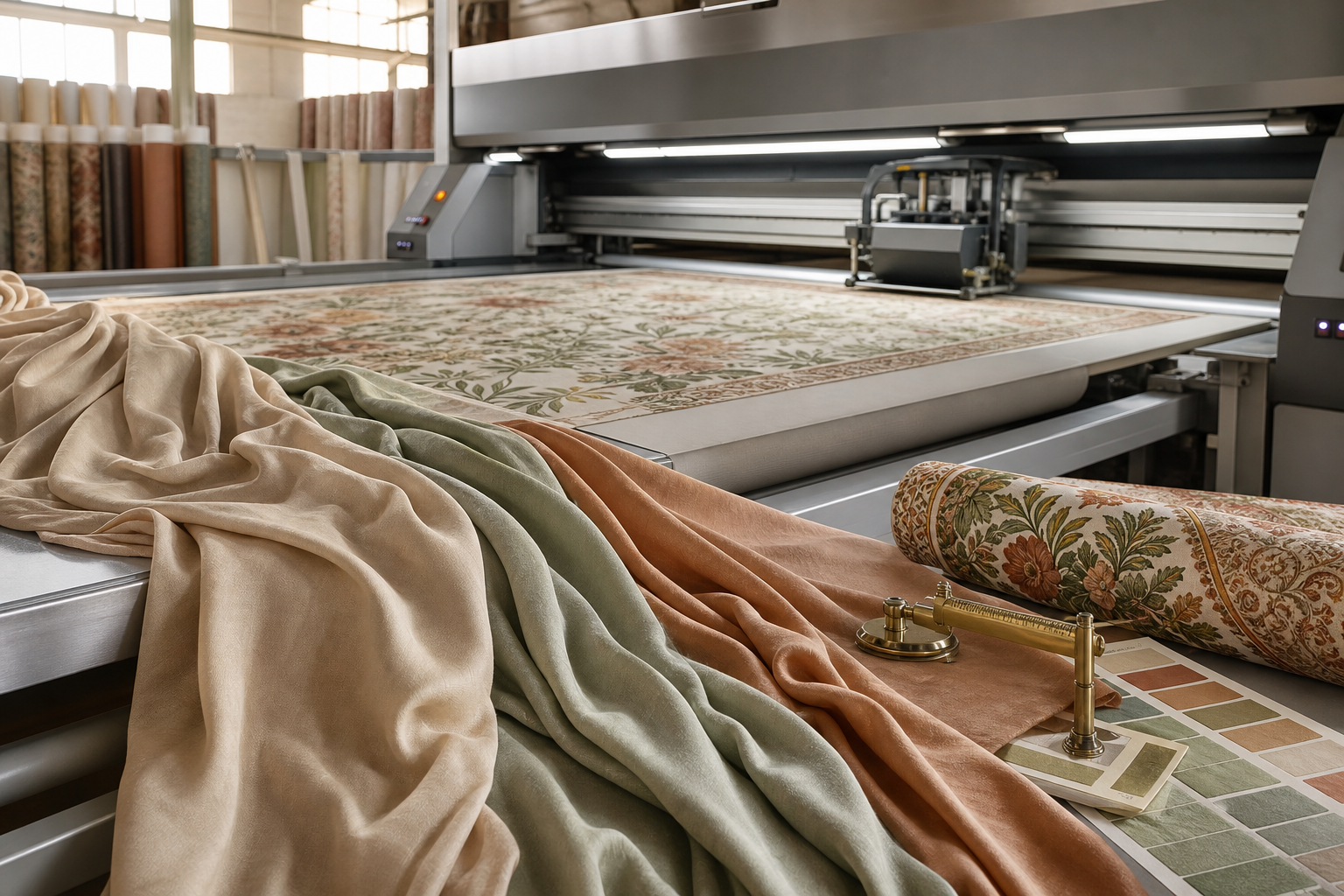
At the heart of our printing room are continuous industrial-grade digital reactive printers equipped with customized adhesive transport blankets. Rather than dragging the fabric over free-spinning tension rollers, the modal roll is unwound via variable-frequency electronic decurlers and guided directly onto a wide, rubberized conveyor belt coated with a water-soluble thermoplastic adhesive. Magnetic pressure rollers press the delicate fabric gently onto the sticky blanket, locking every single warp and weft yarn into an immutable geometric grid. As the print carriage traverses the fabric width, the textile does not stretch or shift by even a tenth of a millimeter.
Furthermore, our technicians have worked directly with print head manufacturers to optimize the piezoelectric firing waveforms of our industrial inkjet nozzles. We utilize micro-piezo print heads capable of variable drop jetting between 3.5 and 14 picoliters at 1200 DPI resolution. For fine botanical linework and soft watercolor transitions, the heads jet micro-fine 3.5 picoliter droplets that deposit precisely without satellite splattering. For deep background fields of espresso, olive, or terracotta, the heads dynamically increase droplet volume, ensuring complete ink penetration through to the reverse side of the hijab so that the design remains vibrant even when the scarf is wrapped loosely.
Following printing, the fabric enters our continuous loop ager fixation chamber. Here, saturated steam is maintained at an exact 102°C at 100 percent relative humidity, with dwell times calibrated between 8 and 10 minutes depending on color density. Unlike atmospheric baking ovens that dry out and embrittle cellulosic fibers, our saturated steam chamber allows the reactive dye to migrate into the fiber core and bond covalently while preserving the fiber’s natural moisture equilibrium.
Part 5: Quality Control -- Rigorous Wash Fastness and Friction Testing Under ISO Standards
A gorgeous print on the factory inspection table is worthless if it bleeds onto a customer’s white blouse on a warm afternoon. At our facility, the definitive benchmark of modal quality control is conducted in our internal analytical testing laboratory, centered on stringent ISO wash fastness and friction rub tests.
Every completed production batch is sampled according to the ISO 105-C06 (Color Fastness to Domestic and Commercial Laundering) test protocol. Our lab technicians sew a 40 mm x 100 mm specimen of the printed modal hijab against an ISO-standardized multi-fiber test fabric containing separate adjacent strips of wool, acrylic, polyester, polyamide, cotton, and acetate. The composite sample is placed into a stainless steel wash container filled with an exact dilution of ECE reference detergent and sodium perborate, heated to 40°C in an accelerated washing bath for 30 minutes with ten stainless steel agitating spheres.
Following washing and controlled drying, the specimen is evaluated under an illuminated D65 color matching light box using the ISO International Grey Scale for Staining and Color Change. Our factory enforces a strict acceptance threshold: color change of the printed modal must score Grade 4 or higher (on a 5-point scale), and staining across all adjacent test fibers must not fall below Grade 4-5. If even the slightest tint appears on the adjacent cotton or nylon test strips, the entire batch is routed back to our tensionless continuous wash ranges for specialized auxiliary post-wash rinsing to strip away all unbound surface dye.
In parallel, we execute the ISO 105-X12 Crockmeter Rubbing Fastness Test. A standardized dry and wet cotton crocking cloth is clamped onto a mechanical finger that rubs back and forth ten times across the printed modal surface under a constant 9-Newton downward force. Both dry rub fastness and wet rub fastness must surpass commercial Grade 4 thresholds. This guarantees that when a customer wears a dark-printed modal hijab against a light collar or perspires during summer weather, no pigment rub-off will occur.
Part 6: Brand Development Advice -- Crafting a High-Margin Modal Collection That Sells
Transitioning into custom printed modal offers exceptional commercial upside for boutique owners and modest wear startups, provided the collection is planned with strategic discipline. Over the years, our team has advised dozens of emerging labels on building profitable modal product lines.
First, calibrate your fabric weight to your primary retail season and geographic market. For European and North American spring and summer releases, an 80-count micro-modal finished at 85 GSM delivers an ethereal, whisper-light hand feel that drapes effortlessly without feeling bulky. For autumn drops or modest wear brands in Gulf markets where air conditioning creates distinct temperature contrasts, a 100-count modal calibrated at 95 GSM provides a slightly richer, more opaque body that holds sculpted crown wraps with minimal pinning.
Second, leverage double-sided color penetration as a luxury differentiator. One common complaint among modest wear buyers is that printed scarves have a bright, vibrant face but a pale, washed-out backside, making loose wrapping styles look unfinished. In your design briefs, request deep color strike-through. By fine-tuning print head carriage speed and ink penetration chemistries, our factory achieves up to 85 percent reverse-side color strike-through on modal, allowing your customers to wrap, twist, and layer their headscarves without worrying about exposing a dull reverse face.
Third, establish a signature perimeter finish. High-street fast fashion brands finish their scarves with crude 3-thread overlock surging that looks cheap and unrefined. To command luxury retail price points, specify a delicate 1.2-millimeter baby hem (pin hem) stitched at 14 to 16 stitches per inch with color-matched mercerized cotton thread. This refined edge finish drapes with clean geometric precision and signals immediate craftsmanship to your customers.
If you are a modest fashion brand founder, designer, or boutique buyer looking to develop or refine a custom printed modal hijab line, our engineering team is here to support you. We invite you to share your brand positioning, target retail price range, and aesthetic moodboards with us; our technicians will review your creative goals and recommend the exact modal yarn count, pre-treatment formula, and color profiling strategy to bring your collection to life.
Frequently Asked Questions
Why does digital reactive printing feel softer on modal hijabs than pigment printing?+
Pigment printing applies color pigments suspended in an acrylic binder that coats the fabric surface, forming a synthetic film that restricts fiber flexibility, traps body heat, and creates a noticeably crisp or stiff hand feel. In contrast, digital reactive printing uses water-soluble reactive dyes that migrate directly into the cellulose structure of modal fibers. During high-temperature steam fixation, a permanent covalent bond forms between the dye molecules and the fiber’s hydroxyl groups. Because no adhesive binder remains on the fabric surface, the modal retains its naturally fluid, cloud-like drape, silky breathability, and luxurious hand feel.
How does an experienced modal hijab supplier prevent fabric stretching and distorted patterns during printing?+
Micro-modal is an exceptionally fluid and elastic cellulosic weave that deforms easily under conventional roller tension. To prevent pattern skewing and edge bowing, our factory utilizes continuous adhesive transport blankets synchronized with magnetic tension-compensating sensors. The raw fabric roll is laid completely flat onto a temperature-regulated sticky blanket without mechanical longitudinal drag, ensuring the weft and warp yarns remain at perfect 90-degree right angles as the digital print heads deposit reactive ink droplets.
What is the optimal fabric weight (GSM) for custom printed modal hijabs?+
Through extensive market testing with European and North American modest wear brands, we have found that an 85 to 95 GSM (grams per square meter) finished weight using 80s or 100s combed micro-modal yarns delivers the ideal balance. At this specification, the hijab provides complete modesty without excessive bulk, drapes gracefully around the shoulders, breathes comfortably in warm weather, and remains light enough to prevent slipping during all-day wear.
What wash fastness rating can brands expect from an authentic modal hijab supplier?+
Our factory guarantees a commercial Grade 4 to 5 rating under the international ISO 105-C06 (A2S) washing fastness standard for all reactive printed modal hijabs. This means colors will not bleed onto adjacent white or light-colored garments during home laundering at 40°C, and surface shades maintain their vibrancy through repeated weekly wash cycles.
Can a boutique brand order small custom print runs on modal fabric without massive inventory risk?+
Yes. Our production model is specifically optimized for small-batch agility. Because digital reactive printing operates directly from digital artwork files without costly physical rotary screens or engraving cylinders, our factory supports low-MOQ pilot production runs starting at 100 to 150 pieces per design across multiple seasonal colorways. This allows independent fashion labels to test fresh print concepts with minimal working capital.
What artwork resolution is required to achieve razor-sharp detail on custom printed modal?+
We recommend submitting vector artwork (AI or PDF) or high-resolution raster files (TIFF or PSD) calibrated to 300 DPI at actual 1:1 physical dimensions (e.g., 180 cm x 70 cm). Our industrial digital print heads can deposit micro-droplets as small as 3.5 picoliters, faithfully reproducing fine botanical linework, subtle tonal gradients, and intricate watercolor textures on modal fabric.
Need a quote for your next order?
Free samples available. MOQ from 100 pieces. Ships to 50+ countries.
Request a Quote