Quick Summary
A jersey hijab factory must manage knitted fabric differently from woven or fluid modal qualities because stretch, recovery, feeding, cutting, and hemming interact. This OEM guide explains what brands should check in a jersey sample and how a factory can turn those observations into production settings. It also covers online dimensional checks, colour stability, private label options, and a controlled pilot-to-repeat route. Our team focuses on fabric-specific decisions rather than treating every hijab quality as interchangeable.
Introduction: Jersey Is a Performance Fabric, Not Just a Heavier Hijab
Jersey hijabs are often chosen for their stretch, grip, and easy styling. Those benefits come from the knitted structure, which also makes the fabric sensitive to tension, feeding, cutting, and finishing. A jersey hijab factory needs to understand how the material behaves at every stage, not only how it looks on a product photograph.
For an OEM buyer, the important question is whether the factory can turn a sample into a repeatable specification. The product should maintain a predictable feel, recovery, finished size, edge treatment, and colour response across a controlled run. If the fabric is handled like a stable woven material, the result may curl, stretch, or lose its intended shape.
This guide is for modest fashion brands, social commerce sellers, boutique buyers, and apparel teams developing custom jersey hijabs. Our production experience allows brands to test the actual fabric quality, clarify its technical needs, and build a practical production plan before expanding the range.
Part 1: Buyer Problem -- Stretch Can Hide Problems Until After Finishing
A jersey sample can appear attractive when it is laid flat and carefully styled. The same fabric may behave differently when pulled, folded, washed, or sewn. A buyer may discover after production that the finished dimensions vary, the hem waves, or the edge curls more than expected. These are not always design problems; they can come from uncontrolled fabric movement.
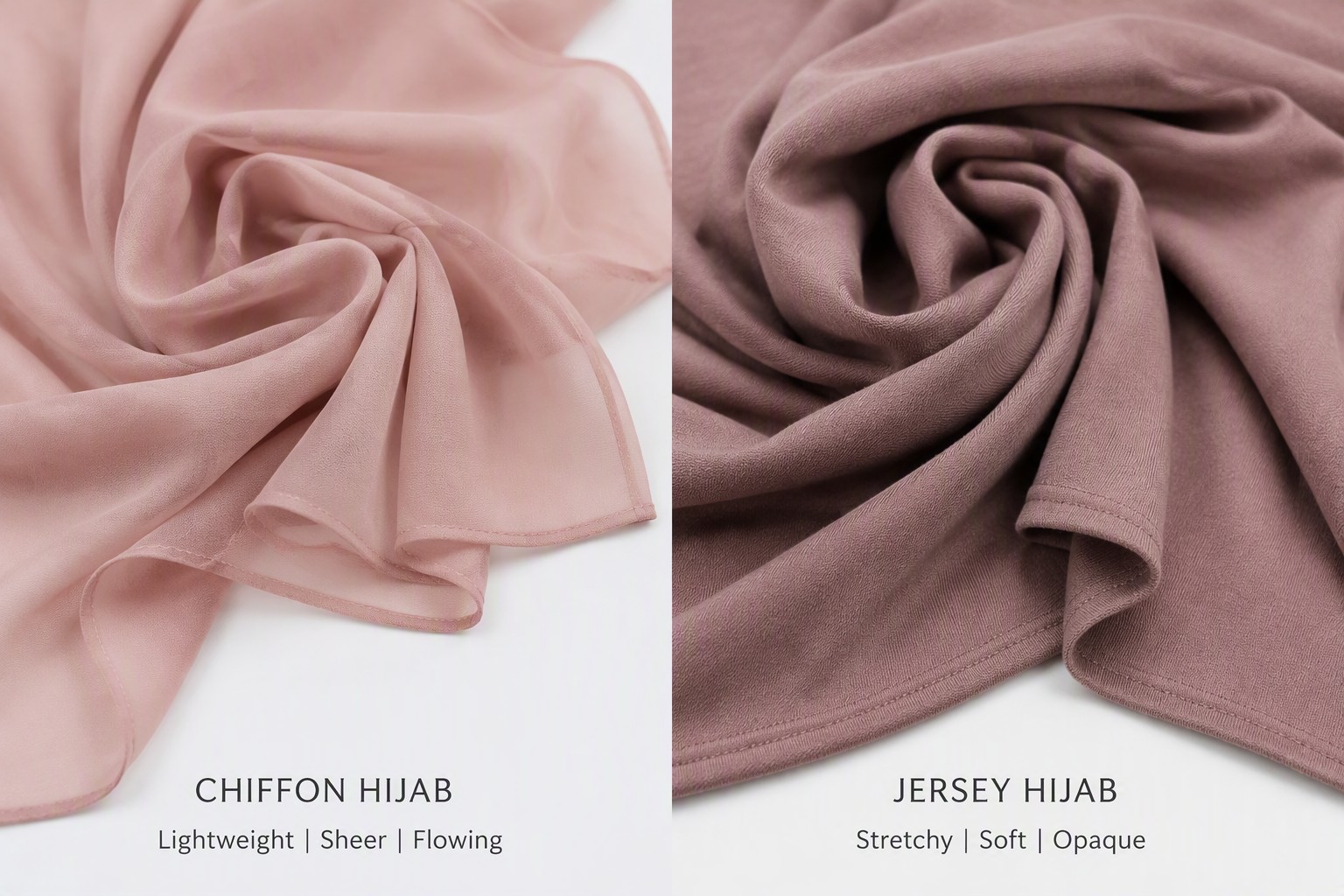
Another difficulty is comparing different jersey constructions under the same name. Weight, loop structure, stretch direction, recovery, and surface finish all affect the hand feel. A supplier should identify the selected quality clearly so the brand does not approve one sample and receive another construction in the bulk order.
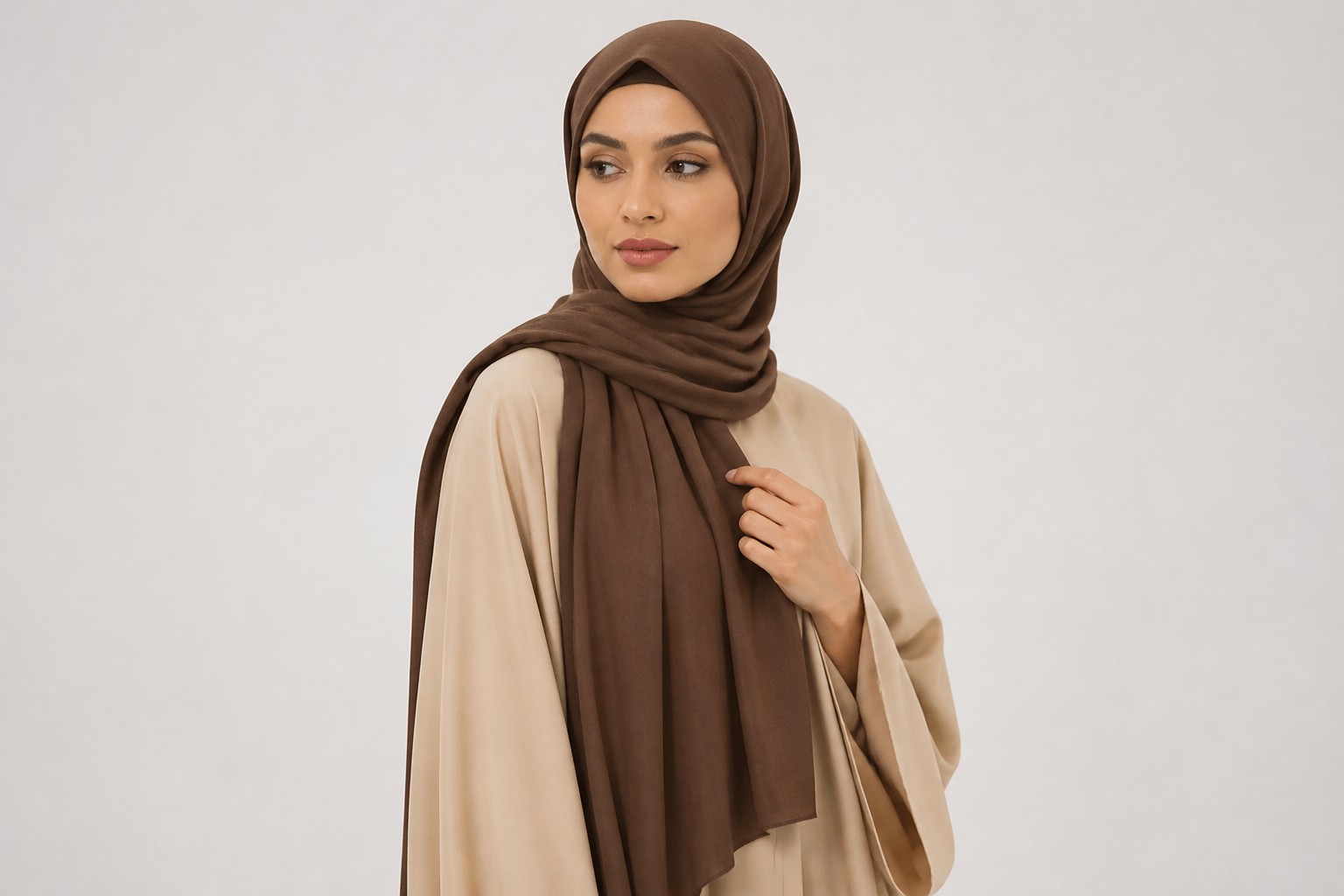
The production brief should explain how the hijab will be worn. A close-fitting everyday style may need grip and recovery, while a draped fashion style may need more fluid movement. The preferred hem, size, print area, and folding method should be considered with that wearing purpose.
For a small brand, the first jersey shipment is also a content asset. Customers will demonstrate wrapping, stretch the edge, and comment on comfort. A supplier that treats the pilot carefully helps the brand avoid promoting a style that cannot be repeated.
Part 2: Industry Trend -- Practical Jersey Essentials for Social Selling
Jersey remains attractive to social commerce brands because it is easy to demonstrate. A creator can show how the fabric grips, stretches, folds, and stays in place. These demonstrations make the material's performance part of the product story, but they also expose inconsistencies quickly.
Focused colour drops can help brands test a jersey quality without carrying too many variants. A basic neutral range may be combined with seasonal colours or a limited print. If the fabric and finish remain stable, the brand can replenish the successful colours with greater confidence.
The sourcing trend is moving toward suppliers that can explain technical decisions in plain language. Buyers want to know how a factory controls stretch, what happens during cutting, how the hem is checked, and how a repeat order will match the first. This is more valuable than a generic claim of high quality.
An OEM partner can also help a brand decide whether jersey is the right substrate for a particular design. Dense prints, fine borders, and precise dimensions may need different development choices than a plain everyday colour. The factory's role is to identify those interactions early.
Part 3: Technical Knowledge -- Stretch, Recovery and Edge Behaviour
Stretch describes how far the fabric can extend, while recovery describes how well it returns after being released. Both matter for fit, comfort, and finished shape. A buyer should pull the sample gently in the relevant directions, release it, and observe whether the fabric returns evenly or remains elongated.
Check the edge before and after handling. A knitted fabric may curl or form a wave if tension changes during cutting or sewing. The selected hem construction, stitch balance, and feeding method should be evaluated on the actual quality rather than assumed from another jersey product.
Finished dimensions should be measured while the fabric is relaxed and compared with the agreed tolerance. The same piece may measure differently if it is stretched on the table. A controlled measurement method gives the buyer and factory a shared basis for approval.
For printed jersey, inspect the surface for colour evenness, repeat alignment, and distortion caused by fabric movement. A design can look sharp in a relaxed state but shift when the fabric is stretched. The sample should be reviewed both flat and in normal styling.
Washing and repeated handling are useful parts of development. The buyer should observe recovery, shrinkage, surface appearance, edge stability, and colour after the agreed test process. This creates a more realistic view of how the product may behave after purchase.
Part 4: Our Factory Capability -- A Jersey-Specific OEM Production Route
Our jersey OEM workflow begins with the product purpose and selected fabric quality. The team reviews the intended fit, drape, stretch, recovery, print or plain colour, finished dimensions, hem, label, packaging, quantity, and delivery plan. This prevents a brand concept from being transferred to the line without the fabric decisions being resolved.
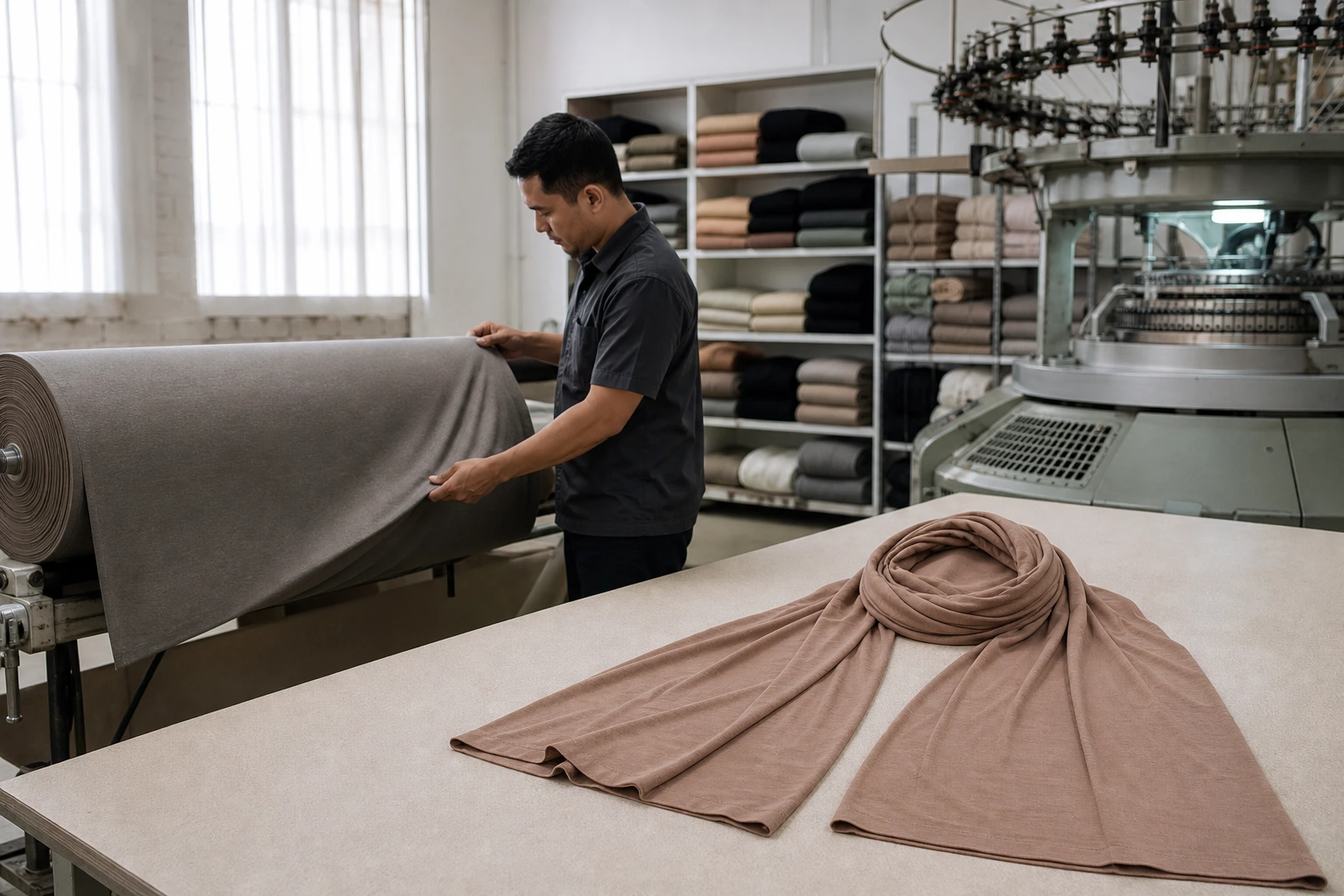
During development, our technicians adjust handling and finishing to the knitted structure. Fabric feeding, cutting, printing, fixation, and hemming are considered together. Our optimized equipment and Modal/Jersey experience help the team protect colour stability and edge consistency without pretending that modal and jersey use identical settings.
The sample approval records the physical result and the decisions behind it. The brand can check stretch, recovery, hand feel, dimensions, print, hem, label, and packaging. Any adjustment is added to the technical file so the pilot follows the current version.
OEM, ODM, and private label projects can include custom artwork, woven labels, care labels, hangtags, and packaging. The route is designed to help a brand develop a repeatable product rather than simply purchase a one-time sample.
Part 5: Quality Control -- Online Dimension and Recovery Checks
Our three-stage QC process includes incoming material checks, online production checks, and final shipment checks. For jersey, the online stage pays close attention to the first production section because early tension or feeding changes can affect a larger run if they are not corrected promptly.
The first section is checked against the approved sample for dimensions, edge behaviour, stitch balance, print position, colour, and fabric recovery. Measurements are taken with the fabric relaxed and the inspection method is kept consistent. If the piece needs to be rechecked after handling, that condition is recorded as part of the comparison.
Colour is compared under controlled lighting, while the fabric is also reviewed for stretch-related distortion. The team checks whether the printed area remains visually balanced when the jersey is worn or gently extended. This is important for borders, repeated motifs, and fine lines.
Any adjustment is documented with the production record and linked to the approved sample. This creates a clear decision for the remaining pieces and gives the buyer a reference for future orders. Online checks complement incoming and final inspections; they do not replace them.
Part 6: Brand Development Advice -- Treat the First Jersey Order as a Learning System
Begin with one or two clearly defined jersey qualities rather than mixing many constructions at launch. Decide the intended use, desired grip, recovery, coverage, weight, and edge finish. A focused product file makes it easier to compare customer feedback and identify which improvement is genuinely needed.
Use the pilot to test the product in real styling content. Ask creators to show stretching, wrapping, pinning, folding, and washing care. Note whether the fabric behaves as the brand described and whether customers ask the same questions repeatedly.
Keep the approved sample, measurements, fabric reference, colour, artwork, label position, packaging, and inspection notes together. This information will support a repeat order and reduce the risk of a new team member approving a different jersey quality by mistake.
If you are planning a jersey capsule, share the wearing purpose, target customer, artwork direction, preferred feel, quantity, and launch timing with our team. We can help map the brief to sampling, OEM production, QC, packing, and delivery.
A Practical Jersey Approval Sequence
A useful buyer review can follow four stages. Lay the jersey flat without stretching it, measure the relaxed dimensions, and record the surface feel. Then test gentle stretch and recovery in both relevant directions, inspect the edge after handling, and review the sample in normal styling. After washing, repeat the dimension and recovery checks. Keeping these observations with the approved sample helps the factory and buyer distinguish a normal fabric response from a production problem.
Repeat-Order Questions for Jersey Buyers
Before placing a repeat order, compare the new fabric lot with the retained sample while both are relaxed. Confirm the same weight range, stretch direction, recovery, surface feel, colour, finished measurement, hem, and packaging. If any input changes, ask the factory to identify whether the change affects cutting, printing, or finishing. A short written comparison is enough to keep the decision visible and prevents a familiar style name from hiding a different material.
Conclusion: Choose Jersey Expertise That Can Be Repeated
A jersey hijab factory should be able to explain stretch, recovery, feeding, cutting, hemming, colour, and measurement as one connected system. When the selected quality and production method are recorded together, a brand can build a product that is comfortable to wear and practical to repeat.
Our team focuses on fabric-specific OEM and ODM development, small pilot quantities, controlled online checks, and clear production communication. That approach gives brands a stronger basis for deciding which jersey styles deserve a larger launch.
Frequently Asked Questions
Why does jersey need different OEM settings from modal?+
Jersey has a knitted loop structure that can stretch, recover, curl, or distort during handling. Feeding, cutting, printing, and hemming need fabric-specific control so the finished hijab remains stable and comfortable.
What should a buyer check on a jersey hijab sample?+
Check stretch, recovery, weight, opacity, surface feel, edge curl, hem consistency, finished dimensions, print appearance, and behaviour after washing and repeated handling.
Can a jersey hijab factory support small-batch OEM?+
Our OEM route can support a pilot from 100 pieces per colourway or design, subject to the selected fabric, artwork, and finishing requirements. The pilot helps brands validate the quality before scaling.
How can jersey dimensions remain consistent?+
Use the approved fabric quality, control tension and feeding, confirm the first production section, measure finished pieces during production, and retain the approved sample and settings for repeat orders.
Can jersey hijabs be printed and privately labelled?+
Yes. A project can combine custom printing, woven or care labels, packaging, and other private label requirements when the details are confirmed in the technical brief and approved during sampling.
What is the advantage of an OEM pilot?+
A pilot lets the buyer check stretch, recovery, drape, print, hem, packaging, and customer response on the actual selected quality before committing to a larger production quantity.
Need a quote for your next order?
Free samples available. MOQ from 100 pieces. Ships to 50+ countries.
Request a Quote