Quick Summary
A custom hijab manufacturer that serves Instagram and TikTok brands needs a different production setup than a generic wholesale supplier. Print calibration must be fabric-specific, QC must be documented, and sample turnaround must fit social media campaign timelines. Our facility in Yiwu runs separate print protocols for modal and jersey, applies three-stage QC to every private label order, and supports MOQ from 100 pieces per colourway. Brands that visit or audit our production lines consistently note the difference between a facility built for custom work and one that applies custom as an afterthought to a bulk wholesale operation.
Most brands that contact a hijab manufacturer for the first time have the same question: what does the factory actually look like, and how does what happens on the production floor translate into what arrives in the shipment? This is a reasonable question, and it is one that generalist wholesale suppliers rarely answer clearly.
This article is a direct account of how our production facility in Yiwu is structured, what we have built specifically to serve custom and private label orders, and why the differences between a facility designed for custom work and one that treats it as a side operation matter for brands building collections for Instagram and TikTok markets.
Part 1: The Buyer Problem - Why Generic Wholesale Fails Social-First Brands
Instagram and TikTok brands have fundamentally different sourcing requirements than traditional wholesale buyers. A traditional buyer orders a proven SKU in volume and sells on price and availability. A social-first brand builds a product that generates content, tells a brand story, and creates a customer relationship that extends beyond the first transaction.
Generic wholesale product cannot do this. When five brands in the same market are selling the same hijab from the same supplier, the visual content looks the same, the product review language is the same, and the only competitive lever left is price. This is not a sustainable position for a brand building on social media where differentiation is the primary acquisition mechanic.
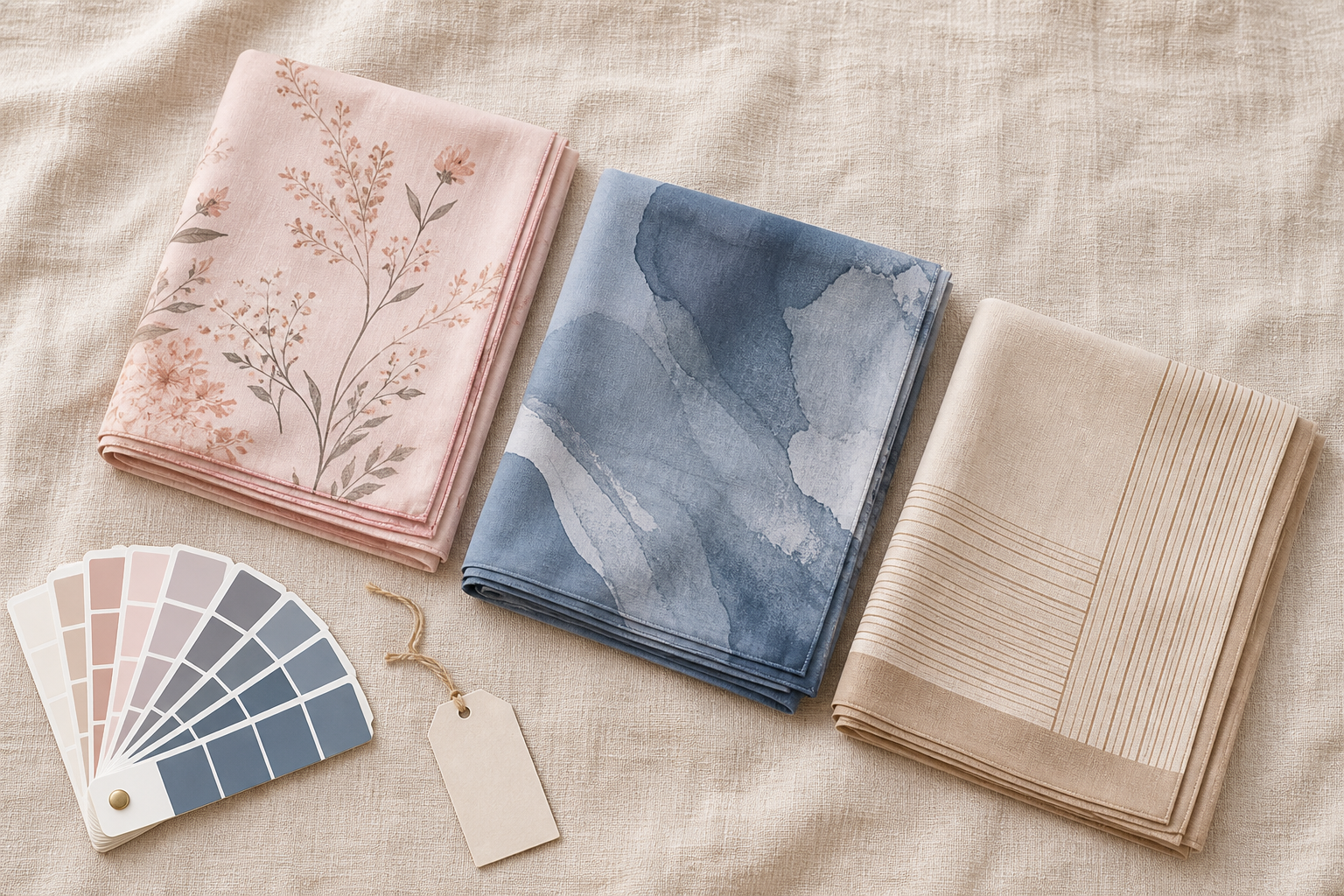
Custom manufacturing solves this by making the product itself the differentiator. An exclusive print pattern, a specific colourway developed for a brand aesthetic, a woven label inside the hijab and a branded hang tag outside it -- these are not cosmetic details. They are what makes a customer feel they bought something, not just acquired a commodity.
Part 2: Industry Trend - The Production Capability Gap
The demand for custom hijab manufacturing has grown substantially as the modest fashion market matures. What has not grown at the same rate is the number of manufacturers with genuine in-house capability to execute it well.
Many suppliers advertise custom and OEM capability. In practice, a significant proportion outsource the printing to a third-party print house, coordinate the labelling through a separate vendor, and treat packaging as the brand's problem. This fragmentation multiplies the points of quality failure and extends the timeline in ways that brands only discover after placing an order.
The trend we observe among the brands we work with is a shift toward fewer, more capable supplier relationships. Rather than managing three or four vendors for a single custom product, brands increasingly want one facility that controls the process from fabric to finished unit. This is what genuine custom hijab manufacturing looks like.
Part 3: Technical Knowledge - What Custom Production Actually Requires
Custom hijab production involves more technical variables than most brands anticipate at brief stage. The fabric choice determines which print process is appropriate, which ink formulation maintains wash fastness, and which GSM produces the visual weight the brand is targeting.
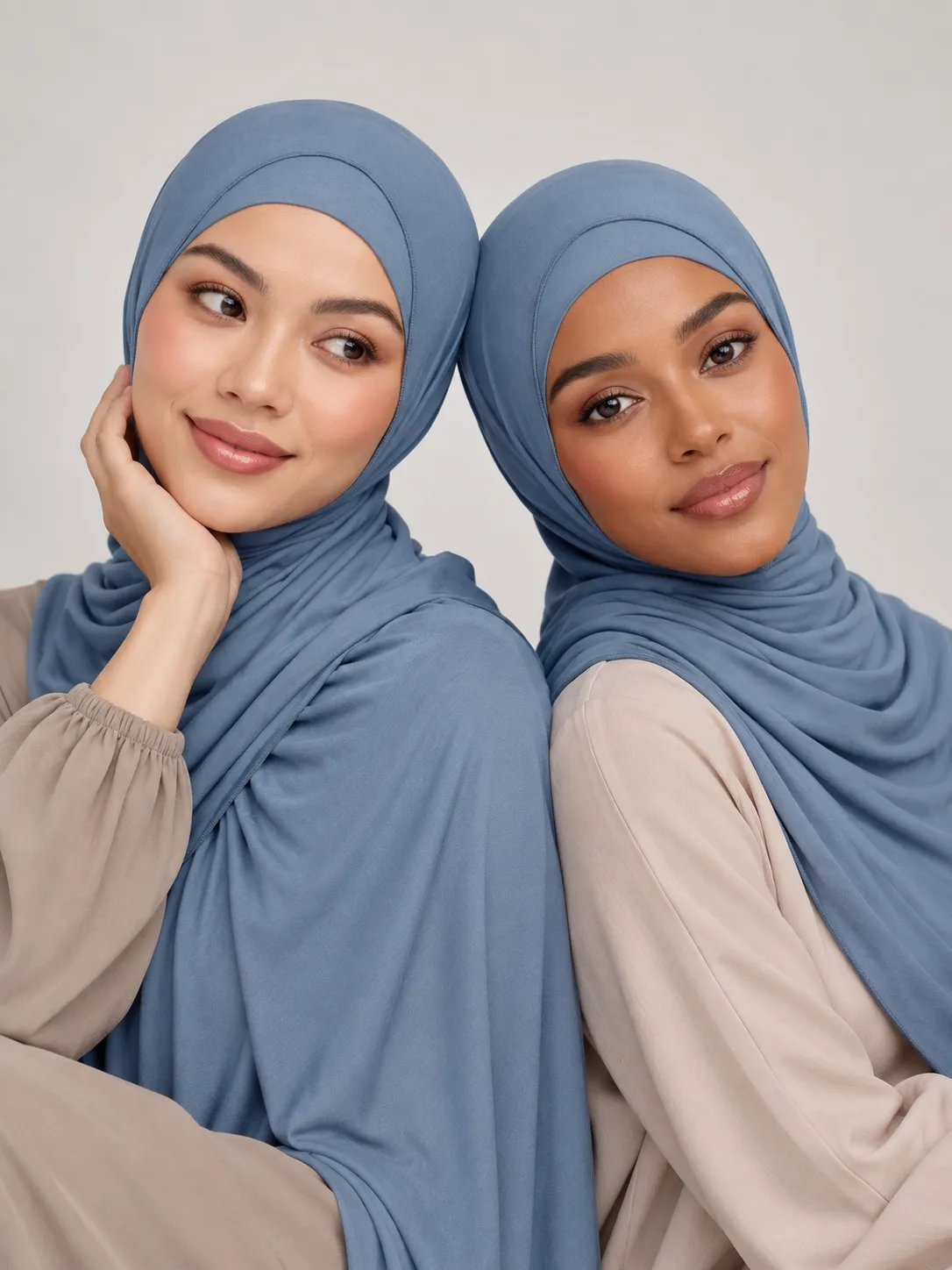
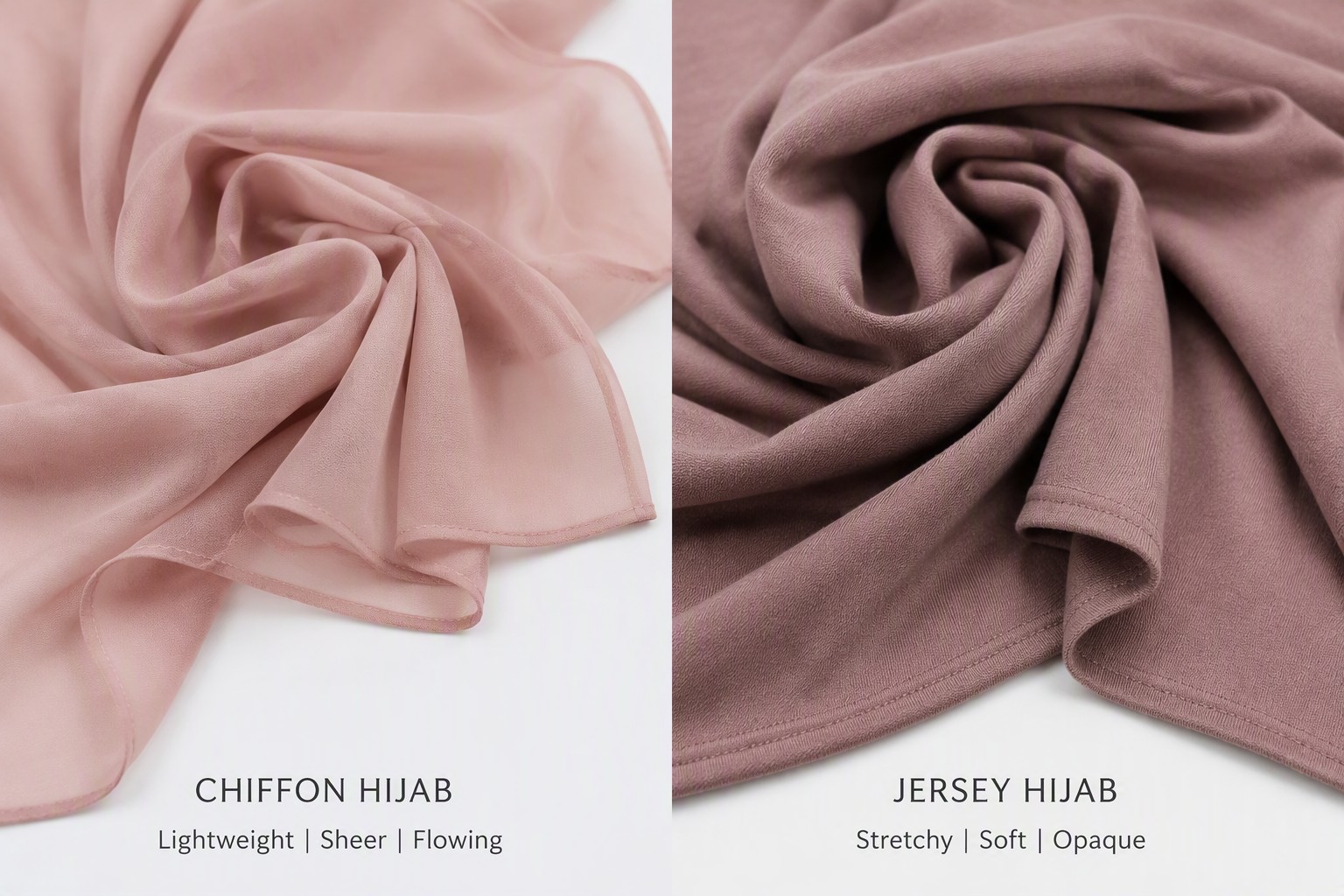
Modal and jersey -- the two fabrics most premium brands work with -- require entirely different print calibration. Modal absorbs pigment more evenly due to its smoother fibre surface, which produces richer colour depth with less process adjustment. Jersey, as a stretch knit, requires tension control during printing to prevent ink cracking when the fabric is stretched in wear. A print process calibrated for woven fabrics applied to jersey produces results that look sharp on the sample table and fail within three washes.
Colour management at production scale introduces a further variable: dye-lot variance. Fabric batches dyed at different times carry measurable colour differences even within the same specification. Without incoming fabric testing, these differences pass through to the finished product and create colour inconsistency across a brand's collection.
Part 4: Factory Capability - How Our Production Line Is Built for Custom Work
Our facility runs dedicated print lines for modal and jersey with separate calibration profiles for each fabric type. The modal line is optimised for colour depth and edge definition on smooth-surface fabrics. The jersey line runs with tension compensators and lower substrate temperature settings that prevent cracking on stretch areas.
Our team has developed these calibration settings through production iteration across multiple fabric lots and colourways, not through theoretical specification. This means the settings reflect real fabric behaviour under real conditions, including the variance that occurs between fabric lots from the same mill.
In-house labelling capability means woven labels, heat-transfer labels, hang tags, poly bags, and outer cartons are produced and applied within the same production window as the garment itself. This eliminates the coordination lag that occurs when labelling is managed by a separate vendor and ensures the brand packaging arrives with the product, not in a separate shipment two weeks later.
Our production experience allows brands to test at MOQ 100 pieces per colourway and scale to 5,000-plus pieces within the same production infrastructure, without changing suppliers or re-qualifying a production line.
Part 5: Quality Control - The Three-Stage Protocol That Protects Brand Reputation
Quality control in custom manufacturing is more consequential than in stock wholesale. When a brand's label is on the product, the brand owns any quality failure in the customer's mind. This is why our QC protocol is designed around documentation and traceability, not just inspection.
Stage one: incoming fabric inspection. Before any fabric enters the production line, we test GSM accuracy, colour consistency against the approved specification, and surface defect rate. Fabric lots that do not meet the standard are quarantined. This step catches dye-lot variance before it reaches the print table, which is the most common source of colour inconsistency in finished product.
Stage two: in-line print inspection. After the first 20 pieces of each bulk run, we compare print registration, colour match, edge sharpness, and pattern alignment against the approved pre-production sample under D65 standardised lighting. Any deviation triggers a calibration adjustment before the run continues.
Stage three: final AQL inspection. Before packaging, a statistically sampled quantity from each batch is inspected for print quality, stitching, label placement, and dimensional accuracy. Results are documented in a production report that ships with the order.
Part 6: Brand Development Advice - What to Look for When Choosing a Custom Manufacturer
The most useful question a brand can ask a prospective manufacturer is not about price or MOQ. It is: can you show me where the printing happens and who operates the equipment? A manufacturer with genuine in-house capability answers this with a factory visit or a detailed video walkthrough of the print line. A trading company or an outsource coordinator deflects.
Ask for wash fastness test reports from previous production runs, not from a spec sheet. Ask whether colour reference data is retained for reorders. Ask who manages labelling and packaging -- and whether they are in the same building as the garment production.
The brands that build the strongest supplier relationships are the ones that treat the first order as an audit as much as a purchase. A 100-piece first order that tests the full production process -- sample, revision, bulk, QC report, packaging, delivery accuracy -- tells a brand everything they need to know before committing to scale.
Brands looking for a manufacturer that treats custom work as the core of the business, rather than an add-on to bulk wholesale, are welcome to get in touch. We are glad to walk through our process in detail.
Frequently Asked Questions
What makes a hijab manufacturer suitable for custom and private label orders?+
A manufacturer suited for custom work controls the full production chain in-house -- fabric sourcing, cutting, printing, stitching, labelling, and packaging. In-house control over the print process is the most critical factor: it allows colour management, tension calibration, and curing settings to be adjusted per fabric type, which prevents the print quality issues that occur when printing is outsourced to a third party unfamiliar with the garment.
How long does a custom hijab sample take to produce?+
A standard pre-production sample for a custom printed hijab takes 7 to 10 working days from approved artwork and fabric confirmation. If a revision round is needed, add 5 to 7 days. Brands that provide complete briefs with vector artwork, Pantone references, and fabric specification at the outset consistently achieve faster turnaround.
What is the minimum order for a custom hijab with private label?+
Our minimum order for custom printed hijabs with private label -- including woven label, hang tag, and branded packaging -- starts at 100 pieces per colourway. This covers the print setup and labelling costs while keeping first-order risk manageable for emerging brands.
How do you ensure colour consistency between sample and bulk production?+
Colour consistency is managed through three controls: fabric lot pre-testing before any printing begins, in-line colour matching against the approved sample after the first 20 pieces of each bulk run, and final AQL inspection under standardised D65 lighting. We retain colour reference data for each order so reorders match the original without requiring a new calibration round.
Can you support brands that order in small quantities across multiple colourways?+
Yes. Our production scheduling accommodates mixed-colourway orders within a single style and fabric. A brand ordering 100 pieces each in four colourways of modal hijab can consolidate into a single production run. This approach is more efficient for both sides than four separate small-batch orders.
Do you provide production documentation for brands that supply boutiques or multi-brand retailers?+
Yes. Every private label order includes a production report documenting fabric inspection results, in-line print QC, and final AQL findings. This gives brands traceability documentation they can share with wholesale buyers or retail partners that conduct supplier audits.
Need a quote for your next order?
Free samples available. MOQ from 100 pieces. Ships to 50+ countries.
Request a Quote