Quick Summary
Instagram fashion brands need a hijab supplier that can protect both visual identity and operational reliability as a collection grows. This sourcing guide explains how to compare modal and jersey qualities, evaluate physical samples, define colour and finishing requirements, and use online inspection checkpoints during production. It also outlines a practical three-stage QC process and a clear route from the first inquiry to delivery. Our team focuses on helping brands test a focused assortment before building a repeatable supply programme.
Introduction: Why Supplier Choice Matters to an Instagram Fashion Brand
Instagram fashion brands often build demand through a strong visual language. A particular colour palette, print scale, fabric drape, and unboxing style can make a small label recognizable before it has a large product range. That visual advantage becomes difficult to protect when the supply chain is inconsistent. A colour may shift between sample and bulk, a soft modal may be replaced with a different quality, or a neat edge may arrive with a wavy finish.
Choosing a hijab supplier for Instagram brands therefore requires more than comparing catalogue photographs and unit prices. The supplier needs to understand how a physical product becomes social content, customer feedback, repeat orders, and a recognizable brand asset. It must also communicate clearly when the buyer's creative idea needs a fabric-specific adjustment.
This guide is for Instagram fashion brands, TikTok sellers, boutique owners, and modest fashion startups sourcing custom modal, jersey, private label, or OEM hijabs. Our production experience allows brands to begin with a focused assortment, verify the physical result, and build a supply programme around designs that earn real demand.
Part 1: The Buyer Problem -- A Good Feed Cannot Fix an Inconsistent Product
The first sourcing problem is the gap between digital presentation and physical delivery. A photograph can make two fabrics look similar, but the customer feels the difference immediately. Modal may be softer and more fluid, while jersey may offer stretch, grip, and a different weight. If the supplier changes the quality without clear approval, the brand's photography and product description stop matching the product in the parcel.
The second problem is unreliable colour. Instagram brands frequently build campaigns around a signature neutral, seasonal accent, or coordinated print. If the factory relies only on a screen colour, the finished fabric can look warmer, duller, darker, or more saturated than the approved design. The difference is especially visible when customers post comparison videos or place a repeat order beside an earlier purchase.
The third problem is a supplier that accepts an order without asking useful questions. A professional partner should clarify the finished size, artwork scale, edge treatment, fabric direction, label position, packaging, quantity, and approval point. These questions are not unnecessary delay; they are how an idea becomes a repeatable product.
The fourth problem is a small order being treated as unimportant. Emerging brands may begin with a limited quantity, but the first shipment often carries the greatest reputational risk. It supplies launch content, creator samples, and early customer reviews. A supplier should apply meaningful controls to a pilot rather than treating it as an informal experiment.
Part 2: Industry Trend -- Social Commerce Rewards Focused, Repeatable Assortments
Social commerce has encouraged many modest fashion brands to release smaller and more focused capsules. Instead of stocking every possible colour, a brand may launch a small story that is easy to style, photograph, explain, and test. The collection can then develop from customer responses rather than from a large seasonal commitment made months in advance.
This model makes supply flexibility commercially important. The supplier needs to support sample development, manageable pilot quantities, clear approvals, and repeat production. A small MOQ is useful only when it is paired with consistent materials and a process that can be repeated when the first style sells through.
The same trend increases the value of technical content. Buyers want to know how a fabric behaves on camera, whether a print remains balanced at the edge, and whether the product can be folded and shipped without losing its presentation. A supplier that explains these factors helps the brand create more accurate product pages and fewer avoidable customer complaints.
For Instagram brands, the supply chain is part of content planning. A physical sample may be needed for close-up texture footage, styling demonstrations, colour comparisons, and creator seeding. Selecting a supplier early enough to align sampling with the content calendar can reduce the pressure to publish before the product is ready.
Part 3: Technical Knowledge -- How to Evaluate Modal and Jersey Samples
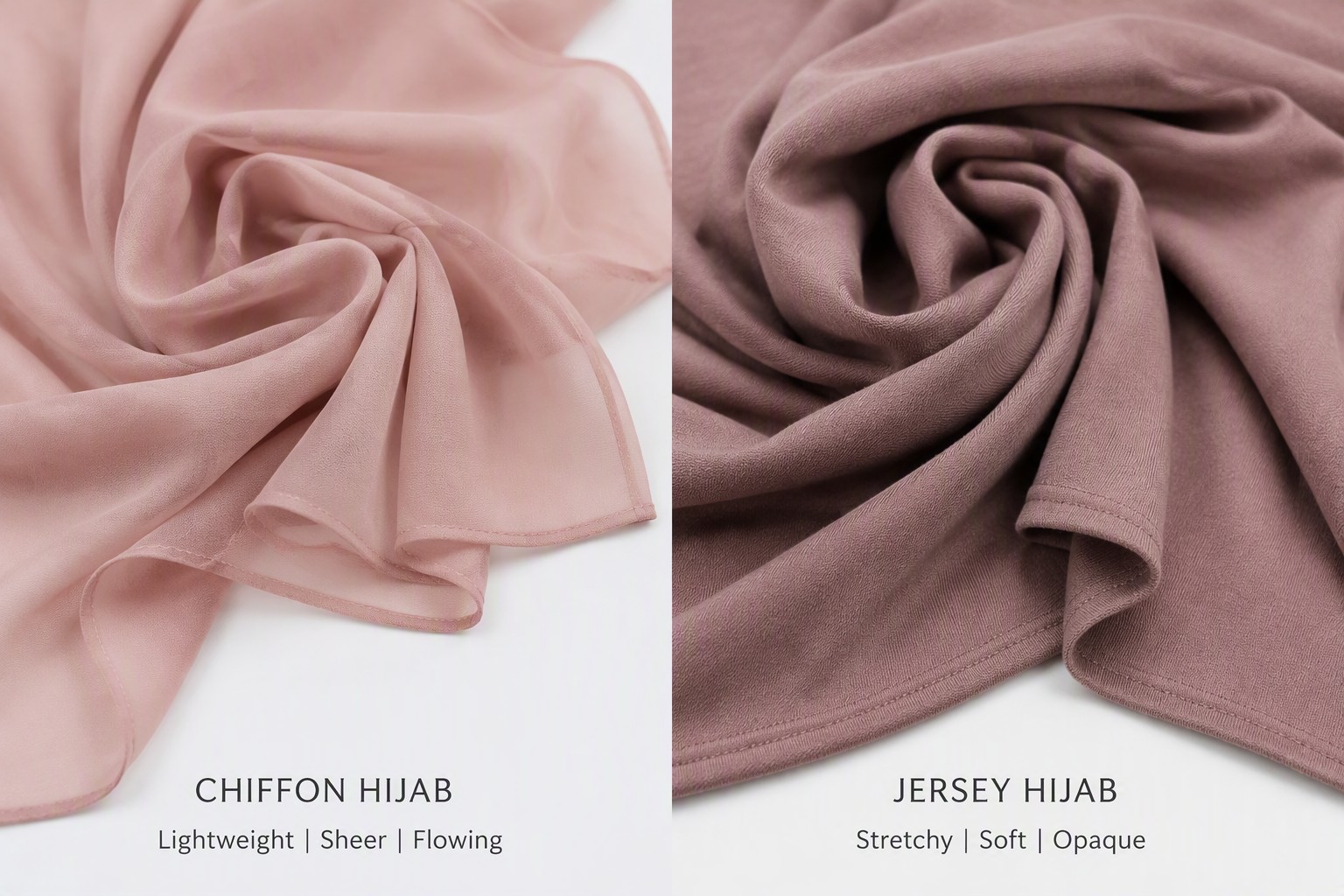
Start with the hand feel, but do not stop there. A modal sample should be checked for softness, fluid drape, surface smoothness, opacity, print absorption, and edge behavior. The buyer should handle the fabric in natural light and look at how it falls when folded, wrapped, and held away from the body. These observations connect the material to the way customers will style it.
A jersey sample should be checked for stretch, recovery, grip, weight, opacity, and curl at the cut edge. Pull the fabric gently and observe how quickly it returns. Examine the hem after handling and washing. A supplier with jersey experience should be able to explain how the knitted structure affects cutting, feeding, and finishing rather than presenting jersey as simply a heavier modal.
For printed qualities, inspect the front and reverse sides, line sharpness, colour depth, repeat alignment, and the transition from the printed field to the edge. A design that is attractive in the centre may become visually unbalanced if the border is cut or hemmed without enough allowance. Ask the supplier to confirm how the artwork will be positioned on the finished dimensions.
The sample should also be measured. Confirm finished length and width, hem width, label position, and any tolerance agreed in the brief. If the brand sells the item as a repeat style, keep the approved physical sample and record its fabric, colour, artwork, and finishing details. This sample becomes the reference for future production.
Colour management deserves its own approval step. A digital file, a monitor, a Pantone reference, a fabric swatch, and a printed strike-off can communicate different results. Agree which physical reference controls approval, view the strike-off under consistent lighting, and record the accepted version before bulk production begins.
Part 4: Our Factory Capability -- An End-to-End Sourcing Workflow
Our factory capability is structured as a connected workflow from inquiry to delivery. The first stage is requirement clarification: our team reviews the brand's customer, product role, preferred fabric, artwork direction, finished dimensions, label needs, packaging, target quantity, and launch timing. This creates a shared production brief before the factory recommends a sample route.
The second stage is material and design development. Modal and jersey are evaluated through their own technical requirements, including absorbency, stretch, tension, print response, fixation, cutting, and hemming. Our team focuses on the relationship between the artwork and the selected substrate so that colour management and print stability are addressed before a pilot is approved.
The third stage is sample review and approval. The brand receives a physical result to assess in the same way its customers will: by touch, drape, styling, photography, and handling. Any change to fabric, colour, dimensions, artwork scale, label position, or packaging is recorded in the working brief rather than left to memory.
The fourth stage is pilot production. Our optimized printing equipment, fabric-specific settings, and finishing workflow are used to create a controlled first quantity. OEM and ODM projects can include original artwork, private label details, and brand packaging when those requirements have been approved with the sample.
The final stages cover finished-goods inspection, packing confirmation, and delivery coordination. This end-to-end structure gives a brand one route for questions and approvals. It also makes the next order easier because the important decisions have already been documented and can be reviewed against the first shipment.
Part 5: Quality Control -- Online First-Section Checks and Light-Box Comparison
Our strict three-stage QC process begins before production and ends before shipment, but the online stage is where a small deviation can be stopped before it spreads across the order. At the start of a print or finishing run, the operator confirms the first section against the approved sample, artwork, fabric, and production brief. The line continues only after the key visual and dimensional points are accepted.
Colour comparison is performed under controlled lighting rather than under changing room conditions. A calibrated light box helps the team compare the first section with the approved physical reference and identify a shift that may be difficult to judge on a phone screen. The check is especially important for neutral tones, gradients, and dark colours that can look different under warm or cool light.
Online inspection also reviews print alignment, repeat position, edge treatment, fabric movement, and early signs of streaking or tension distortion. On modal, the team watches how the surface receives the print and how the fabric moves through the process. On jersey, the team pays attention to stretch and recovery so the finished dimensions are not compromised by uncontrolled handling.
The approved first-section result is kept with the production record. If an adjustment is made, the reason and new setting are recorded so the remainder of the order follows a known decision. This is more reliable than asking an operator to remember a verbal instruction several hours later.
Online checks do not replace incoming or outgoing inspection. They complement them. Material checks prevent an unsuitable roll from entering production, online checks catch process drift while the order is running, and final checks confirm that finished goods are packed only after the agreed requirements have been reviewed.
Part 6: Brand Development Advice -- Source for the Next Order, Not Only the First Post
When comparing suppliers, think beyond the first Instagram launch. Ask whether the factory can repeat the selected fabric, colour, artwork, label, and finish when the style becomes a core product. A supplier that can explain its records and approval process is more useful than one that simply promises a low first-order price.
Build your first brief around one clear product role. Decide whether the hijab is a daily basic, an editorial statement, a seasonal gift, or a signature print. That decision helps the factory and the brand evaluate weight, drape, opacity, print complexity, finishing, packaging, and target quantity with the same customer in mind.
Use the pilot to collect evidence. Track which colourways sell, what customers say about feel and styling, whether the packaging arrives in good condition, and which questions appear repeatedly in comments or direct messages. This feedback can guide the next colour drop or fabric decision more effectively than assumptions made before launch.
Keep a simple product file for every repeat style. Include the approved sample, physical colour reference, artwork version, fabric quality, measurements, label and packaging details, inspection notes, and customer-facing care information. This reduces confusion when a brand grows from one founder to a small team or works with an external content partner.
A good supplier relationship should support questions throughout the order. From the first inquiry to delivery, buyers should know who confirms the sample, who answers technical questions, when the first-section inspection occurs, how finished goods are checked, and how shipping information is shared. Clear responsibility makes a small operation feel more dependable to its customers.
Conclusion: Build a Supplier Relationship That Protects the Brand
The best hijab supplier for an Instagram brand is not simply the supplier with the largest catalogue. It is the partner that can understand the brand's product role, explain modal and jersey differences, manage colour and print stability, support a realistic pilot, and keep the approved decisions visible throughout production. Those capabilities protect the visual identity that attracted the customer in the first place.
Our team supports brands through the complete route from inquiry to delivery, including requirement clarification, sampling, OEM or ODM development, private label details, production coordination, QC checkpoints, packing, and shipment preparation. Share your collection direction and target customer with us to begin a practical sourcing discussion based on the product you want to build.
Frequently Asked Questions
What should Instagram brands check before choosing a hijab supplier?+
Check the supplier's fabric expertise, sample quality, colour communication, MOQ, lead time, private label capability, production photos or video, inspection process, and responsiveness to technical questions. A physical sample should be reviewed before a larger commitment.
Can an Instagram brand start with a small MOQ?+
Our pilot programme can start at 100 pieces per colourway or print design, subject to the fabric and finishing requirements. A focused pilot gives the brand useful product and customer feedback before wider inventory planning.
How should buyers compare modal and jersey hijab samples?+
Compare hand feel, drape, opacity, stretch or recovery, edge behavior, print appearance, wash response, finished dimensions, and styling use. The same design may need different settings on modal and jersey, so compare samples made from the actual selected quality.
How can a supplier keep Instagram product colours consistent?+
Agree which physical reference controls approval, record the colour profile and fabric quality, review a strike-off before bulk production, and compare the first production section under controlled lighting. Keep the approved sample for repeat-order comparison.
What does a three-stage QC process include?+
The first stage checks incoming materials, the second checks the first production section and online process, and the third checks finished goods before packing. The exact checkpoints should reflect the fabric, print, dimensions, finishing, and buyer requirements.
Can a hijab supplier support private label packaging?+
Yes. A sourcing brief can include woven labels, care labels, hangtags, folding instructions, and packaging requirements. These details should be approved with the physical sample so the finished product and presentation work together.
Need a quote for your next order?
Free samples available. MOQ from 100 pieces. Ships to 50+ countries.
Request a Quote