Quick Summary
For social-first modest fashion brands, a hijab is evaluated primarily through high-definition smartphone cameras, studio lookbooks, and short-form video reels before a customer ever touches the fabric. Flaws that pass traditional wholesale standards -- such as wavy hem stitching, irregular light transmission, or sheen shifting under ring lights -- become glaring visual distractions on screen. Choosing a specialized hijab supplier requires auditing edge finish precision, modal and jersey drape fluidities, and pre-production color calibration. Our production team works directly with social-first fashion founders, providing tailored baby-hem finishing, calibrated reactive printing, and low-MOQ test runs that convert viewers into loyal repeat buyers.
The Visual Economy of Modest Fashion on Instagram and TikTok
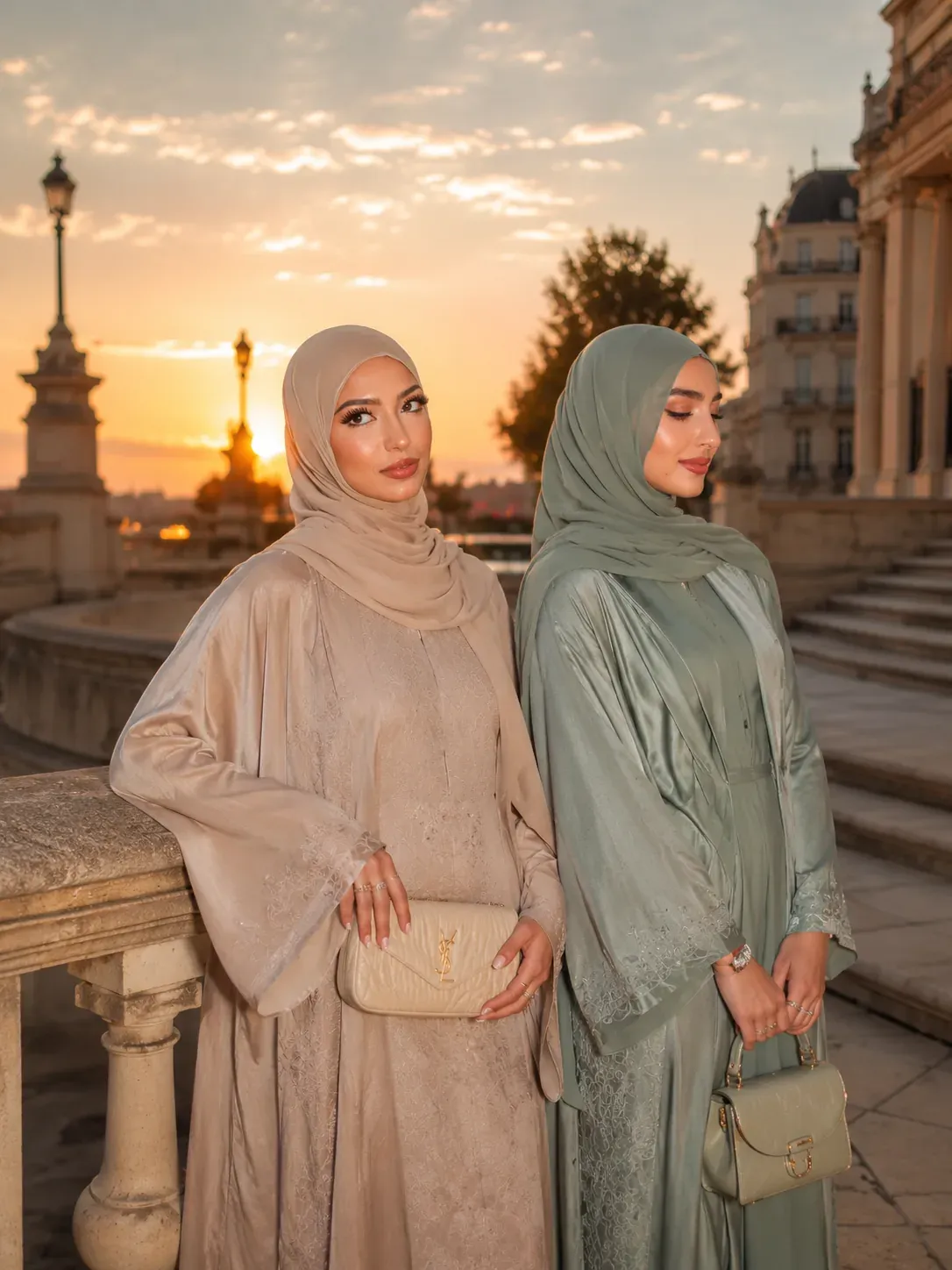
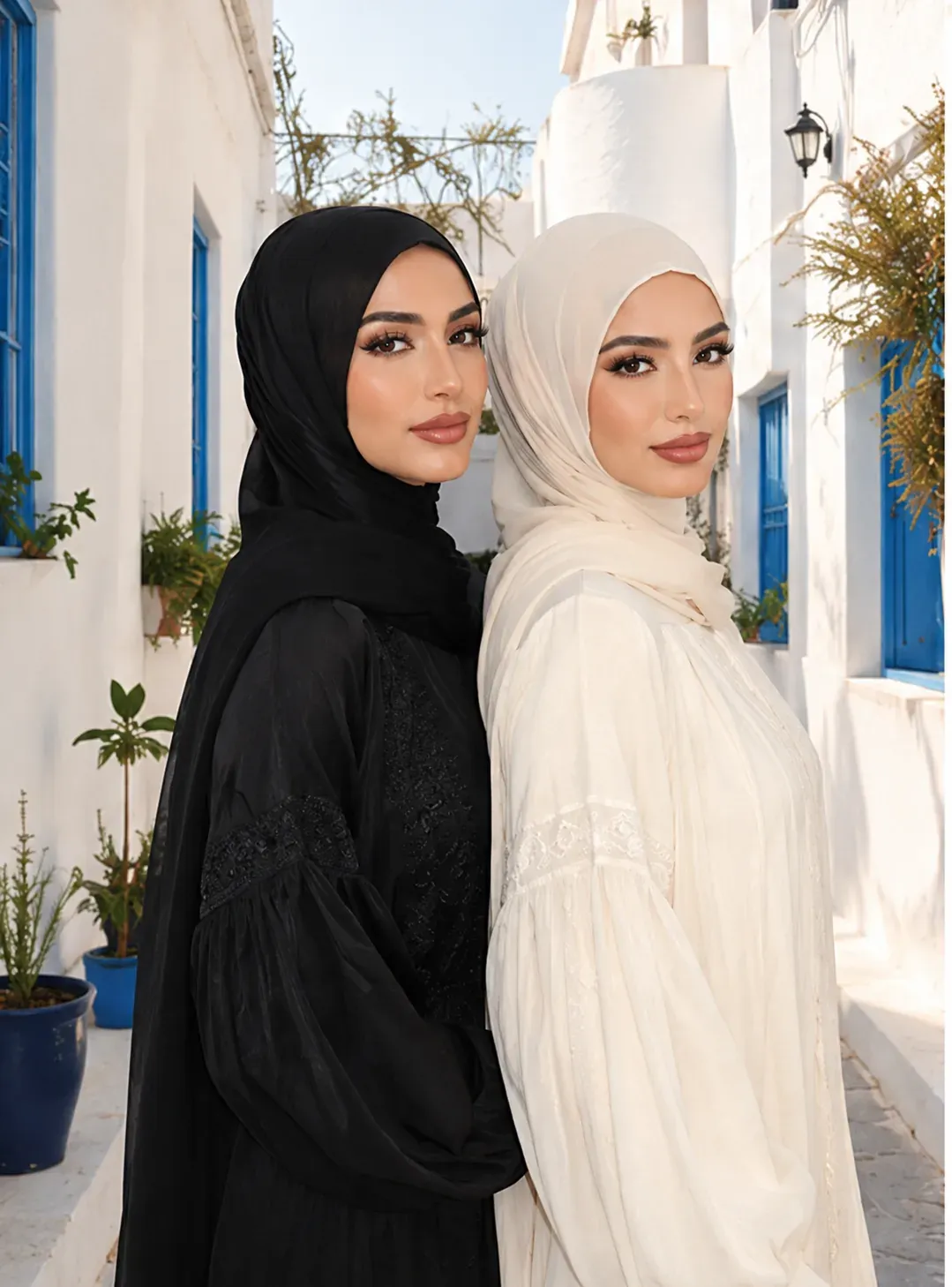
In the modern modest fashion ecosystem, purchasing decisions occur within fractions of a second. An Instagram user scrolls past hundreds of posts until a striking styling reel, a carousel lookbook, or an influencer unboxing captures their focus. For independent labels, direct-to-consumer boutiques, and emerging lifestyle founders, the visual fidelity of your product on camera is the single most powerful conversion engine you own. Before a buyer can experience the buttery drape of 100% micro-modal or test the stretch recovery of premium jersey against their skin, they evaluate its texture, drape fluidity, hem precision, and color richness entirely through a glass smartphone screen.
This visual-first retail reality has fundamentally altered manufacturing requirements. In traditional bulk wholesale, a factory might pass a shipment if the fabric weight is within five percent of target and the edges are securely overlocked. In contrast, an Instagram fashion brand requires camera-ready precision. A hem that ripples when draped around the neck, a print that looks washed out in daylight photography, or a fabric weave that appears translucent under portrait lighting directly damages brand equity. Finding a dedicated hijab supplier that understands the technical nuances of visual merchandising is no longer optional -- it is the cornerstone of sustainable e-commerce growth.
Part 1: The Buyer Problem -- Micro-Flaws Magnified Under 4K Lenses
The most frustrating challenge boutique owners face when ordering from conventional apparel factories is the gap between physical sample approval and bulk content production. A sample scarf viewed on a hanger in a showroom may feel adequate. However, the moment your creative director sets up directional studio key lights or your influencer takes a close-up selfie in 4K resolution, hidden manufacturing compromises become painfully obvious.
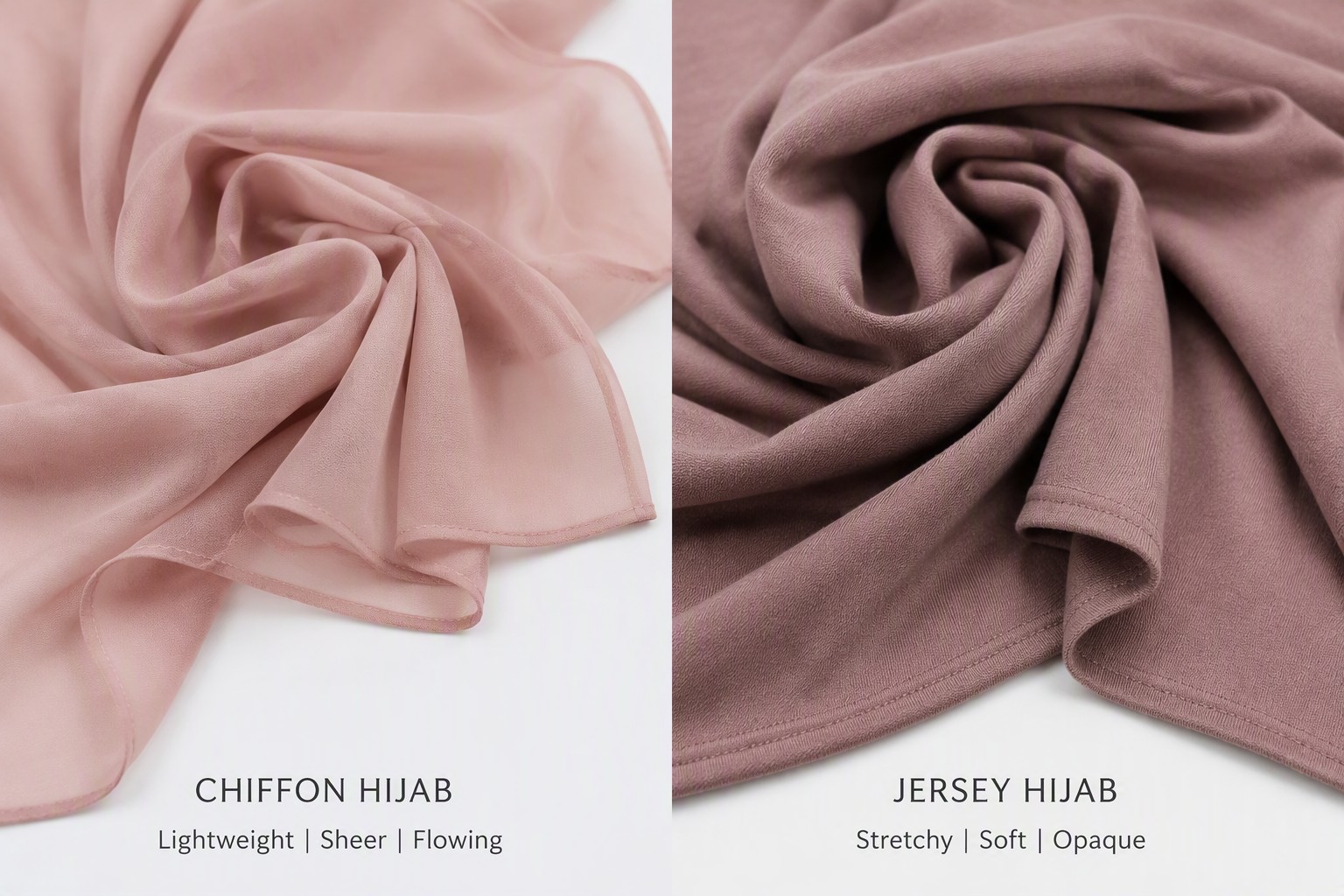
The primary offender is edge hem puckering. Lightweight fabrics like 80-count modal and ultra-sheer chiffon are notoriously difficult to guide through industrial sewing machines. When a generic factory rushes production, operators pull the fabric with uneven manual tension. This stretches the delicate weave along the bias, resulting in a wavy, bacon-like hemline. On camera, this defect prevents the hijab from framing the face smoothly, causing harsh micro-shadows that distract the viewer from the beauty of the design.
A second pervasive issue is color inconsistency across lighting environments. Many independent brands have experienced the disappointment of filming a campaign outdoors during golden hour, only to discover that their signature olive hijab registers as muddy brown on video, while appearing greenish-yellow indoors under household LEDs. This phenomenon, known as metamerism, occurs when suppliers utilize cheap dye compounds without spectral calibration. The resulting customer reviews -- complaining that the item received does not match the website lookbook -- directly spike return rates and suppress organic social advocacy.
Part 2: Industry Trend -- The Rise of Aesthetic Tone Palettes and Capsule Drops
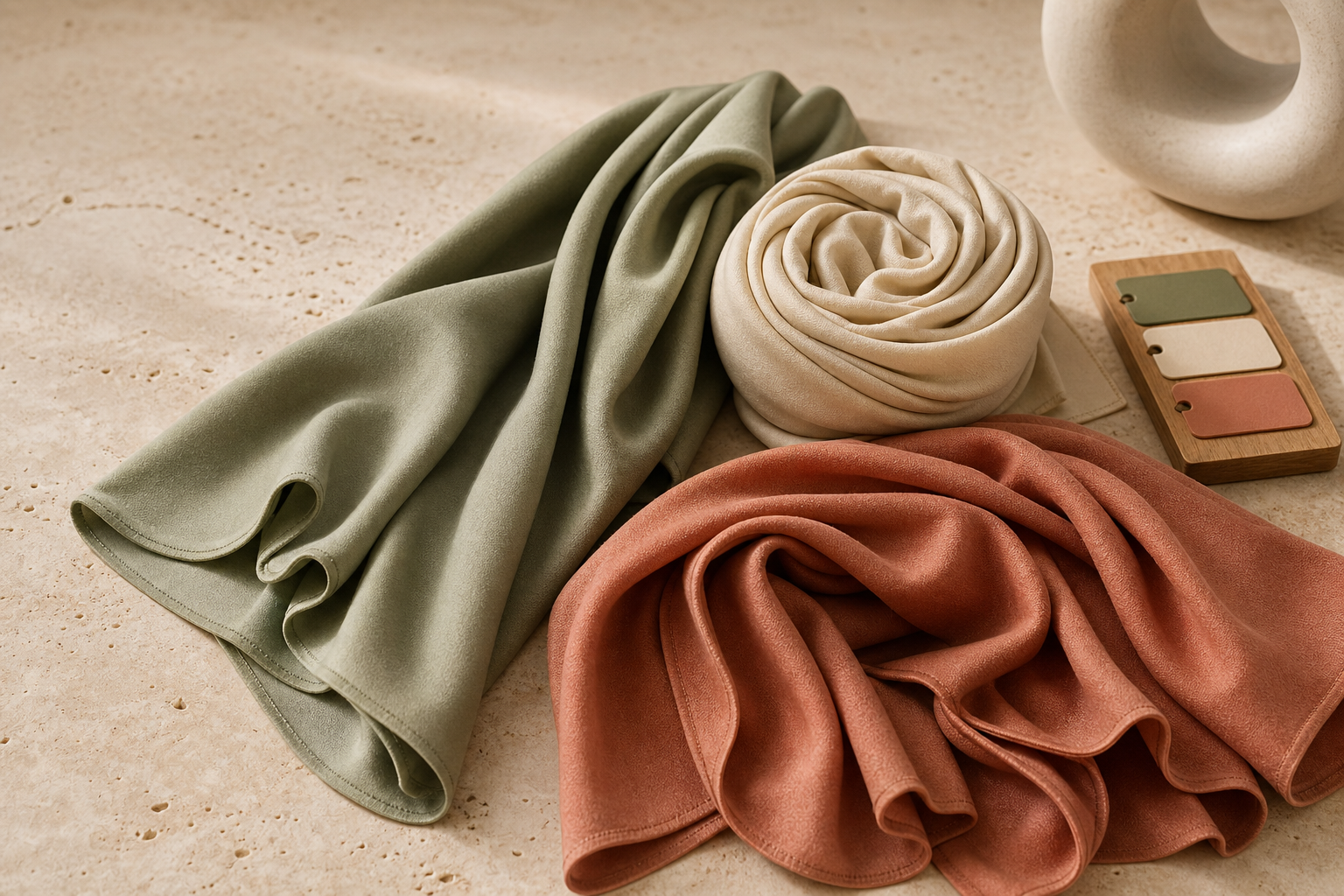
The contemporary modest fashion market has moved decisively away from generic, high-saturation primary colors toward nuanced, earthy tonal palettes. Over the past three seasons, the highest-performing Instagram and TikTok modest brands have built cult followings around proprietary color systems: muted sage, dusty terracotta, oat milk cream, washed mauve, and deep espresso. These sophisticated neutral tones require exact dye formulation and exceptional fabric sheen control.
Simultaneously, the standard inventory model has evolved from massive seasonal bulk buys toward rapid, low-MOQ capsule drops. Leading social brands release curated collections of four to six coordinating shades in limited quantities of 100 to 200 units per colorway. This drop model creates organic urgency, generates recurring viral engagement, and drastically reduces unsold inventory liabilities. However, it places immense operational demands on the supply chain. The brand needs a manufacturing partner capable of executing small-batch production with the identical color consistency, label customization, and premium packaging standards typically reserved for ten-thousand-piece purchase orders.
Furthermore, social media audiences demand genuine material transparency. Modern buyers actively look for certifications like OEKO-TEX Standard 100, checking whether modal fibers originate from sustainably managed beechwood pulp and whether jersey blends use breathable natural modal or bamboo rather than synthetic polyester. Brands that clearly showcase fabric provenance and ethical factory craftsmanship in their behind-the-scenes content achieve noticeably higher engagement and brand trust.
Part 3: Technical Knowledge -- Fabric Drape, Light Transmission, and Edge Geometry
Translating creative brand concepts into flawless physical garments requires an understanding of three core textile mechanics: drape coefficient, yarn light transmission, and edge hem geometry. Mastering these variables allows founders to write authoritative tech packs and eliminate ambiguous supplier communication.
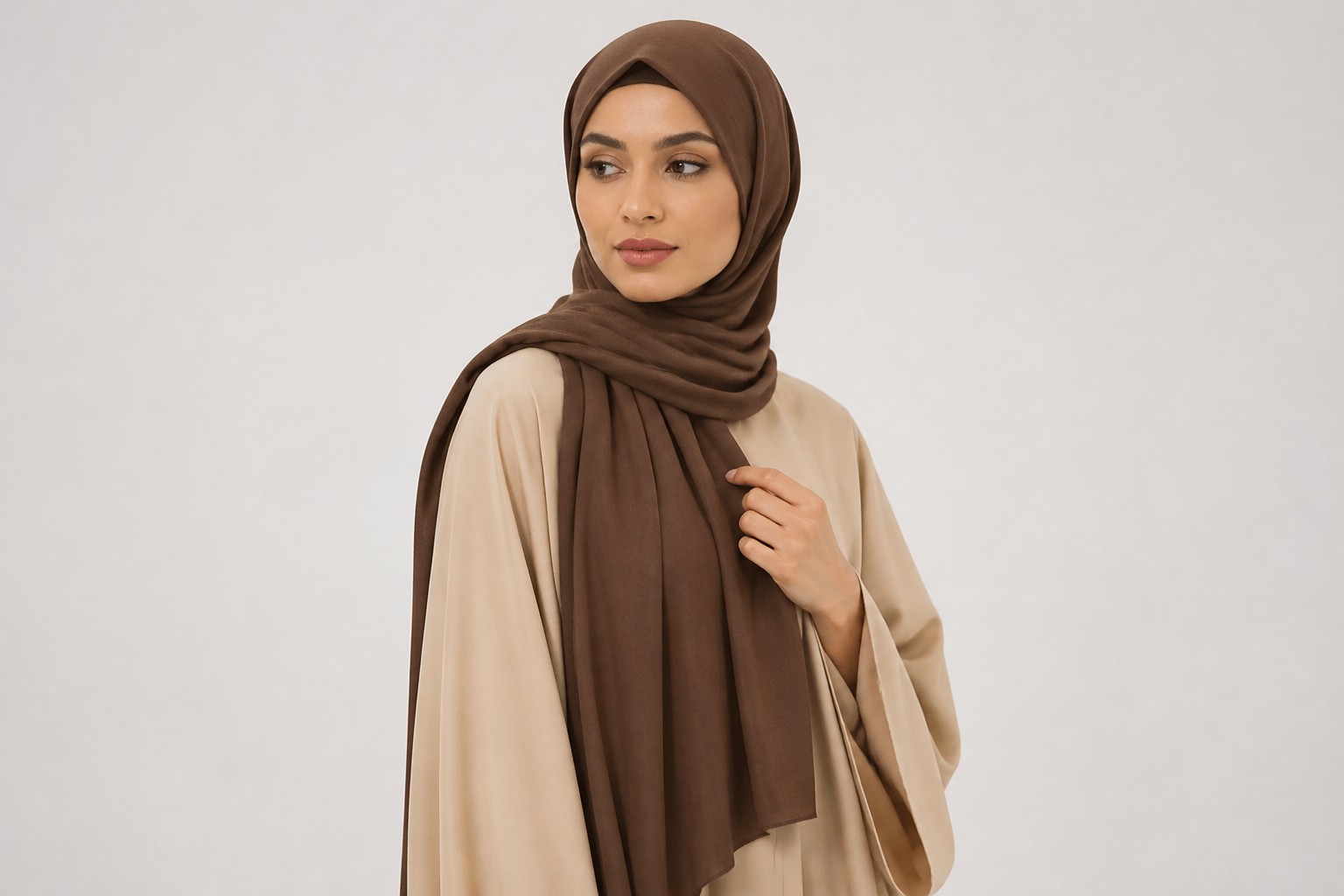
Drape coefficient measures how a fabric falls under its own gravitational weight. A high drape coefficient indicates a stiff fabric that flares outwards into rigid cones -- catastrophic for modest styling tutorials where the wearer wants graceful, cascading folds around the shoulders. Premium custom printed modal achieves an exceptionally low drape coefficient because the micro-modal filaments (typically 0.9 to 1.1 denier) possess extraordinary longitudinal flexibility. This allows the hijab to wrap smoothly around the head and cascade without bunching, creating photogenic sculptural lines in every frame.
Light transmission is equally vital. For daytime video content, a hijab must maintain modesty without feeling heavy or suffocating. Achieving this balance in lightweight fabrics (such as 85 to 95 GSM modal) requires high-density weave construction using fine combed yarns rather than coarse, low-twist threads. A dense weave prevents see-through translucency across the crown while allowing maximum airflow, ensuring the wearer remains comfortable throughout day-long shoots.
Finally, edge geometry defines the luxury positioning of the piece. The gold standard for premium modal and silk-blend hijabs is a 1.0 mm to 1.5 mm micro baby hem executed with a single needle and high-precision hemmer foot, calibrated at 14 to 16 stitches per inch using ultrafine color-matched thread. The stitch must wrap the folded raw edge completely without puncturing or tearing the fine yarns. For stretch jersey hijabs (typically 180 to 220 GSM modal or bamboo-spandex blends), the edge must incorporate micro-elastic thread tensions that expand dynamically when wrapped without snapping or fraying over time.
Part 4: Our Craftsmanship and Operator Expertise -- Human Precision Behind the Lens
While advanced digital printing equipment provides the foundation for vibrant patterns, the ultimate tactile and visual quality of a hijab is determined by the skilled craftspeople who guide the fabric through production. At our specialized manufacturing facility, we recognize that lightweight modal and supple jersey cannot be treated like ordinary woven textiles. Our hemming workshop is staffed by senior sewing artisans with an average of over seven years of specialized experience handling luxury modest wear and delicate scarves.
Each production operator is given explicit procedural authority to halt their line if fabric tension begins to drift. In standard fast-fashion factories, machine operators are paid purely on piece rates, incentivizing them to pull fabric rapidly through sewing guides at the expense of straightness. In our workshop, technicians are incentivized on first-pass optical consistency. They manually regulate roll tension, continuously inspect needle points for microscopic burrs that could snag fine modal filaments, and verify edge straightness against illuminated measurement grids every ten pieces.
Our pre-production sampling masters work directly with independent founders to prototype and refine custom finishes before bulk cutting commences. When an Instagram label submits a moodboard requiring a specific drape fluidity or an unusual edge colorway, our craft team tests multiple thread compositions, tension ratios, and bio-wash finishing wash recipes. This human-centered expertise ensures that the sample you approve for your lookbook model is identical in hand feel and stitch perfection to the five-hundredth unit shipped to your fulfillment warehouse.
Part 5: Quality Control -- Camera-Ready Outgoing Inspection and AQL 1.5 Standards
To ensure that zero defective pieces reach your photography set or your retail unboxing experience, our facility enforces a rigorous multi-tier outgoing quality control protocol operating under AQL 1.5 major defect standards -- significantly stricter than the general apparel industry default of AQL 2.5 or 4.0.
Every finished hijab passes across a calibrated, glare-free optical inspection table equipped with dual overhead D65 daylight lamps (6500K color temperature, Ra > 95) and translucent backlight diffusers. This dual-lighting setup instantly illuminates weave irregularities, microscopic slubs, ink micro-droplets, or pinhole defects that would normally remain invisible under casual ambient room lighting.
Our QC inspectors measure four critical parameters on every audited bundle: dimensional squareness, stitch count density, hem flatness, and thread trimming cleanliness. Scarf dimensions are verified against tight tolerances of ±1.5 cm on length and width, ensuring that styling folds hang symmetrically on both sides of the chest. Edge lines are laid flat across a precision marble surface; any hem that lifts or curls by more than 1.0 mm is flagged for immediate adjustment. Finally, every corner is examined with micro-snips to eliminate loose thread tails longer than 2.0 mm, guaranteeing that when your influencer records an unboxing reel, the product appears clean, refined, and immaculate from the very first macro shot.
Part 6: Brand Development Advice -- Building a High-Converting Social Merchandising Pipeline
Scaling an Instagram or TikTok modest fashion brand requires a disciplined bridge between creative social storytelling and supply chain planning. The most successful founders do not view their manufacturer as a transactional vendor, but as an operational extension of their creative studio. To turn your product drops into repeatable commercial sell-outs, we recommend adopting a systematic merchandising workflow.
First, establish a core aesthetic color library before testing experimental novelty prints. Select three to four signature neutral shades that reflect your brand identity -- such as a warm nude, a signature taupe, and an earthy olive -- and keep them permanently in stock as your core revenue drivers. Use seasonal capsule drops of one or two trending accent shades or bespoke botanical prints to generate excitement, using pre-orders and waitlists to gauge exact customer demand before committing to bulk roll cutting.
Second, invest in complete branded packaging integration from day one. Custom woven damask care labels, heat-pressed satin branding, matte foil hangtags, and custom-embossed frosted slider pouches cost only pennies per unit when batched together, yet they multiply perceived retail value three- to five-fold in social unboxing videos. An unboxing experience that looks deliberate and luxurious encourages your customers to tag your brand organically, creating authentic social proof that dramatically lowers your customer acquisition costs.
If you are currently developing your upcoming collection or preparing your brand launch, the fastest way to bridge the gap between creative vision and factory execution is to share your design brief directly with our engineering team. Whether you have detailed CAD tech packs, Pantone color references, or simply an Instagram moodboard and aesthetic lookbook, our team will review your visual requirements, recommend optimal fabric weights and hem specifications, and provide a tailored sampling plan designed to make your next collection camera-ready and commercially successful.
Frequently Asked Questions
Why do hijabs that look acceptable in person sometimes look cheap on Instagram and TikTok?+
Studio lighting, ring lights, and 4K smartphone cameras magnify subtle manufacturing defects that are easily overlooked in ambient indoor light. Two issues are most prevalent: irregular light transmission and stitch wave. If a fabric lot has uneven yarn density, backlight will reveal blotchy light patches on camera. Furthermore, if a sewing operator applies uneven tension during hemming, the scarf edge develops a subtle ripple or lettuce effect. While barely noticeable on a flat hanger, macro camera lenses immediately catch these wavy edges in styling tutorials and portrait crops, eroding perceived brand quality.
Which fabric is better for Instagram fashion brands: custom printed modal or premium bamboo jersey?+
The choice depends on your brand aesthetic and content format. Custom printed modal is the premier choice for editorial lookbooks, fluid drape tutorials, and luxury styling reels. It offers a subtle matte sheen, featherweight breathability, and exceptional dye penetration that renders complex botanical or geometric prints with crisp photographic clarity. Premium bamboo jersey is the top seller for daily wear, effortless styling, and active modest fashion. Its natural four-way stretch hugs the face comfortably without pins, creating clean sculptural lines in selfie reels and casual lifestyle posts.
What type of hem finish should a boutique or Instagram brand specify on their tech pack?+
For modal, silk-blend, and chiffon hijabs, the industry benchmark is a fine baby hem (also known as a micro pin-hem), measuring 1.0 to 1.5 mm with 14 to 16 stitches per inch. This creates a razor-sharp, weightless edge that hangs perfectly straight without curling. Cheap rolled hems from generic factories often measure 3 to 4 mm with loose 8-stitch densities, which look bulky and puckered on camera. For stretch jersey hijabs, an ultra-fine interlocking blind stitch or clean double-needle seam with matching high-elastic thread is essential to prevent edge breakage when the wearer stretches the scarf.
How does lighting calibration prevent customer complaints about color variation?+
Social media brands suffer high return rates when a product delivered to a customer looks distinctly different from the influencer video or product listing. This discrepancy is caused by metamerism -- dyes appearing one shade under factory fluorescent tubes and an entirely different shade under daylight or incandescent warm studio lights. A reliable supplier calibrates reactive dye formulations under standard D65 daylight and 2800K commercial store illuminants inside a calibrated light box, guaranteeing that the dusty rose or olive tone shown on your grid matches the physical parcel opened on unboxing day.
What is the recommended MOQ for an Instagram brand launching its first capsule drop?+
We recommend starting with 100 to 150 pieces per colorway across three to four core aesthetic shades. This volume keeps total inventory risk low while securing full OEM customization, including custom woven brand labels, branded satin wash tags, eco-friendly frosted zip pouches, and dedicated lab-dip color approvals. Sourcing fewer than 50 pieces per custom color often forces suppliers to use market-stock dyed fabrics that cannot be consistently reordered when a reel goes viral.
Can custom printed modal hijabs achieve deep saturated colors without stiffening the hand feel?+
Yes, provided the manufacturer uses high-grade reactive dyes coupled with temperature-controlled saturated steam fixation and bio-enzyme post-wash cycles. Sublimation or pigment surface printing deposits an ink binder on top of the fibers, creating a stiff, plasticky layer that ruins drape and glares under studio strobes. In contrast, reactive digital printing forms a covalent chemical bond with the cellulose fibers of the modal, leaving the natural breathability and buttery fluid softness completely intact.
Need a quote for your next order?
Free samples available. MOQ from 100 pieces. Ships to 50+ countries.
Request a Quote